Showing posts with label Drama. Show all posts

Ashes to Ashes: Series 1 (2008)

Monday, 5 October 2009, 3:33 pm | Comments (0)

Ashes to Ashes - Series 1With Life on Mars – and the journey of time-travelling cop Sam Tyler – neatly wrapped up after two stellar seasons, the existence of sequel series Ashes to Ashes clearly owes to one thing and one thing only: Detective Chief Inspector Gene Hunt.

Philip Glenister's brutish, scene-stealing cop is back front and centre in Ashes to Ashes alongside Life on Mars sidekicks Ray Carling (Dean Andrews) and Chris Skelton (Marshall Lancaster), who have left Manchester to tackle the criminal scum of London. The trio are brought back to life when police psychologist Alex Drake (Spooks' Keeley Hawes) awakes in 1981 after being shot during the pursuit of a criminal in 2008. Like Tyler before her, Drake finds herself trapped in the past and working with Hunt and his team.

By the time Ashes to Ashes' first season wrapped up on ABC1 last week, it had more or less escaped the vast shadow of Life on Mars. The season's central arc, which saw Drake fighting to prevent the death of her parents in a car bombing, was engaging stuff, and her urge to return to her daughter in the present day meant Drake's even more determined to return to the present day than Tyler was.

Unfortunately, the show stumbles in overcoming the expectations attached to a sequel series. The transition from Life on Mars' gritty depiction of seventies Britain to the glitz and glamour of the 1980s in Ashes to Ashes is accompanied by a jarring tonal shift; at times, Ashes to Ashes borders on a parody of its predecessor. The ingredients are all there (the Ford Cortina is replaced by an Audi Quattro, the pub by an Italian restaurant and the Test Card girl by a very creepy clown) but there's an obvious sense of self-awareness to Ashes to Ashes that was lacking in the original series. While it may be befitting to Hawes' character, who, having read Sam Tyler's files, is convinced that her awakening in 1981 is all in her head, the jokier tone plays contrary Life on Mars' engaging conviction to its conceit.

(Curiously, the lighter Ashes to Ashes would probably have leant itself better to a US adaptation than Life on Mars did, particularly given the in-vogue setting of the 1980s. It also wouldn't have given US producers the ammunition they needed to make a God-awful literal twist in the final episode.)

Glenister still lends great gusto to Gene Hunt who is now aware that his old school policing methods are soon to be a thing of the past (it's ripe material only hinted at in series one – here's hoping it'll be further explored in future episodes). However, Hunt, like Skelton and Carling (sporting an ace perm), seem to be painted in far broader strokes than they were in Life on Mars – witness the bombastic introduction of Gene Hunt in episode one.

Hawes, meanwhile, eventually comes into her own as Ashes to Ashes ultimately does. Her constant (and occasionally annoying) narration in early episodes makes her a less endearing protagonist than John Simm's instantly likeable Tyler, but Drake's tetchy sparring with Hunt becomes a joy to behold. She also develops an intriguing relationship with Montserrat Lombard's Sharon Granger toward the season's end.

It's difficult to assess the first season of Ashes to Ashes as an independent entity (the show even takes its title from another David Bowie song, just one of dozens of funky '80s tunes to feature), and it was always going to struggle to recapture the brilliance and originality of Life on Mars. However, there's still life left in the show's fish-out-of-water premise and with that awkward transitional phase over, Ashes to Ashes should be well placed to develop an identity of its own as the second season begins tonight.

Inglourious Basterds (2009)

Wednesday, 9 September 2009, 6:14 pm | Comments (2)

Inglourious BasterdsIt was worth the wait.

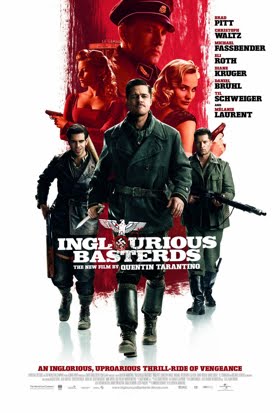
Quentin Tarantino has been promising to unleash his World War II epic Inglourious Basterds upon us for over a decade. In the choppy wake of the critic-dividing Grindhouse experiment, Basterds is not only a return-to-form for the acclaimed director – it's perhaps his finest film yet.

Tarantino's love and appreciation of cinema is evident in virtually every frame of Inglourious Basterds; the film itself builds toward a finale set during the premiere of Joseph Goebbels' latest propaganda flick. Ostensibly a revenge tale, Basterds serves up an alternate history of World War II that is ultimately a propaganda movie of its own – and arguably a statement on violence in film.

Inglourious Basterds is perfectly paced, playing out like an on-screen novel; indeed, the film itself is split into five chapters during which Tarantino's knack for dialogue flourishes. Unlike those in most films, Inglourious Basterds' lush, natural conversations play out for longer than a mere couple of minutes – few directors could pull off an opening scene that is a fifteen minute conversation as well as Tarantino does here with an engaging sequence in which a Nazi interrogates a French farmer who may be harbouring Jews.

What follows is a sprawling tale as a vengeance-driven daughter of a slaughtered Jewish family, a defecting German actress, members of the British military, the Nazis and a group of OSS soldiers (the titular Basterds) converge, as characters do in Tarantino films, for a violent confrontation.

Although an ensemble picture, Inglourious Basterds benefits from just one megastar in its cast: Brad Pitt as beefcake Lieutenant Aldo Raine, who leads the Basterds on a mission to collect 100 Nazi scalps each. The rest of the cast (with the possible exception of Mike Myers, whose British general has overtones of Austin Powers) is mostly rounded out by a troupe of capable unknowns.

Two of the movie's stars shine particularly bright: Mélanie Laurent as Shosanna Dreyfuss, a Jewish girl whose family was murdered by the Nazis, and Christoph Waltz as Hans Landa, the man who ordered the deaths. Laurent's moving performance grounds the film in some semblance of reality, while Waltz, quite simply, is phenomenal; his nuanced performance as Inglourious Basterds' main antagonist is indescribable – a dead certainty for a Best Supporting Actor Oscar nomination.

There are a couple of jarring additions, including one of two sequences narrated by Samuel L. Jackson that overtly explains the explosive properties of nitrate film, but in the wake of some brain-crushingly moronic summer blockbusters, Inglourious Basterds is a gust of fresh air.

As expected for a Tarantino flick, violence abounds, and if you're likely to get squeamish at the sight of Raine and his cronies hacking the scalps off of evil Nazis, you have been warned. But when Tarantino (via Brad Pitt) professes during the film's final scene that Inglourious Basterds may just be his masterpiece, it's very difficult to disagree.

Life on Mars (2006-2007)

Thursday, 13 August 2009, 7:49 pm | Comments (3)

Life on MarsFor those of you wondering whether the experience of enduring Transformers: Revenge of the Fallen had turned me off popular culture, fret not. To detox, I've decided to splurge on all the critically-acclaimed telly I missed over the last few years while I was travelling the world, having life-shaping experiences and all that.

The first DVD box sets to land in my shopping basket? BBC's Life on Mars, the time travel/cop show with a premise so balmy it shouldn't work, let alone work so brilliantly.

The excellent John Simm is Sam Tyler, a Manchester police officer who is hit by a car in 2006 and wakes up in 1973. With no idea as to how or why he is living in the past, Sam struggles to fit in with the archaic, corrupt and thuggish 1970s Manchester police force led by Philip Glenister's eminently quotable Gene Hunt.

Tyler's time warp dilemma is mostly a subplot on the show, simmering in the background of each week's fresh, '70s-set police procedural. It's a time when forensic science is a developing field, when suspects and witnesses are treated with equal contempt and when it's perfectly acceptable to halt a murder investigation on account of it being "beer o'clock".

It's testament to the sheer quality of Life on Mars' that at no point does the concept ever feel naff. Jokes about the past and present are sly and subversive without ever seeming too cute; "There will never been a woman Prime Minister as long as I have a hole in my arse," bellows the sexist, racist, alcoholic, homophobe Hunt, who still remains likeable thanks to Glenister's commanding performance.

Dean Andrews as the boorish Ray Carling, Marshall Lancaster as the likeable Chris Skelton and Liz White as love interest Annie Cartwright are all perfect for their parts, but the real focus is wisely kept on Tyler and Hunt; their relationship represents a fascinating contrast between the morals and values of the 1970s and the present day.

Life on Mars is rich on nostalgia, truly capturing the essence of the seventies – the soundtrack is amazing (led by David Bowie's dizzying title track) and the cinematography drenched in all those browns and yellows commonly associated with the decade. This vivid detail of the 1970s constantly plays on Sam's mind, as he fights off voices and visions that suggest he's actually gone insane rather than back in time.

Both seasons deliver a pitch-perfect cocktail of intrigue, humour, action and drama through their highly successful meshing of the science fiction and crime genres. Thanks largely to the strengths of the show's two main actors, Life on Mars also succeeds in being strangely affecting; I challenge any other viewer not to share Sam's mixture of emotions each time he hears a voice beckon to him from the present day.

The programme's creators chose to follow the great British tradition of ending a show at the top of its game, and while Sam's predicament remains almost as intriguingly ambiguous at the end of the show as it was at the start, the finale is perfectly satisfying.

(As an aside, don't get Life on Mars confused with the gratuitous US remake, the finale of which sounds as awful as it is different from that of the UK version.)

If I sound like I'm gushing, it's because I am. Life on Mars is one of the finest shows of the decade. Thoughts on the show's sequel – the 1980s-set Ashes to Ashes, which recently premiered on ABC1 – will be here in the coming weeks.

Slumdog Millionaire (2008)

Sunday, 1 March 2009, 11:10 pm | Comments (1)

Slumdog MillionaireSlumdog Millionaire owned last week's Oscars, taking home eight out of a possible 10 statues, including the two big ones: Best Picture and Best Director. The $64,000 – or 1,250,000 rupee – question: is Slumdog Millionaire deserving of such recognition?

My final answer is a resounding yes.

British director Danny Boyle's acclaimed adaptation of Vikas Swarup's novel Q&A recounts the story of Jamal Malik (played at various points in time by Ayush Mahesh Khedekar, Tanay Chheda and Dev Patel), a boy from the Mumbai slums who triumphs on India's version of Who Wants to Be a Millionaire?. However, when Jamal is arrested, interrogated and tortured on suspicion of cheating, he reveals his life story, which suggests that destiny may have had a hand in his big win.

Slumdog Millionaire's peculiar conceit – film based around a game show that was surely at its most popular nearly a decade ago (Q&A featured a fictional game show) – sounds kitschy at best and downright cheesy at worst; in short, not Oscar material. But the quiz show premise makes the movie's flashback sequences surprisingly fluid, allowing the film to wonderfully explore one man's rise from India's slums and his unrelenting pursuit to be with the woman he loves.

The first thing that struck me after leaving the cinema was Slumdog Millionaire's tremendous vibrancy. The writing, direction, acting, cinematography, editing and music are all pulsing with an energy I haven't seen in a film in years; the film looks and feels completely unique. Compared to the rest of this year's Oscar contenders, including the terrific The Curious Case of Benjamin Button, it's easy to see why Slumdog Millionaire sticks out.

Its cast of unknowns adds to Slumdog Millionaire's charms. While the cast noticeably failed to be acknowledged at the Academy Awards, all capably handle all that their roles require of them. That many of the younger actors – all of whom are superb – actually come from Mumbai's slums (Slumdog Millionaire was entirely shot in India) is another feather in the film's cap. In particular, Bollywood star Anil Kapoor is a standout as the slimy host of Who Wants to Be a Millionaire?.

I've seen posters around Sydney proclaiming Slumdog Millionaire to be "the feel-good film of the decade", which, given its predominant themes of empowerment and redemption, might be a fair assumption. Yet Boyle is unafraid to pull emotional punches when the script demands it. The movie's early scenes, set in Mumbai's slums, are simultaneously colourful and upsetting. Slumdog Millionaire's most harrowing sequence – a genuinely sickening moment in which a gangster blinds a small child in order to increase his begging potential – is deftly handled as the culmination of a segment of the film in which the audience, like the children the scene concerns, are oblivious to the gangster's true intents. By contrast, Boyle gives just the right amount – and type – of levity to elsewhere balance the film's tone.

In fact, watching Slumdog Millionaire, I found myself reminded of precisely why I love going to the cinema. If only all films offered this much. The film's outcome is rarely in doubt, but Simon Beaufoy's script is so engrossing that it's perfectly acceptable to question the outcomes of the lesser aspects of the story (particularly during its vignette-esque flashbacks). Slumdog Millionaire offers a quality of romance, suspense and thrills rare in modern cinema.

It's not quite perfect. Slumdog Millionaire might be a touch too sentimental, particularly during its final act, in which the entire nation becomes enthralled by Jamal's potential win; the story has enough momentum without resorting to such clichés as people huddling around televisions in shop windows. Additionally, the Bollywood-style dance number that's intercut with the film's closing credits is at odds with the rest of the picture's Hollywood sensibilities. I also didn't quite buy a key moment in Jamal's relationship with his brother, which may have warranted further exploration.

Any flaws are easily overlooked: Slumdog Millionaire is a real winner.

Angels and Basterds get trailers

Saturday, 21 February 2009, 8:05 pm | Comments (1)

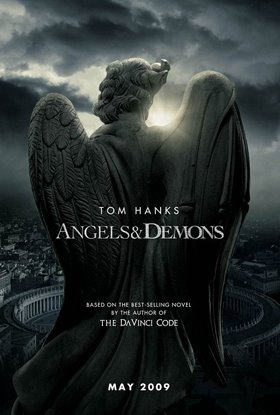
Angels & DemonsTrailers for two of my most-anticipated films for 2009 have found their way onto the world wide web this week.

First up is Angels & Demons, the prequel-cum-sequel to Dan Brown's love-it-or-hate-it religious thriller, The Da Vinci Code. As I've written elsewhere on this blog, I really liked Ron Howard's film adaptation of The Da Vinci Code; it's not flawless, but there's plenty to enjoy, and it certainly didn't deserve the critical mauling it received upon its release.

That said, Angels & Demons is the superior book. There's less historical exposition, a tighter story and more action (I'm keen to see how the film handles one particularly fanciful stunt). The trailer's pretty standard for an action flick – it's the usual mish-mash of confusingly out-of-context quotes accompanied by a rising choral soundtrack – but I have high hopes for the film.

Tom Hanks returns as Robert Langdon (sans the hardly noticeable but inexplicably controversial mullet), joined by Ewan McGregor, Ayelet Zurer and Stellan Skarsgård.

With Howard breaking news this week that Brown has finished work on the third Langdon book (working title: The Solomon Key), expect Angels & Demons to be the second of a trilogy if it makes a wad of cash.

Personally, I'm still hanging out for a Deception Point adaptation.

Meanwhile, Inglourious Basterds (yes, that's the correct spelling) is shaping up to be a return-to-form for Quentin Tarantino. After the misstep that was his Robert Rodriguez collaboration Grindhouse (more of a throwaway curiosity than enduring cinema), the controversial filmmaker is back with this long-in-development World War II epic: Tarantino's first self-contained movie since 1997's Jackie Brown.

Inglourious Basterds, partly based on the more literate 1978 Italian film Inglorious Bastardssees a group of soldiers dropped into Nazi-occupied France posing as civilians. The trailer focusses on a Brad Pitt (who looks to have given a terrific performance) making a long-winded speech to his troops about collecting Nazi scalps. Vintage Tarantino in the making.

The Trial of Tony Blair (2007)

Friday, 6 February 2009, 10:59 am | Comments (0)

The year is 2010 and former British Prime Minister Tony Blair is summoned to the Hague to face war crimes charges over his involvement in the Iraq invasion. That's the premise of The Trial of Tony Blair, a satirical Channel 4 telemovie first broadcast in 2007.

The Trial of Tony Blair's "what if?" premise is an intriguing notion, reminiscent of the conceit of faux-documentary Death of a President. However, The Trial of Tony Blair eschews any kind of realism for blatantly opinionated farce. It's a missed opportunity to delve into the mind of the embittered former PM. The film is a political mouthpiece and nothing more.

The Trial of Tony Blair begins with Blair (Robert Lindsay) handing over power to Gordon Brown in the run-up to the 2010 general election. Lindsay's Blair is a far-fetched caricature of the man, obsessed with his own legacy and increasingly tortured over his hand in the war in Iraq. It's a worthwhile performance, but, in light of the script, Lindsay's Blair is reduced to a buffoon of a man. (In the apparent interests of balance, Alexander Armstrong cameos as an out-of-touch David Cameron, but his appearances are too fleeting and disconnected to mask the film's political agenda.)

With Brown elected, Blair spends his days lost, waiting for phone calls from the likes of Bill Gates and Hillary Clinton (who has been elected President of the United States). He longs for the power and importance of his previous position. Cherie Blair, played coldly by Phoebe Nicholls, also becomes discontent with her new life. As it becomes increasingly likely that Tony Blair will face trial, the political forces that brought him to power and that now lie in the hands of others begin to turn against him.

There are plenty of elements the film gets right. Blair and Brown's abhorrence for each other is engaging stuff, particularly when Brown decides to hang Blair out to dry in an attempt to distance himself from the Blair/Bush era of politics. Later in the film, Blair is called to the US embassy hopeful of being offered some kind of position, only to be told that Hillary Clinton, who is due to embark on her second term campaign, will be spouting some nasty things about Blair in order to similarly disassociate herself from the war in Iraq – even though the US will continue to support Blair at the Hague.

When The Trial of Tony Blair makes these kind of jabs at the political scene, it really hits the mark; it's a dirty world where enemies can be anywhere. As if to illustrate this, there's a terrific scene in which Gordon Brown (a pouty Peter Mullan) is put in his place by a pair of children during a media tour of a primary school ("Are you the one my dad says is a born loser?" one child innocently asks).

Though the satire is mostly painted with far too broad strokes, when the movie arrives at the event in its title, the filmmakers skip off without exploring the trial itself. The movie's obvious political stance leaves little doubt as to how the trial would have turned out, but at a brisk 72 minutes, The Trial of Tony Blair feels like it's missing the vital third act.

Where Death of a President presented a bold, compelling and – crucially – neutral examination of a world leader's decisions, The Trial of Tony Blair takes the easy road to deliver a film that, while entertaining, is disappointingly shallow in its execution.

Defiance (2008)

Thursday, 29 January 2009, 4:03 am | Comments (2)

DefianceAs far as true stories go, the events that inspired Edward Zwick's Defiance are incredible. The film, based on Nechama Tec's Defiance: The Bielski Partisans, tells the little-known tale of three Jewish brothers who escape Nazi-occupied Poland and proceed to lead a resistance against the Nazis during World War II. It's a piece of history that's well worth exploring in a feature film. Indeed, one of Defiance's major coups is that it's a story that presents the Jews as more than just passive victims: the Bielski brothers and their ever-increasing group of Jewish partisans are testament to man's unwavering will to survive. It's moving stuff.

Daniel Craig, Liev Schreiber and Jamie Bell head up a virtually flawless cast. Craig's Tuvia is precisely the kind of role the actor appears to be relishing in light of his new-found fame: after exacting revenge upon the man responsible for his father's death, the eldest Bielski brother firmly believes that avoiding conflict in order to stay alive is the best course of action. Schreiber's Zus, however, remains adamant that the Jews should be fighting back, ultimately choosing to side with the Russians. Bell is a real standout as teen Asael, whose coming-of-age was worthy of further exploration: it's his finest performance to date.

Unfortunately, the strong cast is held back by a script that never allows us to connect with the Bielski brothers, and some fairly bland direction from Zwick. Some scenes stand out – there's a brutal sequence in which a Nazi is captured by the partisans who proceed to exact justice – and there's the occasional image that's potentially iconic: a wide-angled shot of the partisans wading through wetlands is a hint at what could have been. It may have been an intentional decision to shoot the picture with little flair in order to depict the events as true-to-life. However, the low-key approach is at odds with some decidedly Hollywood-esque heroics, rendering Defiance's dramatic sequences and action scenes as a bit flat, despite some impressive cinematography. The resultant effect means the characters' plights never feel as grave as they ought to. The movie is also sadly over-scored, with James Newton Howard's Oscar-nominated soundtrack weakening several key dramatic moments that would have played better without music.

Defiance's forest setting (Lithuania doubles for Poland) is impressively used, as the story spans roughly one year of time. Throughout autumn, Tuvia remains cognisant of food rationing during Poland's harsh winter. The elements and landscape are also adversaries with which the partisans need to contend.

As is standard for a "true story" adaptation, Defiance closes with a series of title cards revealing what became of the characters' real-life counterparts. It's only during these final seconds that the viewer really grasps the sheer scope of the story they just witnessed. For this alone, Defiance is a captivating tale worth seeing. One just wishes the film itself conveyed this sense of awe.

Desperate Housewives: Season 5 (2008-2009)

Wednesday, 21 January 2009, 9:50 am | Comments (1)

Desperate Housewives: Season 5 Minor spoilers for Desperate Housewives: Season 5 ("The Best Thing That Ever Could Have Happened")

Hi. My name's Matt. I'm a 23-year-old heterosexual male and I'm a fan of Desperate Housewives. There. I said it. Wanna fight about it?

I always get some strange reactions when I make the above statement (least of all because I'm threatening people with violence), but you know what? Anyone who judges Desperate Housewives based on its apparent reputation for being a light, fluffy show for women – a kind of primetime Bold and the Beautiful – is dead wrong.

Desperate Housewives might be slick, sexy and comical, but that's all subterfuge, for its overarching stories are dark mysteries with some truly disturbing twists in their unravelling. The subject matter allows the show's trademark black humour to flourish – at times, Desperate Housewives is outright hysterical. Unlike other dramatic serials, Desperate Housewives more or less wraps up every story arc by the end of each season, meaning that each mystery can be plotted out and resolved in a satisfying manner. Most importantly, though, it's smart, addictive television.

The final scenes of Desperate Housewives' fourth season saw the show take an unprecedented five-year leap forward in time that's seen the fifth season re-ignite the spark of the show's first and third years (it seems Desperate Housewives is at its best during the odd-numbered seasons). This year's mystery began with the arrival of Neal McDonough's sinister Dave Williams, husband to man-eater Edie Britt. The psychotic Williams, brilliantly played by McDonough, is secretly plotting revenge against one of Wisteria Lane's residents for reasons unknown. It's a compelling story on par with the mystery of Mary Alice's death and the tale of Orson Hodge's sick past.

"The Best Thing That Ever Could Have Happened", the series' milestone 100th episode, was broadcast this week. Opting to give this year's mystery a back seat, creator Marc Cherry served up a self-contained story based around guest star Beau Bridges' Eli Scruggs, a handyman with a heart of gold. Scruggs dies before the opening credits roll (there is much death within Desperate Housewives), prompting the main characters to reminisce about how he had impacted their lives.

What followed was a series of moving flashbacks that essentially re-engineered key moments in the characters' lives to show the involvement of the generous handyman. It was a neat trick that, like the sudden inclusion of Lost's maligned background castaways Nikki and Paulo, was pulled off effectively, even allowing us to revisit some familiar faces from the show's past.

It was a surprisingly moving episode that may have been light on the comedy, but it proved that for all the dark satire of suburban life, Desperate Housewives' characters are real people with real emotions. Serialised drama episodes are frequently overlooked at TV awards ceremonies, but I'd be very surprised if this standalone tale is doesn't receive a nod at Emmy time.

Seven Pounds (2008)

Monday, 12 January 2009, 5:33 am | Comments (0)

Seven PoundsAs my girlfriend and I purchased tickets this weekend for Seven Pounds, the attendant instead gave us two passes for Quantum of Solace. Innocent mistake or was she trying to spare us the 123 uneven minutes that comprise this messily-plotted Will Smith vehicle?

Many critics have called Seven Pounds something of a vanity project for Smith. It's difficult to disagree. Released at a time when cinemas are flooded with Oscar bait, Seven Pounds seems to be screaming, "Nominate me!" And therein lies the film's major problem: it screams. Constantly. Nothing about it is subtle. Seven Pounds seems to exist purely to go for the heartstrings; but it does so at the expense of logical storytelling.

Smith plays Ben Thomas, an emotional IRS auditor who sets about altering the lives of seven complete strangers. Ben's motivations are hinted at throughout the picture, but never explicitly revealed until the film's harrowing conclusion. The result leaves the audience either bewildered at the meandering plot unfolding before them, or if, like me, they figure out Ben's intentions and motivations early on, impatiently watching the characters behave in implausibly erratic ways in order to withhold the inevitable reveal.

The picture's climax is simultaneously moving and sickening, leaving the audience confused as to what reaction Smith's character is supposed to ultimately provoke. Most damningly, however, the conclusion of the film – and, thus, the film itself – collapses under any kind of logical or scientific scrutiny. Moreover, its weighty themes of suicide and self-sacrifice aren't handled particularly delicately or explored as well as they could have been.

Seven Pounds does contain some worthy performances. Smith gives a decent, if slightly overplayed turn as the unnecessarily mysterious Ben, while Rosario Dawson and Woody Harrelson are among the able supporting players restricted by Grant Nieporte's heavy-handed script.

Gabriele Muccino, who helmed The Pursuit of Happyness, re-teams with Smith here, but his direction is fairly run-of-the-mill and often uneven; the film's occasional stabs at humour are frequently misjudged.

Seven Pounds isn't necessarily bad, but it's difficult to determine precisely why this film was made and who it was made for. Occasionally moving, it seeks to be empowering, but winds up both baffling and depressing.

Ten films to bet on in 2009

Friday, 9 January 2009, 2:13 am | Comments (0)

Angels & Demons

The cinema gods are vengeful gods, for 2008 was the year we were blessed with The Dark Knight and punished with Mamma Mia!. What does 2009 have in store? Read on for my picks...

Watchmen (6 March, 2009?)
Potentially The Dark Knight of 2009, the film adaptation of Watchmen is currently the subject of a bitter legal battle that may see its release postponed into 2010. I haven't read Watchmen yet, but it's considered to be the most critically-acclaimed graphic novel ever (it even made Time's 100 best novels of all-time). The amazing trailers show that the film appears to do it justice.

This Side of the Truth (20 March, 2009)
Ricky Gervais' feature film directorial debut is a high-concept comedy set in a world where lying was never invented. Gervais has assembled an impressive cast, including Jennifer Garner, Rob Lowe, Tina Fey, Jonah Hill, Christopher Guest, Patrick Stewart and cameos from Gervais regulars Stephen Merchant and Karl Pilkington.

Star Trek (8 May, 2009)
Star Trek! What a geeky recommendation, I hear you cry. Fair point, too. But before you start hurling insults my way, like, er, Trekkie, let me tell you that this instalment is helmed by none other than J.J. Abrams, the genius who gave us TV's Lost and Alias, as well as the enjoyable Mission: Impossible III. Abrams is a master of high-quality popcorn entertainment and if anyone could get me into a cinema to watch a bunch of fellows with pointy ears and bowl haircuts, it's him.

Angels and Demons (15 May, 2009)
The critics predictably bashed it, but I actually loved Ron Howard's adaptation of The Da Vinci Code. Angels and Demons, though, is the superior book. It loses the huge amounts of exposition that were necessary in The Da Vinci Code and opts for a simpler race-against-time plot that sees Robert Langdon (played again by Tom Hanks) trying to stop a plot to destroy Vatican City on the eve of the papal election. Ewan McGregor, Ayelet Zurer and Stellan Skarsgård co-star.

Terminator Salvation (22 May, 2009)
Never thought I'd see a McG film on my most-anticipated list (he's to blame for those God-awful Charlie's Angels flicks), but here we are. Christian Bale is onboard to once again resurrect a dormant franchise and the trailers are looking rather spiffy. Don't expect it to reach the heights of Terminator 2, but with a script by reboot masters Jonathan Nolan (The Dark Knight) and Paul Haggis (Casino Royale, Quantum of Solace), it doesn't look like the write-off it could have been.

Up (29 May, 2009)
WALL•E set a phenomenally high bar for Pixar, but they're notorious for topping themselves. A 3D re-release of Toy Story is also set for later in the year.

Public Enemies (1 July, 2009)
Johnny Depp and Christian Bale team up with Michael Mann (the director who gave us Heat and Collateral) for this crime drama set during the Great Depression. Two actors at the height of their careers and one of the best crime directors around – what's not to like?

Inglourious Basterds (21 August, 2009)
Love him or hate him, Quentin Tarantino is one of the most influential filmmakers around. He's back after the commercial stumble that was his Robert Rodriguez collaboration, Grindhouse, with this clumsily-spelled wartime epic. Brad Pitt, Diane Kruger and Mike Myers head up a huge cast list.

Sherlock Holmes (20 November, 2009)
The more serious of two Holmes films currently in production, Guy Ritchie's take on Sir Arthur Conan Doyle's famous detective sees Robert Downey Jr. as the title character and Jude Law as Watson. Scenes for the film were being shot at London's St Paul's Cathedral when I visited there in October. (For those curious, the second Holmes pic is a comedy starring Sacha Baron Cohen and Will Ferrell...)

Avatar (18 December, 2009)
James Cameron returns to the director's chair for the first time since blockbuster mush-fest Titanic. Sci-fi pic Avatar uses groundbreaking 3D technology that's predicted to finally put 3D cinema on the map.

Runners-up
Coraline (6 February, 2009): surreal stop-motion adaptation from the director of The Nightmare Before Christmas, starring Dakota Fanning, Ian McShane and Teri Hatcher.
X-Men Origins: Wolverine (1 May, 2009): spin-off exploring Wolverine's formative years; can the X-Men franchise bounce back after the lacklustre Last Stand?
Brüno (15 May, 2009): Sacha Baron Cohen's Borat follow-up will also likely offend and entertain in equal measure.
Transformers: Revenge of the Fallen (26 June, 2008): more big, dumb action with extra-special effects from Michael Bay.
Green Zone (TBC): Matt Damon and Paul Greengrass reteam for this film about the American reconstruction project in Iraq.

Anyway, those are my bets for 2009. If any of them turn out to be rubbish, I apologise. If all of them turn out to be rubbish, blame the cinema gods.

The Curious Case of Benjamin Button (2008)

Wednesday, 7 January 2009, 3:51 am | Comments (0)

The Curious Case of Benjamin Button

The Curious Case of Benjamin Button, F. Scott Fitzgerald's 1921 short story about a man who ages backwards, has been adapted into a sprawling three-hour epic... by David Fincher. Yes, David Fincher of Fight Club and Alien³ fame.

There's no doubt that it's a "curious" choice for Fincher (see what I did there?), but this is an engaging film that resonates with genuine emotion.

Told in flashback, The Curious Case of Benjamin Button charts the title character's life from his birth at the end of the first World War and subsequent abandonment by his horrified father, to his difficulties in finding his place in the world, and ultimately his coming to terms with growing younger as everyone he knows is getting older and dying. It's a lengthy film where, for once, the runtime is justified. Eric Roth's screenplay ensures that Button's life is ripe for exploration; the character's fairy tale-like condition never feels like a gimmick.

Brad Pitt roles tend to fall into one of two categories. There are the parts he was born to play (such as his previous Fincher collaboration, Fight Club) and the parts that ooze "Hey, hey! It's Brad Pitt!" stunt casting (like the celebrity love-in Ocean's series or the disappointing Burn After Reading). Benjamin Button lands firmly in the former category. It is, quite simply, an Oscar-worthy turn in what is probably an Oscar-worthy film. It's a tremendously tricky role to pull off but Pitt gives the character a hefty dose of humanity. Button's condition could easily be played for laughs (and there are more than a few in the film, including an amusing running joke involving a man reminiscing about being hit by lightning seven times), but Pitt wonderfully balances the tragedy of Button's condition with a beautiful depiction of his unrelenting joie de vivre. You really believe in his affliction.

Cate Blanchett plays Daisy Fuller, Button's main romantic interest, whom he meets early (i.e. late) in his life and with whom he becomes romantically involved when they approach the same age. Blanchett may be the film's only significant blight. There are times when she suits the part, but the chemistry between the pair isn't quite stellar. I never got a genuine sense of why Daisy was "the one" for Benjamin.

What's interesting is that we are never shown an attempt to diagnose or cure Button's disease. Only twice in the film is he seen in the presence of a doctor – once as a child with the symptoms of an old man and once as an old man with the symptoms of a child. The decision to not focus on the condition itself but rather on living with it pays off. Attempting to explain the disease would have only weakened the film.

The picture also contains some truly standout scenes, including Button's first brush with unnatural death during the second World War and a fascinating sequence in which he details the unfortunate chain of unconnected events that leads Daisy to be hit by a taxi (even if there's no way Button could have known about these).

Technically, The Curious Case of Benjamin Button is just as impressive. There's a terrific soundtrack and some gorgeous cinematography, both of which befit the eras that the film spans. The effects used to achieve Button's aged look early in the film are particularly convincing.

The Curious Case of Benjamin Button is a melancholic allegory on life and death, equal parts poignant and uplifting, and a worthy addition to the Oscar race.


All original content is Copyright © 2009 by popular culture... etc. | Firebug Theme by Blog Oh! Blog | Converted to Blogger Template by ThemeLib.com