Showing posts with label Films. Show all posts

A View to a Kill (1985)

Sunday, 27 September 2009, 9:52 am | Comments (0)

A View to a KillIt may be the Bond fan's whipping boy, but I can't help but think A View to a Kill scrapes by on charm alone.

In fact, the fourteenth Bond film is a bit like a doddery old relative among the others in the series. It regurgitates familiar stories (the plot is a virtual retread of Goldfinger), meanders and makes little sense (the film's first third is concerned with an irrelevant horse racing subplot), tries to be embarrassingly hip (see Bond snowboarding to a cover of "California Girls") and is generally as creaking and tired as 57-year-old Roger Moore, who reprises the role of James Bond here for the seventh and final time.

But A View to a Kill is also the swansong to a particular kind of Bond film that, as a product of the seventies and eighties, might never see the light of day again. Watching Roger Moore cock his eyebrow through an endless stream of double entendres and wry one-liners is like watching a stand-up comic perform a tried and tested act. Sure, it's familiar but it remains entertaining – and the same could be said for the film itself.

The plot, for what it's worth, sees 007 encounter Christopher Walken's Max Zorin, a French industrialist scheming to destroy Silicon Valley in order to corner the world's microchip market. He's assisted by Grace Jones' androgynous Mayday, while Bond receives help from Tanya Roberts whose air-headed geologist is only as smart as the rocks she studies.

The casting standout, unsurprisingly, is Walken, whose psychopathic performance is classic Bond villain material. All those Walken tics are present and accounted for ("More... more powah..." he stiltedly cries at one point, just moments before chuckling as he falls to his death).

What A View to a Kill lacks in exotic locations (Siberia, France, San Francisco), it more than makes up for in the action stakes. There's the opening ski chase (not a patch on The Spy Who Loved Me's iconic opening, but then, what is?), a daft but enjoyable sequence in which Bond clings to an out-of-control fire engine and a couple of Hitchcockian action sequences involving national landmarks.

And any film that ends with Christopher Walken battling Roger Moore with an axe atop the Golden Gate Bridge can't be all bad.

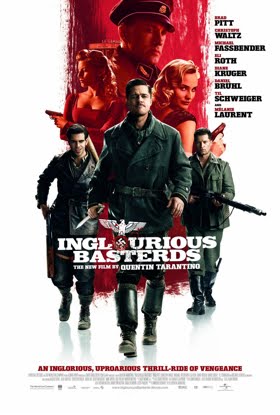
Inglourious Basterds (2009)

Wednesday, 9 September 2009, 6:14 pm | Comments (2)

Inglourious BasterdsIt was worth the wait.

Quentin Tarantino has been promising to unleash his World War II epic Inglourious Basterds upon us for over a decade. In the choppy wake of the critic-dividing Grindhouse experiment, Basterds is not only a return-to-form for the acclaimed director – it's perhaps his finest film yet.

Tarantino's love and appreciation of cinema is evident in virtually every frame of Inglourious Basterds; the film itself builds toward a finale set during the premiere of Joseph Goebbels' latest propaganda flick. Ostensibly a revenge tale, Basterds serves up an alternate history of World War II that is ultimately a propaganda movie of its own – and arguably a statement on violence in film.

Inglourious Basterds is perfectly paced, playing out like an on-screen novel; indeed, the film itself is split into five chapters during which Tarantino's knack for dialogue flourishes. Unlike those in most films, Inglourious Basterds' lush, natural conversations play out for longer than a mere couple of minutes – few directors could pull off an opening scene that is a fifteen minute conversation as well as Tarantino does here with an engaging sequence in which a Nazi interrogates a French farmer who may be harbouring Jews.

What follows is a sprawling tale as a vengeance-driven daughter of a slaughtered Jewish family, a defecting German actress, members of the British military, the Nazis and a group of OSS soldiers (the titular Basterds) converge, as characters do in Tarantino films, for a violent confrontation.

Although an ensemble picture, Inglourious Basterds benefits from just one megastar in its cast: Brad Pitt as beefcake Lieutenant Aldo Raine, who leads the Basterds on a mission to collect 100 Nazi scalps each. The rest of the cast (with the possible exception of Mike Myers, whose British general has overtones of Austin Powers) is mostly rounded out by a troupe of capable unknowns.

Two of the movie's stars shine particularly bright: Mélanie Laurent as Shosanna Dreyfuss, a Jewish girl whose family was murdered by the Nazis, and Christoph Waltz as Hans Landa, the man who ordered the deaths. Laurent's moving performance grounds the film in some semblance of reality, while Waltz, quite simply, is phenomenal; his nuanced performance as Inglourious Basterds' main antagonist is indescribable – a dead certainty for a Best Supporting Actor Oscar nomination.

There are a couple of jarring additions, including one of two sequences narrated by Samuel L. Jackson that overtly explains the explosive properties of nitrate film, but in the wake of some brain-crushingly moronic summer blockbusters, Inglourious Basterds is a gust of fresh air.

As expected for a Tarantino flick, violence abounds, and if you're likely to get squeamish at the sight of Raine and his cronies hacking the scalps off of evil Nazis, you have been warned. But when Tarantino (via Brad Pitt) professes during the film's final scene that Inglourious Basterds may just be his masterpiece, it's very difficult to disagree.

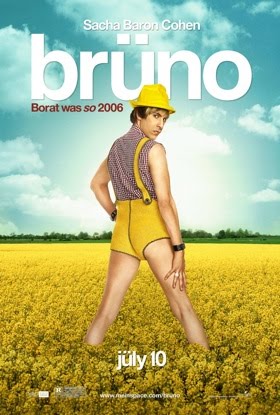
Brüno (2009)

Saturday, 29 August 2009, 9:47 pm | Comments (0)

BrünoThe phenomenon of the difficult second album is alive and kicking in Brüno, Sacha Baron Cohen's follow-up to the brilliant (and brilliantly titled) Borat: Cultural Learnings of America for Make Benefit Glorious Nation of Kazakhstan. But while Brüno doesn't recapture the magic of watching Cohen's hapless Kazakhstan reporter navigate conservative America, it's often hilarious, which is more than can be said for most comedies that wind up in cinemas.

Brüno Gehard is Cohen's third creation from Da Ali G Show. In the guise of a fish-out-of-water documentary à la Borat, Cohen sends the extroverted gay Austrian fashionista to America with one goal: to become famous. In our current celebrity-soaked climate, it's a ripe target for satire and Cohen milks it wonderfully. "I'm going to be the biggest Austrian since Hitler," Brüno proclaims.

What follows is essentially a series of sketches/stunts/pranks loosely strung together by Brüno's pursuit of fame and his assistant's assistant's (no typo there) romantic pursuit of Brüno.

In perhaps the film's most cringe-worthy scene (or at least the most cringe-worthy scene that doesn't involve talking male genitalia), a parade of mothers spruik their babies to Brüno in an effort to have their children feature in a photo shoot. Shockingly, the parents show no qualms about their children potentially having liposuction, wearing Nazi uniforms or appearing crucified as long as their child has a shot at stardom. As an diatribe against fame, Brüno frequently hits a bull's-eye.

Of course, Brüno's other target is prejudice. It's an attack that's only partly successful as Cohen's character obviously embodies all the gay stereotype characteristics that the film itself would aim to stamp out. Fortunately, Cohen's unwitting co-stars are well-picked, including a gobsmacking sequence in which US Republican presidential candidate Ron Paul reacts horribly to Brüno's none-too-subtle passes.

Comparisons to Borat are inevitable given Brüno would never have been made were it not for the surprise box office success of the former picture. This follow-up is a much more uneven film, chiefly for the greater proportion of staged set pieces featured. However, Cohen's knack of nailing those stunts in which he would have had just one chance to do so is consistently impressive. This is never more apparent than during Brüno's joint interview with a Palestinian politician and a former Mossad agent, as well as in a remarkable separate encounter with an alleged terrorist leader.

Cohen's slapstick pratfalling is also a joy to behold. A sequence in which Brüno shows up at a fashion show in Milan while wearing a velcro suit is hilarious in its simplicity.

Brüno's crass, controversial and confrontational humour will obviously not appeal to all, but there are more than enough laughs here to justify a watch for fans of Borat's satirical stunt comedy.

Public Enemies (2009)

Sunday, 23 August 2009, 11:17 am | Comments (4)

Public EnemiesThere's something oddly unengaging about Michael Mann's Public Enemies that keeps the film from achieving greatness. Instead, it's merely good. With the director of Heat and Collateral (we'll overlook that sketchy Miami Vice remake) at the helm, it's disappointing that this tale of John Dillinger, one of history's most infamous criminals, isn't the bona fide classic it had the potential to be.

An adaptation of Bryan Burrough's Public Enemies: America's Greatest Crime Wave and the Birth of the FBI, 1933-43, Mann's film sees Johnny Depp take on the role of Dillinger with a cool, restrained performance that truly sells the character as a real person. It's the central performance Public Enemies needed, given the script itself is rather light on character development; despite clocking in at nearly two-and-a-half hours in length, the film wells too often on plot at the expense of character.

Elsewhere, Christian Bale lends his trademark gruffness to Melvin Purvis, the FBI agent tasked with hunting down Dillinger and his gang, while Marion Cotillard is Billie Frechette, whose romance with Dillinger is sadly underdeveloped.

The real standout, though, is Billy Crudup (last seen all blue and naked as Dr Manhattan in Watchmen) who brings J. Edgar Hoover to life in a minimal amount of screen time.

Stylistically, Public Enemies is a mixed bag. The film is shot in digital which, while visually impressive, is seemingly at odds with the period setting. It's also quite a claustrophobic picture, with Mann often choosing to rely on tight shots to convey a sense of intimacy with the characters; this is at the expense of a feel for the era, which one doesn't get a sense of until some way into the film.

Thankfully, the picture does gather steam as the FBI closes in on Dillinger and his gang – Public Enemies' denouement is as strong as the rest of the film should have been.

One area that scores a direct hit is the film's sound – the Tommy Gun has never sounded as vivid and powerful as in Public Enemies. Each bullet fired is accompanied by a violent crack. If only the rest of the film were as sharp.

Transformers: Revenge of the Fallen (2009)

Sunday, 26 July 2009, 4:35 pm | Comments (1)

Transformers: Revenge of the FallenUp until last week, I thought I understood popular culture. I knew reality television would never produce anyone but absolute cretins. I believed celebrity gossip to be a driving force behind the spread of mankind's stupidity. And I accepted no film would ever bludgeon my senses like 2005's Stealth, the Jamie Foxx actioner about a talking plane that turns evil.

And then I saw Transformers: Revenge of the Fallen and suddenly the whole world unravelled before my very bleeding eyes.

Where to start? Perhaps by pointing out that the film's robots (and I'm including the so-called humans in this category for reasons that become clearer with each chunk of moronic dialogue mumbled between explosions) are as soulless, boorish, lumbering, clunky, hulking and unnecessary as the film itself.

Granted, this is a franchise based on a toy line (and an inane one at that) and the first film could only be considered passable in a guilty, check-your-brains-at-the-door kind of way, but my God, Revenge of the Fallen is dumb, even by Transformers standards.

It's pointless dissecting the acting, casting, music, cinematography or direction, as all are as subtle as a cannonball to the face. Quite simply, it's a film where the only thing that's special are the effects, and even those are little more than a forgettable mishmash of pixels.

There's a scene towards the end of the film where, for reasons too moronic to explain, a Decepticon is seen climbing one of Egypt's Great Pyramids. As the camera pans up to reveal the robot, the audience is treated to a bird's-eye view of a pair of giant wrecking balls clanging together. Transformer testicles. Proof positive Transformers: Revenge of the Fallen is utter bollocks.

At least I still have the undeniable, unquestionable, irrefutable assumption that no film this vapid will ever become a box office hit. Oh.

Oscar sees double in 2010

Thursday, 25 June 2009, 7:40 pm | Comments (0)

Hollywood will congratulate itself twice as much in 2010, thanks to yesterday's announcement that the Academy of Motion Picture Arts and Sciences will double the Best Picture field from five to 10 nominations at next year's Oscar ceremony.

"After more than six decades, the Academy is returning to some of its earlier roots, when a wider field competed for the top award of the year," said Academy of Motion Picture Arts and Sciences President Sid Ganis. "The final outcome, of course, will be the same – one Best Picture winner – but the race to the finish line will feature 10, not just five, great movies from 2009."

It's a strange move for the Academy, and one that is almost certainly a response to last year's Oscars, which were criticised for overlooking acclaimed genre fare like The Dark Knight and WALL·E.

The last time 10 movies were in the running for Best Picture was in 1943, when Casablanca took home the award. The following year saw the field restricted to five nominees, an imposition that's been in place ever since.

While mainstream films like Pixar's Up – currently enchanting critics the world over – are likely to benefit from the new rules, the widened field will probably only result in the inclusion of a couple of token popcorn flicks that, while critically hailed, have a snowball's chance in hell of actually winning. Such additions may, however, popularise an awards ceremony that is increasingly under fire for only recognising a certain type of film, which may be precisely what the Academy has in mind with this revamp.

In wonder at Alice...

Tuesday, 23 June 2009, 8:47 pm | Comments (2)

Alice in WonderlandI try to keep this blog for review-ish posts and my Twitter feed for pointing out odd nuggets of pop culture that catch my attention. However, I couldn't resist highlighting these stunning pieces of concept art for Tim Burton's upcoming film, Alice in Wonderland.

If ever there was a story seemingly tailor-made for Burton's eccentric style, Lewis Carroll's Alice's Adventures in Wonderland must be it. The kooky director looks to be on top form here, coming off the back of the fantastic Sweeney Todd.

In a word, the art is breathtaking. These character images perfectly capture the bizarre dystopia dreamt up by Carroll for the Alice books.

Be sure to check out USATODAY.com for an interactive look at some of the artwork for the film.

Alice in WonderlandAlice in Wonderland

Alice in WonderlandAlice in Wonderland

Burton's Alice in Wonderland is a live action/stop motion/motion capture adaptation set 10 years after the original stories and sees the title character return to Wonderland with no recollection of her first adventure there. The usual Burton stalwarts are all set to appear, including Johnny Depp, Helena Bonham Carter, Alan Rickman and Christopher Lee. They are joined by Mia Wasikowska as Alice. The film will be released in glorious IMAX 3-D.

Star Trek (2009)

Sunday, 14 June 2009, 8:20 pm | Comments (1)

Star TrekIn the wake of the bland and forgettable X-Men Origins: Wolverine, J.J. Abrams' Star Trek is refreshing proof that there's still life in the old prequel/origin concept.

The punchy title of this, the eleventh entry in the Star Trek series, reflects the confident, stripped-back nature of the film. Gone are the unattractive roman numerals, indicating an impenetrable byzantine storyline, along with the confusing subtitles referring to incidents and characters that further alienated casual viewers.

Star Trek (re)introduces us to Captain James T. Kirk (Chris Pine), Spock (Zachary Quinto), Dr Leonard "Bones" McCoy (Karl Urban), Nyota Uhura (Zoe Saldaña) and the rest of the crew of the U.S.S. Enterprise as they meet for the first time at the Starfleet Academy.

However, the gang's first mission puts them to the ultimate test when they come up against a band of time-travelling Romulans (lead by Eric Bana's Captain Nero) hellbent on destroying Earth by using a drill containing an element called red matter that will open up a black hole when placed in the planet's core. Or something. To be honest, it's too convoluted to even bother taking the storyline seriously.

Despite this, the reimagined Trek (re)creates an entire universe that isn't worlds apart from our own. Wisely setting much of its action on Earth, Star Trek is populated by flawed heroes. Kirk, for instance, is strong-willed but cocky, while Spock is constantly conflicted by his mixed heritage.

The cast do a superb job of resurrecting classic characters, embodied for decades by the same actors. Pine and Quinto are particular highlights; neither opt to ape their predecessors, but both manage to retain the key elements that made the characters so iconic in the first place. Leonard Nimoy gives a heartfelt but contrived cameo as an older Spock, providing a neat link to the franchise's roots. Simon Pegg's hyperactive Scotty and Bana's forgettable Nero may be the only casting bum notes.

Rich in the themes that often dominate J.J. Abrams' TV work – chiefly, destiny – Star Trek's script ingeniously uses its central plot device of time travel to create a parallel timeline that effectively wipes clean anything made canon in the old Trek, and creates great potential for future instalments. Sure, the action and special effects dominate, but Roberto Orci and Alex Kurtzman's script ensures things move along so swiftly – and with enough humour – that the whole affair is never anything other than fun.

Yes, the geeks-only Star Trek franchise has been given a terrific Casino Royale-esque reboot. But whereas Casino Royale injected new life into a series that was still bringing in the big bucks, J.J. Abrams' Star Trek successfully reinvigorates a franchise that had previously appealed only to an increasingly narrow audience.

And once Leonard Nimoy delivers that immortal voiceover from the original Star Trek series during the film's final reel – like Daniel Craig's triumphant delivery of 007's famous introduction at the end of Casino Royale – it's evident that the series has truly become reborn.

X-Men Origins: Wolverine (2009)

Saturday, 30 May 2009, 3:58 pm | Comments (0)

X-Men Origins: WolverineI was anticipating a leisurely Saturday afternoon at the cinema. Having left home in good time, I drove to Westfield Bondi Junction to discover utter chaos in the carpark. After twenty minutes of dizzying circling in a desperate attempt to find a parking space, I looked at my watch and questioned whether I would ever make it to see X-Men Origins: Wolverine.

I finally found a spot somewhere in the earth's outer core and did that awkward-looking half-walk-half-run to the movie theatre. Only then did I realise I'd still made it to the cinema in time to catch the last twenty minutes of advertisements before the film began. Enduring countless commercials, each more irritating than the last, I found myself once again wondering whether I would ever see Wolverine.

Sadly, my journey to the cinema contained more uncertainty and more suspense than the entirity of the latest instalment of the X-Men cashcow.

The greatest hurdle of the origin film is to surprise the audience with a story of which they already know the outcome. In the case of X-Men Origins: Wolverine – a prequel – it's a particularly lofty barrier, given we've already seen Hugh Jackman's sideburned mutant slash and scream his way through three earlier (or later, I guess) films of varying quality.

Director Gavin Hood, from a script by David Benioff and Skip Woods, sadly seems to skip over possibly the most compelling period of James Logan's life in a gritty credits sequence that sees the ill-tempered mutant fighting his way through the 20th century's numerous wars alongside his fiery half-brother Victor Creed (Liev Schreiber). Instead, the bulk of the film is concerned with Logan's involvement with a group of forgettable mutants led by Danny Huston's equally forgettable William Stryker (so coldly played by Bryan Cox in the excellent X-Men 2) and his relationship with his half-brother.

In hiring Hood, who helmed the terrific Tsotsi, I'd hoped for a more cerebral superhero film, akin to Christopher Nolan's potential-filled Batman Begins. Unfortunately, Wolverine is lumbered with the kind of overwhelming CGI, over-choreographed fight scenes and underdeveloped characters that are the hallmarks of lesser comic book adaptations (see: Fantastic Four, Daredevil, Spider-man 3). Even Brett Ratner's much-maligned X-Men: The Last Stand contains more panache than that which is on display here.

The film's key moment, naturally, comes when Logan agrees to participate in the surgery that causes his skeleton to be bonded with an indestructible metal called adamantium. Or something. But having already seeing Jackman (and Troye Sivan as a young Logan) brandish his claws and scream skywards several times before this point, the only real transformation the character appears to undergo is aesthetic.

Suitably, this is Jackman's film, and he does a fairly admirable job of carrying it. Unlike the previous films' reliance on an ensemble cast, only Schreiber and Huston could be considered to have supporting roles here, with the remainder of the picture's characters reduced to mere cameos. Lost stars Dominic Monaghan and Kevin Durand make brief appearances as Bradley (a mutant who can manipulate electricity) and the Blob (clue's in the title) respectively, while Lynn Collins plays Wolverine's romantic interest. Ryan Reynolds, who appears in roughly five minutes of film as Deadpool, is reportedly being considered for his own spin-off, though there's little indication here as to why it would be a worthwhile investment of anyone's time. Only Taylor Kitsch leaves any kind of impression with his sassy interpretation of Gambit.

A post-credits scene points towards an already-announced sequel that will take the character to the Far East where he will hopefully meet characters more interesting and have adventures more gripping than those presented here. Whichever film comes first – be it this prequel-spin-off-sequel, the Deadpool flick, or the infinitely more appealing Magneto spin-off – it's apparent that the X-Men franchise needs to undergo a more exhaustive transformation than that which Wolverine endures here.

The Boat That Rocked (2009)

Friday, 15 May 2009, 11:18 pm | Comments (0)

The Boat That RockedThe scent of fresh popcorn wafts through the cinema as a throng of people march their way across the unnaturally sticky floor before getting settled into their seats and noisily wrestling with bags of M&Ms. Everyone's wallets are (a frankly absurd) $16.50 lighter, but no-one is complaining. It could only mean one thing: Summer Blockbuster Season™ is here!

Or there, rather. There being the northern hemisphere. Here, we're lumbered with the somehow less exciting winter blockbuster season. Still, doesn't really matter what the weather's like outside, right? This is the time to sit back, relax and enjoy popular cinema at its most popular.

So, you ask, which balls-to-the-wall, special effects-laden, action-fest did I kick off with? X-Men Origins: Wolverine? Star Trek? Angels & Demons? How about the latest film from the man behind Love, Actually and Four Weddings and a Funeral? Aren't I a good boyfriend?

To be fair, the association with these and the other romantic comedies on Richard Curtis' CV doesn't do justice to The Boat That Rocked, which is an unabashed ode to rock and roll.

It's the mid-1960s, a time of political upheaval, as Great Britain embraces a more liberal lifestyle. One of the key figures is the pirate radio station, Radio Rock, broadcast from a ship in the North Sea populated by a motley crew who burst out one popular track after another to the enjoyment of millions of listeners and the irritation of the country's conservative government.

Our ticket onboard Radio Rock comes via Carl (Tom Sturridge) who is sent there by his mother (Emma Thompson). She claims it's to be with his godfather (Bill Nighy, just being Bill Nighy), but there may be a deeper reason for it.

Essentially an ensemble comedy, Curtis' script flits between the exploits of boat's boisterous male crew members, including Nick Frost, Tom Brooke, Chris O'Dowd, Rhys Darby, Ralph Brown, Phillip Seymour Hoffman and Rhys Ifans. Onshore, Kenneth Branagh (as MP Dormandy) manipulates Jack Davenport's ambitious civil servant, Twatt (the name of whom may be the film's cheapest laugh), into finding some way to legally shut down Radio Rock for good.

Whereas Love, Actually (possibly the only romantic comedy I can stomach) worked by showing its large cast of characters through a series of vignette-type set-ups, The Boat That Rocked isn't nearly as deft in its handling of such a diverse group, even with its bloated 129 minute runtime. There are moments when the story really begins to gather steam before it suddenly changes direction to focus on a different shipmate.

Despite the muddled storytelling, the cast serve as well as one would expect in a light-hearted comedy such as this. While there are no real stand-out performances, O'Dowd, Branagh, Darby and Hoffman are among the most memorable stars. Special mention, too, ought to go to Ralph Brown's early morning DJ Bob, a man so reclusive his fellow crew members remain unaware that he's actually onboard; Brown's understated turn is the picture's real heart.

Props to Curtis for finding a unique premise and setting for a comedy flick, which the film exploits to the fullest extent. Indeed, The Boat That Rocked's final act, in which the ship's crew decide to evade capture by pulling up anchor, is perhaps its strongest.

Fans of the era's music will no doubt find much to enjoy, even if the film is positively slathered in sentimentality. It may be adrift more often than it steers the course, but The Boat That Rocked is the kind of inoffensive gender-mutual date film that will likely entertain most but be remembered by few.

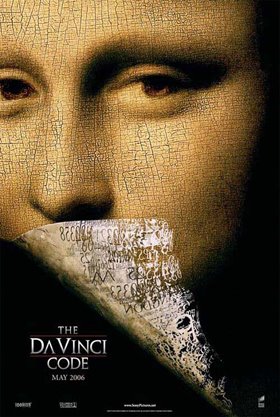
The Da Vinci Code (2006)

Saturday, 9 May 2009, 9:40 pm | Comments (2)

The Da Vinci CodeIn anticipation of Angels & Demons, the prequel-cum-sequel to The Da Vinci Code, a few weeks back, I revisited Ron Howard's adaptation of the second Robert Langdon bestseller.

Unless you've spent the last three years living under a rock, which was, itself, situated under an even bigger rock, you'll be aware of the critical mauling Howard's film received upon its release; the picture was reportedly booed at by critics attending its premiere at the 2006 Cannes film festival.

At the time, I dismissed the claims as Tall Poppy Syndrome at work. With Dan Brown's books seemingly shifting more copies than there are human beings to read them, the time was right to cast aspersions on the man's work. Bizarrely, Tom Hanks' hairstyle even came under heavy fire. But was it deserving of the attacks? (The film, not Tom Hanks' hair.)

In this viewer's eyes, no. However, it must be said that the film version of The Da Vinci Code, in spite of (or perhaps because of) an unwavering devotion to its source material, is a rather different beast to The Da Vinci Code, the novel. Where Brown's page-turning yarn takes its readers along for the ride, allowing us to solve the book's numerous riddles alongside symbologist Robert Langdon and cryptographer Sophie Neveu as we swiftly precede through one brief chapter after another, Howard's adaptation is comparatively languid in pace.

It's a key difference, and one that it appears many critics were unable to overcome. Audiences, however, flocked to see The Da Vinci Code, prompting the film to rake in over $700 million worldwide. These are the same audiences who fervently snapped up copies of the novel before reading it on trains, planes and buses the world over before telling their friends to do the same. It's obvious that Howard and screenwriter Akiva Goldsman both belong to this readership and, subsequently, made their adaptation for this readership, as the film is steadfast in its faithfulness to Brown's controversial tome.

The result is a rich, thinking person's thriller that will be enjoyed by anyone who eagerly flipped through The Da Vinci Code's pages. For the most part, the characters are brilliantly brought to life with pitch-perfect casting. Indeed, with just one key exception, it's difficult to imagine anyone else portraying the numerous characters populating The Da Vinci Code: Audrey Tautou, Jean Reno, Paul Bettany, Jürgen Prochnow and Alfred Molina bring their respective parts to life with ease, while Sir Ian McKellan steals each and every scene he's in as Holy Grail enthusiast Leigh Teabing.

The one omission from this list is, oddly enough, leading man Tom Hanks. From the moment Robert Langdon is summoned from a book signing to assist in the murder of a curator at the Louvre who may or may not have been a high-ranking member of a secret religious society, Hanks is strangely wooden and disconnected. In one of the novels, Brown likens Langdon to Harrison Ford, whose dynamic persona is at ends with Hanks' apparent staidness. A thriller this talky needs a vibrant lead to carry it, and it's only during the movie's final sequence – a real standout of the film, accompanied as it is, by Hans Zimmer's dazzling soundtrack – that Hanks really comes into his own as Langdon.

Elsewhere, Howard stunningly realises the book's numerous flashback sequences, thanks to some magnificent cinematography by Salvatore Totino, who is also responsible for giving Paris the appealing golden allure it possesses in the film. Indeed, the whole movie has a look and feel that's all its own. The Da Vinci Code truly feels like a unique film; not your typical summer blockbuster.

Perhaps an injection of that blockbuster vigour is precisely what The Da Vinci Code needed. It's all played too straight at times. Ian McKellan offers up considerable energy to the proceedings, as do the sequences in which Langdon uses his eidetic memory to solve the puzzles on his quest to unearth the truth. It's the bits in between that lack in zest. Meanwhile the final revelation doesn't nearly carry the weight that it ought to. Despite its earnestness, The Da Vinci Code remains largely compelling viewing.

For viewers after a simpler, swifter and more explosive thriller, I suspect Angels & Demons will be up your alley. It appears to remedy The Da Vinci Code's flaws in that it's more of a straight, race-against-time type affair that's relatively light on exposition and heavy on action.

I watched The Da Vinci Code's extended edition on DVD, which adds another 25 minutes or so to the theatrical cut. While this may even further put off those detractors who found the film too dry and talky, fans of the novel will relish seeing it all up there on screen. Don't expect The Da Vinci Code to be a traditional blockbuster, overlook its absurdities (and if it's that disconcerting, Hanks' hair), and watch Dan Brown's novel come to life.

Da Vinci Code sequel announced

Tuesday, 21 April 2009, 11:51 am | Comments (0)

It's hard to believe that it's been nearly six years since The Da Vinci Code first hit bestseller lists worldwide. Probably because during those six years, every living soul on the face of this planet seems to have read the real-time thriller, keeping it at the top of said lists for most of that time. At the height of the book's popularity, airlines may as well have substituted their in-flight magazines with copies of the controversial thriller. A money-raking film adaptation boosted sales even further.

With next month's film adaptation of Angels & Demons set to bring Harvard symbologist Robert Langdon back into the limelight, Brown has today cannily announced the long-awaited follow-up to The Da Vinci Code.

The Lost Symbol will be released this September with US publishers Doubleday giving it a massive five million copy print run. According to the press release, the third Langdon thriller will take place over a 12 hour period, rather than Brown's four previous books, which were all set over 24 hours.

Until today, the novel possessed the working title of "The Solomon Key", which, though evocative of The Da Vinci Code, is a bit less generic than The Lost Symbol. Though the press release announcing the novel's publication doesn't give any clues as to its plot, previous reports suggest the book would see Langdon on US soil for the first time, entangled in a mystery involving the Freemasons.

Variety reports, rather unsurprisingly, that Columbia Pictures is moving forward with a film adaptation of The Lost Symbol set to follow the release of Angels & Demons.

Speaking of which, Columbia have released a sneak peek of Angels & Demons highlighting Hans Zimmer's soundtrack. For me, one of the highlights of the underrated Da Vinci Code adaptation was Zimmer's score, which culminated in the breathtaking "Chevaliers de Sangreal". The Angels & Demons score will take this track and expand upon it as a theme for Langdon. Sounds like it could be one of the soundtracks of the year for this film geek.

The Living Daylights (1987)

Monday, 20 April 2009, 8:49 pm | Comments (0)

The Living DaylightsDespite being a bit of a James Bond geek, I have to confess to having not seen most of the films in several years. To be fair, I've been living overseas for a few years, far away from the massive 20-film DVD box set that weighs down the fourth shelf of my new bookcase. But perhaps most crucially, since the arrival of Daniel Craig's superb 007, it's tough to settle for anything less.

That said, if there's one era of films it's worth revisiting in light of Craig's brooding, bloody and brilliant Bond, it's Timothy Dalton's. While Dalton has a sizeable following among hardcore fans, his two 007 outings are largely overlooked by the general public. Now that audiences have accepted a Bond who doesn't raise an eyebrow or offer up a groan-inducing quip at every opportunity, it's as good a time as any to return to revisit Dalton's debut Bond film, 1987's The Living Daylights.

The fifteenth 007 film was initially conceived as a Casino Royale-esque origin story exploring James Bond's roots. Despite this idea being shelved, The Living Daylights is a clear return to the character's edgier roots. Shying away from the excesses of the Roger Moore era, The Living Daylights is a great send-off as the series' last Cold War thriller.

Ian Fleming's "The Living Daylights", one of several short stories posthumously collected in Octopussy and The Living Daylights, is niftily used by screenwriters Michael G. Wilson and Richard Maibaum as a launching pad for the movie's fairly down-to-earth plot, which sees 007 assisting with the defection of a KGB agent. When the defector is subsequently abducted from British hands, Bond discovers a plot by a war-obsessed arms dealer to frame a Soviet general for the murder of a number of British spies.

Dalton, a Shakespearean-trained actor, has a fine understanding of Fleming's character, imbuing him with a dark, often nasty streak (witness the violent way in which he uses General Pushkin's mistress as a distraction). The actor had previously turned down the part in 1968 before vying for the role in The Living Daylights alongside Sam Neill and Pierce Brosnan (who accepted the role before NBC renewed his Remington Steele contract); both of whom lack Dalton's steely seriousness.

The film isn't entirely devoid of humour, and, unlike Dalton's violent follow-up Licence to Kill, most of it is well-placed. Dalton's grim delivery of Bond's one-liners – sparingly used here – lends some black humour to the proceedings.

The supporting cast is led by Maryam d'Abo as Kara Milovy, a professional cellist with whom Bond shares a surprisingly deep relationship. D'Abo makes the most of a pretty beefy Bond girl role. John Rhys-Davies is enjoyable as the underused General Pushkin, a part originally written as General Gogol, Walter Gotell's recurring KGB boss (the role was re-scripted when Gotell fell ill, though he does cameo during the film's final scene). Robert Brown, Geoffrey Keen and Desmond Llewellyn all reprise their recurring roles, outshining an embarrassingly wooden Caroline Bliss in her first appearance as the new Miss Moneypenny.

Where The Living Daylights does flag is in its lack of a strong – or even lead – villain. While Jeroen Krabbé has lots of fun as the slimy Koskov, Andreas Wisniewski's Necros is little more than a diet Red Grant, and Joe Don Baker, who would later return to the series to play a CIA ally in two of Pierce Brosnan's films, fails to leave an impression as arms dealer Brad Whitaker.

Director John Glen, who previously helmed Roger Moore's last three Bond films, is reinvigorated by the series' more serious approach. Despite a character-intensive script, the film does deliver some knockout action sequences. A training exercise gone awry on Gibraltar's rocky landscape makes for a memorable pre-credits sequence, while a Tangier-set rooftop chase and a thrilling climax involving a drugs-laden cargo plane are also among the action highlights.

Veteran Bond composer John Barry returns to compose his final 007 score, an unusually electronics-heavy soundtrack that ranks among his best. The most successful Bond soundtracks always use a great song as a base, and The Living Daylights has not one, but three. In addition to a-ha's catchy title song, The Pretenders contribute two excellent tracks that also form the basis of Barry's score: the brash "Where Has Every Body Gone" and "If There Was a Man", a sweet romantic ballad that also closes the film.

For fans of Daniel Craig's Bond who may not be acquainted with some of the earlier films in the series, The Living Daylights is a great place to start.

Duplicity (2009)

Wednesday, 8 April 2009, 10:42 am | Comments (0)

DuplicityA twist can make or break a film. The success of an entire movie can hang on the employment of this simple but overused plot device. It's incredibly difficult to pull off a twist that not only blindsides the audience, but also makes narrative sense. In short, a truly successful twist is a rare occurrence.

Writer-director Tony Gilroy makes it clear from Duplicity's first act that the film will offer audiences more twists than a Chubby Checker album before the closing credits roll. Gilroy, the screenwriter behind the Jason Bourne films, has created a slick, genre-defying romantic/comedy/thriller set in the cut-throat world of corporate espionage. It's relatively virgin territory and the film is richer for being set in it.

Clive Owen is Ray Koval, an MI6 agent who was once duped by Julia Roberts' Claire Stenwick, a CIA operative. Both leave their jobs for the private sector. When the pair cross paths again five years later, they concoct a scheme to pull a sting on their employers. Though all is not what it seems, and the duo's convoluted history is revealed throughout the film by a series of flashbacks.

Neither Owen nor Roberts are flexing their acting muscles here, though both well suit their respective roles. Paul Giamatti and Tom Wilkinson, meanwhile, are terrific in their supporting roles as the heads of the two corporations Ray and Claire are attempting to swindle.

Duplicity is refreshing as a talky low-key thriller, which could have been just as easily brimming with violence or explosions or explicit sex – and probably be more marketable as a result. Instead, Duplicity spins an engaging yarn reliant solely on the sparky dialogue between its two main players.

Oh, and its abundance of twists. Do they work? For the most part, yes. Once it becomes clear that the film's title refers not only to the relationship between Ray and Claire but also to that between Gilroy and the viewer, we are better positioned to follow Duplicity's convoluted story. With this knowledge, however, it's easier for the viewer to attempt to remain one step ahead of the story. Fortunately, the movie's final twist is left-field enough that only the most prescient of viewers will guess it.

As a brisk and enjoyable time-killer, Duplicity is great fun. It might be a bit too elaborate for its own good, but if, like me, you like to keep your brain switched on while in the cinema, Duplicity will be right up your alley.

The X-Files: Fight the Future (1998)

Tuesday, 17 March 2009, 11:32 pm | Comments (0)

The X-Files: Fight the FutureRevisiting 1998's The X-Files: Fight the Future after the release of the disappointing The X-Files: I Want to Believe only amplifies the strengths of the former and the flaws of the latter.

Unlike the "Is that it?" reaction elicited by last year's long-awaited sequel, Fight the Future proves itself to be one of the best TV-to-film transitions ever, deftly turning an already-cinematic show into a bona fide theatrical film.

Mostly filmed between The X-Files' fourth and fifth seasons, but released and set between its fifth and sixth, Fight the Future represents The X-Files at its creative peak. While fans of the series are no doubt better positioned to understand its tangled conspiracy yarn within the context of the show's ongoing story, the movie also offers a terrific starting point for franchise newcomers.

David Duchovny and Gillian Anderson reprise their roles as FBI agents Fox Mulder and Dana Scully, believer and sceptic, who discover evidence suggesting a Dallas building was bombed in order to destroy several human corpses infected with an extraterrestrial virus.

X-Files regulars Frank Spotnitz and Chris Carter (who together wrote the script) and director Rob Bowman make the most of cinema's broader canvas, both narratively and technically. Fight the Future expands on The X-Files' ambitious plot, presenting an epic conspiracy tale spanning four continents and 35,000 years in history. Bowman makes certain that every extra cent of the film's sizeable budget winds up on screen. All of the show's staples are present and accounted for – paranormal occurrences, shadowy conspirators meeting to ambiguously discuss their plans, unresolved sexual tension between Mulder and Scully – but on a much grander scale. A Hitchcockian chase through a corn crop is just one of a number of memorable action scenes.

The impact of agents' investigation – which sees them hung out to dry by their own agency – allows the film to examine the issue of trust, a key theme that runs throughout the series, characterised by its popular catchphrase: "Trust no-one". Infiltrating military facilities and chasing rogue tanker trucks, Mulder and Scully find they have only each other to depend on, and the will-they-or-won't-they? romantic subplot is only one aspect of their engaging relationship.

Most of the series' recurring characters appear, including Mitch Pileggi as assistant director Walter Skinner, Tom Braidwood, Dean Haglund, Bruce Harwood as conspiracy theorists The Lone Gunmen and William B. Davis as the show's iconic villain known only as the Cigarette-Smoking Man. In addition, Martin Landau is superb as Alvin Kurtzweil, a paranoid doctor whose suspicions may or may not be founded.

The film falters during an action-dominant third act that fails to give any meaningful payoff to the fireworks, but Fight the Future, in true X-Files style, delivers an open ending that leaves the viewer with an insatiable urge to continue untangling the labyrinthine plot via the popular TV series.

Topkapi (1964)

Thursday, 12 March 2009, 11:21 pm | Comments (0)

TopkapiI probably should have prefaced yesterday's fairly positive review of Brett Ratner's After the Sunset with the following: I'm a huge fan of the heist flick. Who hasn't been stuck in line at a bank or bored in a museum only to find themselves wondering how they could purloin something valuable from the premises – and get away with it? The closest I've ever come was when I forgot to return my baggage claim card at Amsterdam's Rijksmuseum. I'm counting on that card becoming very valuable one day.

There's something fascinating about a genre that positions a thief as the hero of a film. Ethically, you shouldn't root for the protagonist, but the joy of a heist film – and, particularly, a heist film done well – is that it leaves the viewer with a sense of appreciation. You admire the thief for pulling off what is often a remarkably elaborate crime.

For a superior, genre-defining heist comedy, look no further than Jules Dassin's Topkapi, the 1964 adaptation of Eric Ambler's The Light of Day. It is, quite simply, a heist film with everything: a gorgeous setting, a terrific cast, a good dose of humour and most importantly, a great caper.

Peter Ustinov landed an Oscar for his role here as Arthur Simpson, a bumbling small-time shyster, himself unwittingly duped by all and sundry. After Simpson is recruited by a pair of thieves posing as tourists (played by Melina Mercouri and Maximilian Schell) to drive their car across the Turkish border, customs officers discover a hoard of arms hidden in the vehicle's body. Simpson agrees to act as an informant for the Turkish government, who erroneously believe a terrorist act is in the offing, in order to guarantee his release. In the process, he becomes entangled in a scheme to lift a priceless dagger from Istanbul's Topkapi Palace.

That Ustinov's (deserved) Oscar was for Best Supporting Actor is a curiosity, as his clueless swindler is central to Topkapi's plot. Simpson is the most amateur of the amateurs drafted by Schell's Walter Harper to pull off his heist. He remains consistently flustered, even though he is oblivious to being duped and used every step of the way. It's a terrific performance for a role that could have easily been as irritating as it is ultimately endearing.

Ustinov outshines the rest of the cast, ranging from Mercouri's rather simple temptress to Robert Morley's brilliant mechanical genius (who gets one of the picture's best sight gags involving a greasy rag). Schell's dark good looks work in his favour as the smooth Harper, while Akim Tamiroff has a lot of fun as the gang's drunken cook.

Topkapi's overarching story is a simple one, but Dassin revels in the smaller details of the heist. Monja Danischewsky's script gives the viewer obscure glimpses at Harper's plot – such as the scene in which Simpson proves his worth by dragging a couch attached to a length of rope across a room – but leaves the puzzle incomplete until the final act. The purposes of the other members of Harper's motley crew, including an acrobat and a toy-maker, are also tantalisingly, but ambiguously laid out in the lead-up to the main event.

And what an event! Topkapi's hugely entertaining heist sets a high bar for the genre, as the crew split up over two locations in order to pull off the daring theft. It's a nerve-racking sequence, wisely devoid of music. The sound of a rope tightening or a cog turning becomes deafening in a void of silence, greatly heightening the sequence's realism. It's equally gorgeous to look at, with Dassin never neglecting the stunning Istanbul scenery, even during the film's climax (from beginning to end, Topkapi is imbued with that travelogue feel so rare in contemporary cinema).

While I won't spoil the heist itself, it should be noted that Mission: Impossible's oft-parodied scene in which Tom Cruise suspends from wires above a series of motion sensors, actually has its roots here. In fact, Topkapi is said to have inspired the original Mission: Impossible television series.

Forty-five years after its release, Topkapi holds up surprisingly well. The editing in the film's opening sequence shows its age, the first act has some minor pacing issues and the movie's final scene is reminiscent of a dated sitcom, but these are just a few flawed moments. Topkapi is a landmark in the heist genre, as sharp, stunning and unique as the jewelled dagger at the centre of its story.

After the Sunset (2004)

Wednesday, 11 March 2009, 5:13 pm | Comments (0)

After the SunsetWarning #1: the following is a review of a Brett Ratner film – the much-maligned director who ran the X-Men franchise into the ground with The Last Stand and who gave us the cinematic pairing no-one asked for in the Jackie Chan/Chris Tucker-led Rush Hour series.

Warning #2: it's not an entirely negative review.

After the Sunset, a 2004 heist flick featuring Pierce Brosnan, Salma Hayek, Woody Harrelson, Don Cheadle and Naomie Harris, is a film I've always had an inexplicable soft spot for. Deep down, I know it's not a classic. Heck, superficially, I know it's not a classic. But I do consider After the Sunset a success in that overdone "light-hearted film with a cast of good-looking people set in an even better looking location" genre. Best of all, it's devoid of the kind of self-satisfied smugness that makes the Ocean's films so difficult to endure.

After the Sunset begins where most heist films end, as jewel thieves Max Burdett (Brosnan) and Lola Cirillo (Hayek) retire to the Bahamas after stealing a valuable diamond. In pulling off their last caper, the pair elude Max's FBI nemesis, Stan Lloyd (Harrelson), who's spent the past seven years of his life trying to catch him. When Lloyd shows up in the Caribbean, convinced Max is planning to steal another priceless gem on display in a berthed cruise ship, the pair form an unexpected bond.

Pretty much everything in After the Sunset has been done before and done better – for starters, check out Brosnan's superb remake of The Thomas Crown Affair – but it remains a fun, undemanding, inoffensive caper comedy.

The cast has some enjoyable chemistry; Brosnan and Harrelson make an unlikely comedy duo, sharing a number of the movie's best scenes. Meanwhile, Hayek and Harris' characters are more than just (admittedly, spectacular) eye candy (actually, After the Sunset's women are far more balanced and level-headed than the men). Cheadle's Henri Mooré, a local entrepreneurial gangster, is underused as the film's most intriguing character. Before his unsatisfactory exit, he does deliver one of the movie's best lines after Max discovers Mooré is really American: "Yes, actually, it's Moore. I put the little thing on the 'e'. Matches the culture."

After the Sunset's emphasis is clearly on comedy and characters – there's a particularly nifty gag involving Max and Stan attempting to salvage each other's relationships over dinner – but it's at the expense of the film's flimsy heists, the intricacies of which should be the jewel in a caper film's crown. Sadly, both of the movie's heists are lazily undeveloped, which is a fairly damning flaw for a film of this genre.

Ratner makes extensive use of the gorgeous Bahaman scenery and the cinematography is full of rich, vibrant colour. Meanwhile, veteran composer Lalo Schifrin, the musical genius who gave us the Mission: Impossible theme, delivers a slick, low-key score (though it reaches ridiculous heights of cheese during the movie's romantic climax).

After the Sunset is far from perfect, but there are worse ways to spend an hour and a half. It's a bit like one of those holidays where you sit about and don't do a thing – the time whizzes by quite breezily; just don't expect to have gained anything from the experience.

Watchmen (2009)

Thursday, 5 March 2009, 10:19 pm | Comments (0)

WatchmenSo, yesterday I praised the heck out of Watchmen, Alan Moore and Dave Gibbons' esteemed graphic novel set in an alternate 1985 in which the world is teetering on the brink of nuclear war. Does the much-hyped film version live up to the expectations that accompany any adaptation of such acclaimed source material?

For the most part, yes. Director Zack Snyder captures much of the spirit of the graphic novel, which offered a refreshingly cerebral take on the "superhero genre". Fans of Watchmen will relish seeing the book's unique imagery represented in live action form. Even as someone who only discovered Watchmen less than a week ago, hearing masked vigilante Rorschach's gravelly narration taken word-for-word from the book, or seeing the action scenes painfully reconstructed shot-for-shot from the graphic novel's frames, enlightened my inner geek.

Watchmen opens with the brutal assassination of a vigilante named The Comedian, whose death sparks theories of a plot against masked heroes. This opening scene, coupled with one of the best title sequences in years (a three-minute montage of moments in the lives of the earliest superheroes, accompanied by Bob Dylan's "The Times They Are A-Changin'"), is arguably the highlight of the film. In just a brief, few minutes, the audience is thrown headlong into the history of this bizarre, alternate reality. It's moving, intriguing and beautifully shot and edited.

Snyder's film remains incredibly faithful to its source material, despite lopping a number of my favourite subplots and sequences in order to get the movie's runtime down to a still-pretty-meaty 161 minutes. Snyder plans to release a director's cut on DVD, containing an extra half hour of footage, which I suspect will benefit the film greatly. (Additionally, an animated film based on the brilliantly dark "Tales of the Black Freighter" story-within-a-story from the original comic is due to be released on DVD in the near future.)

Where Snyder does deviate from the graphic novel (as opposed to excising content due to time restrictions), it's often an improvement. In particular, the villain's ultimate plot, or rather the means by which he aims to achieve it (which I criticised yesterday), is altered here, becoming a tighter, tidier scheme with the same end result. It's difficult to elaborate without spoiling the film, but it's a marked improvement on what was, for me, one of the graphic novel's few flaws. Unfortunately, the absence of the sequences missing from this cut of Watchmen mean we don't fully grasp the scope of the final act's devastation; here's hoping this will be rectified with the director's cut of the film.

Watchmen's faithful transfer to the screen is also due in large part to its cast, which doesn't contain a single A-lister (a major plus). Rather, the film is populated by a very capable group of actors who could only individually be described as "that guy/girl from...". For the most part, all embody their roles with a perfect understanding of the original book's appeal: that Watchmen's characters were not "super" heroes, but rather a random patchwork of real people with real flaws. Standouts include Patrick Wilson (that guy from The Phantom of the Opera) as Daniel Dreiberg/Nite Owl, Jackie Earle Haley (that guy from Little Children) as Walter Kovaks/Rorschach and Jeffrey Dean Morgan (that guy from Grey's Anatomy) as Edward Blake/The Comedian. All of Watchmen's characters are mired in a kind of murkiness and ambiguity that more popular superheroes don't even come close to representing.

My only minor niggles with the cast were Matthew Goode (who's almost too young for the part of Adrien Veidt) and Billy Crudup (though that may have more to do with the difficulty of depicting a character who was vaporised in a radiation accident only to regenerate in the form of a bright blue super human who possesses a range of powers, few clothes and an oft-featured bright blue knob, because he is superb in his pre-accident flashbacks). The fact that Watchmen is one of the best-cast comic book adaptations ever is a major boon in light of the story's ensemble nature.

The cinematography, special effects and costumes are all terrific. Special praise goes to Watchmen's superb soundtrack, which features a fantastic assembly of songs, each beautifully fitting and unfitting for the scenes they accompany.

Yet as much as I found to enjoy in Snyder's adaptation, I can't help but appreciate Alan Moore's snobbery that Watchmen could only ever be pulled off within the confines of the comic book medium. The writer told Entertainment Weekly in 2008, "There are things that we did with Watchmen that could only work in a comic, and were indeed designed to show off things that other media can't." I'm inclined to agree.

Even though Snyder's take on Watchmen is probably as faithful as any adaptation could ever get, everything about the story, including its very context, functions so much better in the comic book medium that any transition to film was bound to live in the shadow of its source material. Many of the book's talky sequences, often dealing with heady existential subjects, are much more engaging on the printed page than on the screen. Moreover, the absence of any equivalent to Moore's engaging and articulate written extracts that close each chapter and contextualise much of the story are sorely missed. Meanwhile, the movie's excessive violence, though accurately translated from the book, at times seems like a bone tossed at fans of the so-called "torture porn" genre. In short, the film version failed to leave me with the same sense of awe at the saga unfolding before me as the graphic novel did.

Like its original format, Watchmen probably isn't destined to be crowd-pleasing fare. I suspect it may even divide fans of the graphic novel as much as it will moviegoers (I'm hoping the director's cut will amend most of my bugbears about this adaptation). It also lacks the psychological resonance that made the graphic novel such a landmark in its medium. Nevertheless, it remains a superior addition to the superhero genre, and one that will hopefully point filmgoers towards its phenomenal source material.

Slumdog Millionaire (2008)

Sunday, 1 March 2009, 11:10 pm | Comments (1)

Slumdog MillionaireSlumdog Millionaire owned last week's Oscars, taking home eight out of a possible 10 statues, including the two big ones: Best Picture and Best Director. The $64,000 – or 1,250,000 rupee – question: is Slumdog Millionaire deserving of such recognition?

My final answer is a resounding yes.

British director Danny Boyle's acclaimed adaptation of Vikas Swarup's novel Q&A recounts the story of Jamal Malik (played at various points in time by Ayush Mahesh Khedekar, Tanay Chheda and Dev Patel), a boy from the Mumbai slums who triumphs on India's version of Who Wants to Be a Millionaire?. However, when Jamal is arrested, interrogated and tortured on suspicion of cheating, he reveals his life story, which suggests that destiny may have had a hand in his big win.

Slumdog Millionaire's peculiar conceit – film based around a game show that was surely at its most popular nearly a decade ago (Q&A featured a fictional game show) – sounds kitschy at best and downright cheesy at worst; in short, not Oscar material. But the quiz show premise makes the movie's flashback sequences surprisingly fluid, allowing the film to wonderfully explore one man's rise from India's slums and his unrelenting pursuit to be with the woman he loves.

The first thing that struck me after leaving the cinema was Slumdog Millionaire's tremendous vibrancy. The writing, direction, acting, cinematography, editing and music are all pulsing with an energy I haven't seen in a film in years; the film looks and feels completely unique. Compared to the rest of this year's Oscar contenders, including the terrific The Curious Case of Benjamin Button, it's easy to see why Slumdog Millionaire sticks out.

Its cast of unknowns adds to Slumdog Millionaire's charms. While the cast noticeably failed to be acknowledged at the Academy Awards, all capably handle all that their roles require of them. That many of the younger actors – all of whom are superb – actually come from Mumbai's slums (Slumdog Millionaire was entirely shot in India) is another feather in the film's cap. In particular, Bollywood star Anil Kapoor is a standout as the slimy host of Who Wants to Be a Millionaire?.

I've seen posters around Sydney proclaiming Slumdog Millionaire to be "the feel-good film of the decade", which, given its predominant themes of empowerment and redemption, might be a fair assumption. Yet Boyle is unafraid to pull emotional punches when the script demands it. The movie's early scenes, set in Mumbai's slums, are simultaneously colourful and upsetting. Slumdog Millionaire's most harrowing sequence – a genuinely sickening moment in which a gangster blinds a small child in order to increase his begging potential – is deftly handled as the culmination of a segment of the film in which the audience, like the children the scene concerns, are oblivious to the gangster's true intents. By contrast, Boyle gives just the right amount – and type – of levity to elsewhere balance the film's tone.

In fact, watching Slumdog Millionaire, I found myself reminded of precisely why I love going to the cinema. If only all films offered this much. The film's outcome is rarely in doubt, but Simon Beaufoy's script is so engrossing that it's perfectly acceptable to question the outcomes of the lesser aspects of the story (particularly during its vignette-esque flashbacks). Slumdog Millionaire offers a quality of romance, suspense and thrills rare in modern cinema.

It's not quite perfect. Slumdog Millionaire might be a touch too sentimental, particularly during its final act, in which the entire nation becomes enthralled by Jamal's potential win; the story has enough momentum without resorting to such clichés as people huddling around televisions in shop windows. Additionally, the Bollywood-style dance number that's intercut with the film's closing credits is at odds with the rest of the picture's Hollywood sensibilities. I also didn't quite buy a key moment in Jamal's relationship with his brother, which may have warranted further exploration.

Any flaws are easily overlooked: Slumdog Millionaire is a real winner.

Layer Cake (2004)

Thursday, 26 February 2009, 12:24 pm | Comments (0)

Layer Cake"Layer Cake? Who's in that? Daniel Craig? Nope, never heard of him." – lots of people, circa 2005

Okay, so it's not a quote I can attribute to anyone in particular, but I did hear it a lot after first seeing Matthew Vaughn's enjoyable British gangster flick in mid-2005. Just a few months later, Craig was announced as the sixth actor to take on the role of a certain enduring spy icon, and the rest, as they say, is history.

The actor's new-found fame and hit-and-miss choice of non-Bond vehicles (most recently, the not-quite-good-enough Defiance) makes Layer Cake, Craig's biggest starring role at the time, fascinating viewing. The actor seldom phones in his performances, and this is no exception.

Based on J J Connolly's novel of the same name, Layer Cake sees Craig play an unnamed drug dealer (Mr X) with ambitions to retire on the fortunes he has made in what he considers a legitimate business. However, when Mr X's boss gives him an unconventional assignment, his world is turned upside down by the chain of events it sets in motion.

While the film starts off superficially glorifying the dealing of drugs (though it's not afraid to show the consequences facing drug users), Layer Cake adheres to the gangster flick staple that sees most of its characters shuffling off their mortal coil before the end credits roll, ensuring no-one will leave the cinema plotting an illicit career change.

Vaughn, who produced Guy Ritchie's Lock, Stock and Two Smoking Barrels and Snatch, delivers a film that's tonally similar to Ritchie's acclaimed gangster flicks: there's a large cast of characters, a convoluted story, an absolutely killer soundtrack, some quotable lines and plenty of violence. However, Vaughn succeeds in toning down the excesses of Ritchie's flicks – the editing is slicker and less obtrusive – offering a tighter story in lieu of an abundance of style.

Layer Cake is a movie that warrants repeat viewings to fully unravel its intricate plot. I watched the film this weekend, having not seen it in a couple of years, only to find myself a bit lost in parts; the story takes unexpected diversions before giving us flashbacks later on to fill in the gaps. It's an unusual storytelling style, and one that requires a bit of extra attention.

The performances are all perfectly adequate, but it's clear that Craig carries the film as the enigmatic Mr X. It's another great performance from the actor. I caught Layer Cake as rumours of Craig's casting as Bond were swirling – this film completely sold me on his talents.

As X's potential love interest, Sienna Miller need only have shown up and looked pretty; needless to say, she effortlessly pulls this off. Similar could be said of the rest of the cast (except for the bit about looking pretty), including Michael Gambon, Colm Meaney and Kenneth Cranham: no-one's a revelation, but no-one lets the side down either. They all do what's required of them.

Which, come to think of it, is precisely what Layer Cake does: it might not reach the heights of Snatch or the brilliant In Bruges, but it ticks all the right boxes as a worthwhile addition to the British gangster genre.


All original content is Copyright © 2009 by popular culture... etc. | Firebug Theme by Blog Oh! Blog | Converted to Blogger Template by ThemeLib.com