Showing posts with label Television. Show all posts

Ashes to Ashes: Series 1 (2008)

Monday, 5 October 2009, 3:33 pm | Comments (0)

Ashes to Ashes - Series 1With Life on Mars – and the journey of time-travelling cop Sam Tyler – neatly wrapped up after two stellar seasons, the existence of sequel series Ashes to Ashes clearly owes to one thing and one thing only: Detective Chief Inspector Gene Hunt.

Philip Glenister's brutish, scene-stealing cop is back front and centre in Ashes to Ashes alongside Life on Mars sidekicks Ray Carling (Dean Andrews) and Chris Skelton (Marshall Lancaster), who have left Manchester to tackle the criminal scum of London. The trio are brought back to life when police psychologist Alex Drake (Spooks' Keeley Hawes) awakes in 1981 after being shot during the pursuit of a criminal in 2008. Like Tyler before her, Drake finds herself trapped in the past and working with Hunt and his team.

By the time Ashes to Ashes' first season wrapped up on ABC1 last week, it had more or less escaped the vast shadow of Life on Mars. The season's central arc, which saw Drake fighting to prevent the death of her parents in a car bombing, was engaging stuff, and her urge to return to her daughter in the present day meant Drake's even more determined to return to the present day than Tyler was.

Unfortunately, the show stumbles in overcoming the expectations attached to a sequel series. The transition from Life on Mars' gritty depiction of seventies Britain to the glitz and glamour of the 1980s in Ashes to Ashes is accompanied by a jarring tonal shift; at times, Ashes to Ashes borders on a parody of its predecessor. The ingredients are all there (the Ford Cortina is replaced by an Audi Quattro, the pub by an Italian restaurant and the Test Card girl by a very creepy clown) but there's an obvious sense of self-awareness to Ashes to Ashes that was lacking in the original series. While it may be befitting to Hawes' character, who, having read Sam Tyler's files, is convinced that her awakening in 1981 is all in her head, the jokier tone plays contrary Life on Mars' engaging conviction to its conceit.

(Curiously, the lighter Ashes to Ashes would probably have leant itself better to a US adaptation than Life on Mars did, particularly given the in-vogue setting of the 1980s. It also wouldn't have given US producers the ammunition they needed to make a God-awful literal twist in the final episode.)

Glenister still lends great gusto to Gene Hunt who is now aware that his old school policing methods are soon to be a thing of the past (it's ripe material only hinted at in series one – here's hoping it'll be further explored in future episodes). However, Hunt, like Skelton and Carling (sporting an ace perm), seem to be painted in far broader strokes than they were in Life on Mars – witness the bombastic introduction of Gene Hunt in episode one.

Hawes, meanwhile, eventually comes into her own as Ashes to Ashes ultimately does. Her constant (and occasionally annoying) narration in early episodes makes her a less endearing protagonist than John Simm's instantly likeable Tyler, but Drake's tetchy sparring with Hunt becomes a joy to behold. She also develops an intriguing relationship with Montserrat Lombard's Sharon Granger toward the season's end.

It's difficult to assess the first season of Ashes to Ashes as an independent entity (the show even takes its title from another David Bowie song, just one of dozens of funky '80s tunes to feature), and it was always going to struggle to recapture the brilliance and originality of Life on Mars. However, there's still life left in the show's fish-out-of-water premise and with that awkward transitional phase over, Ashes to Ashes should be well placed to develop an identity of its own as the second season begins tonight.

Life on Mars (2006-2007)

Thursday, 13 August 2009, 7:49 pm | Comments (3)

Life on MarsFor those of you wondering whether the experience of enduring Transformers: Revenge of the Fallen had turned me off popular culture, fret not. To detox, I've decided to splurge on all the critically-acclaimed telly I missed over the last few years while I was travelling the world, having life-shaping experiences and all that.

The first DVD box sets to land in my shopping basket? BBC's Life on Mars, the time travel/cop show with a premise so balmy it shouldn't work, let alone work so brilliantly.

The excellent John Simm is Sam Tyler, a Manchester police officer who is hit by a car in 2006 and wakes up in 1973. With no idea as to how or why he is living in the past, Sam struggles to fit in with the archaic, corrupt and thuggish 1970s Manchester police force led by Philip Glenister's eminently quotable Gene Hunt.

Tyler's time warp dilemma is mostly a subplot on the show, simmering in the background of each week's fresh, '70s-set police procedural. It's a time when forensic science is a developing field, when suspects and witnesses are treated with equal contempt and when it's perfectly acceptable to halt a murder investigation on account of it being "beer o'clock".

It's testament to the sheer quality of Life on Mars' that at no point does the concept ever feel naff. Jokes about the past and present are sly and subversive without ever seeming too cute; "There will never been a woman Prime Minister as long as I have a hole in my arse," bellows the sexist, racist, alcoholic, homophobe Hunt, who still remains likeable thanks to Glenister's commanding performance.

Dean Andrews as the boorish Ray Carling, Marshall Lancaster as the likeable Chris Skelton and Liz White as love interest Annie Cartwright are all perfect for their parts, but the real focus is wisely kept on Tyler and Hunt; their relationship represents a fascinating contrast between the morals and values of the 1970s and the present day.

Life on Mars is rich on nostalgia, truly capturing the essence of the seventies – the soundtrack is amazing (led by David Bowie's dizzying title track) and the cinematography drenched in all those browns and yellows commonly associated with the decade. This vivid detail of the 1970s constantly plays on Sam's mind, as he fights off voices and visions that suggest he's actually gone insane rather than back in time.

Both seasons deliver a pitch-perfect cocktail of intrigue, humour, action and drama through their highly successful meshing of the science fiction and crime genres. Thanks largely to the strengths of the show's two main actors, Life on Mars also succeeds in being strangely affecting; I challenge any other viewer not to share Sam's mixture of emotions each time he hears a voice beckon to him from the present day.

The programme's creators chose to follow the great British tradition of ending a show at the top of its game, and while Sam's predicament remains almost as intriguingly ambiguous at the end of the show as it was at the start, the finale is perfectly satisfying.

(As an aside, don't get Life on Mars confused with the gratuitous US remake, the finale of which sounds as awful as it is different from that of the UK version.)

If I sound like I'm gushing, it's because I am. Life on Mars is one of the finest shows of the decade. Thoughts on the show's sequel – the 1980s-set Ashes to Ashes, which recently premiered on ABC1 – will be here in the coming weeks.

24: Season 7 (2009)

Saturday, 11 July 2009, 5:35 pm | Comments (1)

24: Season 7Spoilers for 24: Season 7

After succumbing to a touch of the swine last week, and being faced with the horrific prospect of watching daytime television, I figured it was the perfect opportunity to catch up on real-time torture-fest 24, which I'd somehow neglected about a third of the way through its seventh season.

Having painfully watched one of my favourite shows jump the shark in its sixth year, I had hoped Day Seven would mark a triumphant return to form. Sadly, this season was little more than a mixed bag.

First, the pros, led by Annie Wersching's Renee Walker, one of Jack Bauer's most worthy counterparts. If 24's audience were combined into a single character on the show, Walker would be it. Initially disgusted by his controversial and brutal methods, Walker is unable to deny that Bauer gets results. In a season of fumbled character arcs, hers is the most authentic, and her final scene points to a genuinely interesting future for the character.

Walker's increasingly conflicted morals, in addition to President Allison Taylor's strong anti-torture policy, provided a surprisingly weighty analysis of the merits and disadvantages of torture.

Speaking of President Taylor (Cherry Jones), she proved herself to be 24's third best president ever (let's be honest: no one will ever top David Palmer or Charles Logan). Even lumbered with an iffy subplot involving the President's daughter ordering a hit on one of the season's main baddies, Jones ensured the Taylor was one of the most balanced and down to earth characters on the show. I look forward to seeing more of her next season.

Props, too, to Will Patton and, in particular, Jon Voight, for giving us two of 24's best villains. Voight lent to Jonas Hodges a kind of gravitas not seen on the show since Dennis Hopper served up a nice big leg of ham in season one.

Sadly, though, Day Seven was still plagued by the kind of clumsy, contrived plotting that's marred several of the show's earlier seasons. Key among these was Tony's resurrection and subsequent character motivations. Sure, 24 has never been an exercise in character studies, but when Jack confronts Tony during the season finale and tells him that his late wife Michelle would never have approved of his vengeful actions, it only served to highlight how absurd his character arc has become.

Oh, and don't get me started on Kim Bauer's far-fetched airport antics. Even though Elisha Cuthbert is so hot it makes my eyeballs burn, it's simply painful to watch her encounter misfortune absolutely everywhere she goes. It's like watching a Wile E Coyote sketch... whenever she appears, you know there's trouble brewing.

Once again, though, it falls to Kiefer Sutherland to keep the whole damn thing together. The man never gives anything less than 110 percent to his performance as Jack Bauer, and his apparent inability to age makes him all the more convincing in the role. His slow yielding to the effects of the bioweapon that was the season's central MacGuffin gave his character a much-needed dose of humanity, even though he will be predictably revived in the hours following the season finale.

Ultimately, though, the season was plagued by some clumsy, stop-start plotting and an underdeveloped conspiracy arc that was never fully realised. With season eight rumoured to be the show's last, here's hoping the sun sets on a better Day.

“I will be missed.”

Thursday, 2 July 2009, 12:15 pm | Comments (0)

The Today Show's Richard Wilkins made the big-time this week when his embarrassing coverage of the supposed death of Jurassic Park star Jeff Goldblum was featured on The Colbert Report.

Goldblum was shown the cringe-worthy piece of journalism on Colbert's show and concluded he must be dead after all, before proceeding to eulogise himself.

Great stuff, but a sad indictment on the state of journalism. In an age of websites, blogs and social media, where anyone can spread falsehoods as swiftly and as accurately as a game of Chinese whispers, it's truly a rum state of affairs when these sick hoaxes aren't researched before appearing as fact on national television.


The Colbert ReportMon - Thurs 11:30pm / 10:30c
Jeff Goldblum Will Be Missed
www.colbertnation.com
Colbert Report Full EpisodesPolitical HumorJeff Goldblum

Naturally, the whole charade prompted Media Watch's Jonathan Holmes to give Wilkins a well-deserved bollocking on air.

Meanwhile, talk show host Jimmy Kimmel hit the street with the question everyone's been asking: where were you when you found out Jeff Goldblum was still alive?

The Chaser become the chased (updated)

Thursday, 4 June 2009, 8:17 pm | Comments (1)

The Chaser's War on EverythingSatirical comedy team The Chaser have landed themselves in the media's bloodthirsty spotlight once again thanks to a sketch on last night's episode of The Chaser's War on Everything.

The sketch in question spoofed the Make a Wish Foundation in the form of a mock advertisement for a Make a Realistic Wish foundation, in which the dying wishes of children were turned down in favour of more practical gifts.

The backlash against the comedy troupe now seems to be in full force following last week's episode – the first new show in 18 months – which drew criticism about nearly every segment, most of which was ridiculously misguided.

Likewise, most of the complaints levelled at last night's show seem equally misjudged. It's daft to believe that The Chaser team created the sketch in anything but an absurdist sense, eliciting humour from the blackness of the subject matter and nothing else.

Criticisms have been as varied as charity foundations claiming it will make viewers think twice before enlisting their services to children being upset at the broadcast. Of course the show's creators aren't dissing the work of such charitable organisations, and of course they aren't mocking terminally ill children. The comments also raise the question of why children are being allowed to watch post-watershed programs.

Most of all, though, it beggars belief as to why those complaining would continue to watch a show with a history of pushing the envelope and generating controversy and, in doing so, submit themselves to be so easily offended. Vote with your remote.

I first saw the sketch on Tuesday at the taping of last night's episode – you can catch my brief audience cameo about 17 minutes into last night's show – and would never have imagined the sketch would generate this kind of response. Of course, the media know how to create an outrage; the questions aimed at Chaser member Craig Reucassel during a media scrum this afternoon were as biased and unbalanced as they come. Likewise, was our Prime Minister ever going to express anything but disdain for the sketch, despite never having actually seen it?

It's unlikely the hubbub will end here. It's nothing new, after all – who could forget the reaction to the infamous Eulogy Song? And with a further eight episodes to go, there's little doubt that the media will continue to stoke The Chaser's fire for the sake of shifting more papers, scoring more website hits and grabbing higher ratings.

Update (5 June 2009)

Looks like it's the ABC who has voted with their remote – the broadcaster has pulled The Chaser's War on Everything for the next two weeks pending a review of the show's editorial process. The comedy team have responded to the ban on their official site: "We're disappointed by the decision and we don't agree with it."

In their apology, however, the team state what should have been obvious as they explain why the sketch was unworthy of the scuffle that erupted surrounding it.

We never imagined that the sketch would be taken literally. We don't think sick kids are greedy and we don't think the Make a Wish Foundation deserves anything other than praise. It was meant to be so over-the-top that no one would ever take it seriously.
Precisely. I'm largely opposed to censorship in any form, and this ban sets a dangerous precedent whereby any potentially edgy (and thus, potentially offensive) comedy could be considered unfit for broadcast. It's another victory for politically-correct moral crusaders, bent on taking any kind of free will out of the public's hands and transforming the country into a nanny state as a result of knee-jerk reactions designed to provoke drama. Of all the ills of the world to fight against... Where will it end? Even when the forcibly watered-down Chaser's War On Everything returns in two weeks, I suspect it won't be then.

Personally, I'm a big fan of Charlie Brooker's counter-complaint solution, concocted in light of the Jonathan Ross/Russell Brand ruckus late last year, which beautifully speaks for itself...

Maybe, just maybe, it's time to establish "Counter-Complaints": a method of registering your complaint about the number of knee-jerk complaints. And one should cancel out the other - so if 25,000 people complain, and a further 25,000 counter-complain, the total number of complaints is zero. It might lead to a lot of fruitless button-mashing, but at least we can keep our shared national culture relatively sane.

Lost: Season 5 (2009)

Monday, 4 May 2009, 11:53 am | Comments (0)

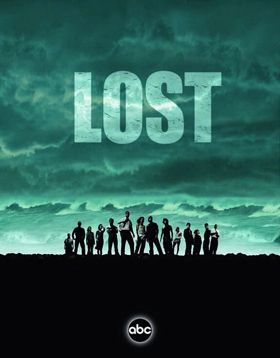
LostTo celebrate Lost's 100th episode – last week's terrific Faraday-centric "The Variable" – I briefly entertained the idea of writing a post entitled "100 reasons why you and everyone you know and everyone they know should watch Lost".

It's tragic that I probably could come up with 100 different reasons, but I figured I would avoid doing so in order to preserve the thinly-veiled façade that I'm not actually a big Lost geek. In any case, after about the forty-eighth reason, I probably would have descended into some really obscure arguments...

49. I actually consider those funky DHARMA jumpsuits highly fashionable.

50. Ben's beady, unblinking eyes. Say no more.

51. The way the show's title flashes across the screen at the end of each episode (usually following some jaw-dropping cliffhanger) never fails to send a chill down my spine.

52. Frank Lapidus: the most engaging minor character in a show packed with engaging minor characters.

53. Scrap that. Richard Alpert is the most engaging minor character in a show packed with engaging minor characters.

54. No, wait. Lapidus.

55. Alpert.

56. It's a tie.

And so on. But don't worry, aside from the above, this isn't going to be yet another post banging on about how brilliant Lost is (I needn't tell you the answer is "freaking"). I'll let the show's makers do that.

"It's a challenging show. It's not just a cookie-cutter procedural with a new case each week. There's a real depth to it. But I also know people who watch only occasionally and really enjoy it when they do." – Stephen McPherson, ABC President of Entertainment

"There are a lot of things happening with [Locke], and the writers give me a lot of room to do things. I like that they allow a wide range of ways of playing this character. There's a lot of potential for interpretation in how to play this character. I don't feel I'll be typecast when the show ends, because you see this character in so many ways." – Terry O'Quinn (John Locke)

"People often ask us if there are any characters on the show that we wouldn't kill. The answer is no, everyone's fair game. With one exception. The most integral character on the show, the one we could not live without, is the music. And that is all a product of Michael [Giacchino]'s singular genius." – Damon Lindelof, executive producer

"We needed to express to the audience where the bookmark was in the novel. By announcing the end date, we signaled yes, we have a game plan, so you can rest assured that your investment in the show is going to pay off." – Carlton Cuse, executive producer

"There's a huge twist in the season finale. It's the best one to me, and I can't talk about it. When I read it, I couldn't stop thinking about it. It's part of that secret scene. I think it tops everything that's happened before this point. I would love to talk about it, but I can't." – Yunjin Kim (Sun-Hwa Kwon)

There's loads more in 100th episode retrospectives in both Variety and The Hollywood Reporter. There are a few spoilers for anyone not up to date with the previous episode, "Some Like It Hoth". You can also check out Jimmy Kimmel's amusing "guest spot" in "The Variable" below.

With 100 episodes down, Lost is now on the home stretch; a mere 20 episodes remain until the island vanishes for good. I aim to live a long and fulfilling life, but to be honest, I'll be content simply by not popping my clogs until after Lost's final episode.

Newswipe with Charlie Brooker (2009)

Tuesday, 28 April 2009, 10:10 pm | Comments (0)

Death, crime, war, puppies, the weather. It could only be the news.

I actually began university with the intention of having a career in journalism. However, after sitting through class after class trumpeting fair, balanced and objective reporting as essential, it became clear that real-world journalism was something else entirely.

I remain a news junkie, but my inner cynic always approaches the news with nothing short of an overflowing salt shaker. Quite simply, the news is a manipulative affair, whether it's tugging blindly at its audience's heartstrings, begging for viewers to send in feedback in a bizarre effort to make the news interactive or just plain old scaremongering. As a viewer, it's impossible to feel like anything other than a puppet, the recipient of constant instructions telling us how to think and act. Rarely does the news allow the viewer to come to his or her own conclusions.

What's troubling is the ease with which people do seem to accept whatever the news tells us. Which is what's makes Charlie Brooker's Newswipe must-see television. Brooker writes...

TV news now comes packaged as a dazzling CGI cartoon, with the names of star anchors included in the programme title, and an absurdly theatrical air of bombast underpinning every second of every broadcast. Traditional newspapers, beaten to the punch by the immediacy of the internet and 24-hour news networks, are becoming less and less bothered with breaking actual news than celebrity gossip, or provocative comment, or shouty campaigning. The internet, meanwhile, can be a great source of rapidly updated information, but is also home to an endless range of partisan news sources, paranoid imaginings, and outright hoaxes. Is it possible for anyone to truly know what the hell's going on?

A spin-off of the superb Charlie Brooker's Screenwipe, Newswipe takes an acerbic, hilarious, eye-opening look at the news. Like his terrific Guardian columns, Brooker hits the bull's-eye on pretty much every issue – adding a healthy shot of humour to the proceedings.

Because I'm a kind soul, here is the entire fourth episode of Newswipe (in three bite-sized chunks) dedicated to the recent G20 summit in London. If you're a news junkie like me, this is fascinating viewing. If you're not, watch it anyway. If anyone should tell you how to think and act, it's Charlie Brooker.

Lost: Season 5 (2009)

Wednesday, 1 April 2009, 10:10 pm | Comments (0)

Lost: Season 5Spoilers for Lost: Season 5 ("He's Our You")

In previous posts about Lost, I praised the show to the skies and encouraged newcomers to get onboard and see what all the fuss is about.

I take it all back. Why? Because despite the fact that Lost continues to surpass its own lofty standards, it's clearly a show for the hardcore fans. Instead, I urge you – more strongly than ever before – to start buying those DVD box sets and catch up. Lost is brilliant.

Once upon a time, casual viewers could easily tune in to Lost and still have a vague idea about what was going on. A self-contained flashback was more than enough to hold one's attention amid the polar bears and hatches and dead people walking around the island.

Those days are long gone. Unlike Alias (J.J. Abrams' pre-Lost series), which hit the reset button several times during its five-year run, Lost is now in the process of delicately assembling five seasons of stories into an impressively cohesive whole. The side effect of this is that it has separated the true fans from the casual viewers.

If you skipped out on Lost a season or two back and tuned back in now, you may be forgiven for thinking you're watching another show entirely, what with Jack, Kate, Hurley, Sawyer and co. currently ingratiating themselves with the DHARMA Initiative in a 1977-version of the island. The acceptance that time travel is possible in the Lost universe has proven itself not only a great way to finally reveal the island's twisted history, but also to allow our favourite castaways to become inextricably linked with it.

With just 24 episodes to go until Lost calls it a day, the resolutions to the show's main mysteries are slowly shifting into focus: the smoke monster, the four-toed statue, Richard Alpert's agelessness... but there are a few other questions I hope we'll get answered. I hereby present my top five lesser Lost mysteries I hope we see resolved before the island disappears for good...

1. Does Walt have special powers? One of Lost's few disappointments for me was the poor handling of Michael's storyline. Though he promisingly returned last year, the troubled dad was offed shortly after. While Walt, his son, had to be written out of the show (the actor was growing up too fast for the show's compressed timeframe), the death of his onscreen father seems to have sidelined any resolution to the notion that Walt is "special". A recent cameo by the character has given me renewed hope that this will be addressed in the future.

2. Who was Libby? The short-lived tail survivor who captured Hurley's heart before being gunned down by Michael was never treated to a flashback of her own. We've caught intriguing glimpses of her in other characters' flashbacks (why was she in the mental asylum with Hurley? was it just a coincidence that she gave Desmond the boat that took him to the island?), but she's got an almost clean slate for the producers to address her history however they like.

3. What happened when The Swan station blew up? Aside from the fact that Locke lost his voice and Desmond lost his clothes. With The Swan under construction in the show's current '70s setting, the answer to this may be closer than we think.

4. What happened between Benjamin Linus and the real Henry Gale? This was something the producers intended to address during the show's strike-shortened fourth season. It's not essential information, but there's a good story to be told about the hot-air balloonist Ben impersonated after being caught in Danielle Rousseau's trap. Heck, I just wanna see more of the creepy former leader of the Others.

5. What is "The Magic Box"? Remember Locke's father mysteriously appearing on the island back in season three? Ben claimed his sudden appearance owed to a "magic box" that would give you anything you desired. How about some answers to these questions?

Assorted Oscar observations

Tuesday, 24 February 2009, 12:49 pm | Comments (0)

The OscarsI sat up last night watching a delayed telecast of the Academy Awards. Having already read the winners, it was a bit like watching Titantic: not only does it drag on and on, but you already know how it ends.

Random thoughts:

  • A hugely predictable ceremony with no real surprises. Not that I expected any. The winners for all the major categories lined up with my own predictions, which I should have posted here, so that you'd believe this statement. As a result of moving countries during Oscar season, I'm yet to catch a number of the nominated films, but I look forward to doing so over the coming weeks.
  • In particular, I really need to see Slumdog Millionaire.
  • Deserving win #1: WALL•E. With Kung Fu Panda picking up a few recent awards, I was a little worried for Pixar's romantic robot. If it weren't for the film's frenetic second half, I'd have liked to have seen it up for the big award: Best Picture. I also hoped WALL•E would take home Best Song, too, for Peter Gabriel's superb "Down To Earth". Alas, it was not to be.
  • Speaking of Best Song, did anyone else find it a bit weird that they had there was a great, big sing-off of the three songs in contention? Should they do this for the other categories too? Imagine Sean Penn, Mickey Rourke, Richard Jenkins, Frank Langella and Brad Pitt – all in their respective characters – hamming it up on stage together. Maybe it's not such a bad idea after all...
  • Deserving win #2: Heath Ledger. A truly touching moment during an evening of what is ostensibly self-congratulatory back-slapping. For those who feel Ledger was only awarded the trophy because of his unfortunate death, go back and watch The Dark Knight again: it's a powerhouse performance.
  • Alan Arkin called Phillip Seymour Hoffman "Seymour Phillip Hoffman" during his nomination speech. Whoops!
  • I miss seeing clips from the films when the nominated actors are announced: I don't know if Christopher Walken really thinks so highly of Michael Shannon.
  • Deserving win #3: Man on Wire. Probably the best documentary I've ever seen.
  • A note on the host: maybe it was because the sound on the telecast was mixed so that you couldn't hear the audience's reaction, but there came a point during Hugh Jackman's credit crunch-themed opening song when he stuck his head through a hole in a cardboard wall just above a headless baby doll to eerie silence. "This is all a bit tragic," I thought to myself.
  • Every time the Nine Network cut to an ad break, they played music that sounded suspiciously like Dr Evil's theme from Austin Powers.
  • Looking forward, there was a pretty neat clip-fest showcasing some of 2009's biggest releases.

The Simpsons’ title sequence gets a facelift

Sunday, 22 February 2009, 7:25 pm | Comments (1)

It's been 20 years since The Simpsons debuted, forever changing the face of primetime television. With the long-running cartoon sitcom finally taking the high definition plunge, its iconic opening title sequence has been given a permanent 21st century makeover.

When I heard the sequence had been changed, I instantly worried that they'd butchered a classic, and the programme's slow but evident fall from grace would finally be complete. However, I'm pleased to report that The Simpsons' makers have actually outdone themselves: it's a winner!

At its core, it's the same sequence, but the opening has been completely updated with characters and gags more faithfully the show's 20-season history. Gone are appearances from early players like Bleeding Gums Murphy (who?), replaced by cameos from regular characters, including Ralph Wiggum, the gun-toting Texan, Apu's octuplets and Hans Moleman. Some of my choice gags to watch out for: a billboard featuring a forlorn Krusty flogging funerals, and the products that comprise Marge's grocery shopping.

Like most people, I used to be an avid viewer of The Simpsons, but its declining quality over recent years, coupled with the dual resurrections of Futurama and Family Guy, has given me less incentive to check out what was once staple viewing. However, I caught a recent episode (in which Nelson befriends Bart) while in transit from Honolulu to Sydney and was pleasantly surprised at its quality (the show is almost always at its best during its more human episodes).

The high gag rate of The Simpsons' new opening sequence actually has me hankering to sit down and watch some new instalments of TV's original dysfunctional, non-prehistoric cartoon family.

The Trial of Tony Blair (2007)

Friday, 6 February 2009, 10:59 am | Comments (0)

The year is 2010 and former British Prime Minister Tony Blair is summoned to the Hague to face war crimes charges over his involvement in the Iraq invasion. That's the premise of The Trial of Tony Blair, a satirical Channel 4 telemovie first broadcast in 2007.

The Trial of Tony Blair's "what if?" premise is an intriguing notion, reminiscent of the conceit of faux-documentary Death of a President. However, The Trial of Tony Blair eschews any kind of realism for blatantly opinionated farce. It's a missed opportunity to delve into the mind of the embittered former PM. The film is a political mouthpiece and nothing more.

The Trial of Tony Blair begins with Blair (Robert Lindsay) handing over power to Gordon Brown in the run-up to the 2010 general election. Lindsay's Blair is a far-fetched caricature of the man, obsessed with his own legacy and increasingly tortured over his hand in the war in Iraq. It's a worthwhile performance, but, in light of the script, Lindsay's Blair is reduced to a buffoon of a man. (In the apparent interests of balance, Alexander Armstrong cameos as an out-of-touch David Cameron, but his appearances are too fleeting and disconnected to mask the film's political agenda.)

With Brown elected, Blair spends his days lost, waiting for phone calls from the likes of Bill Gates and Hillary Clinton (who has been elected President of the United States). He longs for the power and importance of his previous position. Cherie Blair, played coldly by Phoebe Nicholls, also becomes discontent with her new life. As it becomes increasingly likely that Tony Blair will face trial, the political forces that brought him to power and that now lie in the hands of others begin to turn against him.

There are plenty of elements the film gets right. Blair and Brown's abhorrence for each other is engaging stuff, particularly when Brown decides to hang Blair out to dry in an attempt to distance himself from the Blair/Bush era of politics. Later in the film, Blair is called to the US embassy hopeful of being offered some kind of position, only to be told that Hillary Clinton, who is due to embark on her second term campaign, will be spouting some nasty things about Blair in order to similarly disassociate herself from the war in Iraq – even though the US will continue to support Blair at the Hague.

When The Trial of Tony Blair makes these kind of jabs at the political scene, it really hits the mark; it's a dirty world where enemies can be anywhere. As if to illustrate this, there's a terrific scene in which Gordon Brown (a pouty Peter Mullan) is put in his place by a pair of children during a media tour of a primary school ("Are you the one my dad says is a born loser?" one child innocently asks).

Though the satire is mostly painted with far too broad strokes, when the movie arrives at the event in its title, the filmmakers skip off without exploring the trial itself. The movie's obvious political stance leaves little doubt as to how the trial would have turned out, but at a brisk 72 minutes, The Trial of Tony Blair feels like it's missing the vital third act.

Where Death of a President presented a bold, compelling and – crucially – neutral examination of a world leader's decisions, The Trial of Tony Blair takes the easy road to deliver a film that, while entertaining, is disappointingly shallow in its execution.

Lost: Season 5 (2009)

Wednesday, 4 February 2009, 11:32 am | Comments (0)

Lost: Season 5Spoilers for Lost: Season 5 ("Jughead")

It's best to consider Lost as the most demanding – yet rewarding – jigsaw puzzle you have ever tackled. Its story is a rich, growing tapestry of flashbacks, flashforwards and flashes in time that are slowly piecing together to form a beautiful, detailed image. It's a slow, often frustrating process, but when that piece you've been agonising over for so long finally slots into place, the reward is a giddy, euphoric feeling.

Three episodes into its penultimate season and Lost has made finally made the leap into fully-blown science fiction territory, adding another dimension to its already complex narrative. So imagine that lovely flat jigsaw you've been working on is actually one of those funky 3D puzzles.

Casual fans may turn their noses up at this season's principal theme of time travel, but from the moment that thunderous monster began tearing up large patches of jungle in the pilot episode, Lost was showing its sci-fi hand. Its current state is the result of a very natural progression.

While last season's phenomenal Desmond-centric episode, "The Constant" proved that time travel exists in the Lost universe, the fifth season has taken that idea and ran with it. It's a bold move, but the show has danced around the notion for so long that it was an inevitable development.

"Because You Left", this year's season-opener, plunged viewers headfirst into a four-year-long mystery and made no apologies for doing so. If you'd never seen Lost before, lost is precisely what you'd have been. But if you have watched Lost, and watched it devotedly, it was a brilliant continuation of all the themes and characters that have made the show such compulsive viewing.

The second episode, Hurley-centric "The Lie", slowed things down a touch; the cursed lottery winner has always been one of the most relatable characters on the show. It also featured a great expanded role for Hurley's father, played by Cheech Marin. Meanwhile, "Jughead", episode number three, continued the show's run of virtually flawless Desmond episodes. Oh, and I'd like to note that eccentric scientist Daniel Faraday, who I initially felt was overplayed by Jeremy Davies, is developing into one of the most intriguing characters on the show.

Lost has always been an ensemble programme, and that's never been truer than in the fifth season. After just three episodes, there's already been a list of returning guest stars long enough to bewilder anyone but the most ardent of fans. However, as that's precisely what I am, it's thrilling telly. If you struggle to keep up with who's who among the regular cast, good luck remembering returning characters like Ms Hawking, the enigmatic antique saleswoman who convinced Desmond that travelling to the island and pushing the button was his destiny (gibberish to non-fans) in an episode two years back.

If that wasn't enough, this season's new storytelling format that sees the remaining castaways visiting the island at various points in its past really requires viewers to brush up on Lost history (Lostory?). However, that's all part of the fun of unravelling the show's labyrinthine plot. With the island constantly shifting in time, the producers have given themselves the broadest canvas imaginable for exploring the island's past – and future.

Lost has long since become impenetrable for new viewers hoping to make heads or tails of its intricate plot, but that's precisely what makes it such a rewarding viewing experience. Pick up the DVD box sets and get stuck into it. And if you're really struggling with the Lost jigsaw, consider Lostpedia – a wiki entirely devoted to the television series – as the puzzle box from which you can cheat.

Lost: Season 5 (2009)

Thursday, 22 January 2009, 12:06 pm | Comments (1)

Lost: Season 4Spoilers for Lost: Season 4

Can you believe it? Lost is back tonight!

Following its groundbreaking first year, Lost settled in for a bumpy but thoroughly entertaining season and a half. It was then that the show's producers announced that Lost will end in 2010. With just three curtailed seasons remaining, a noticeable shift into focus occurred, and our favourite castaways were no longer wandering aimlessly through the jungle encountering endless random island weirdness.

Lost is in the unique position of being a blockbuster television programme with an incredibly intricate storyline. I think many people were turned off the show during its second and third years, fearing that Lost would become a victim of the kind of protracted, meandering storytelling that ultimately caused The X-Files' flame to flicker out. But ever since the end date announcement, Lost has confidently propelled forward, providing answers to existing mysteries, and tantalising new ones. This viewer has faith that there will be a worthwhile resolution at the end of it all.

For those who gave up on Lost, there's no excuse not to come back. While it makes no apologies if you miss an episode, and the show's producers have openly admitted that those who have never watched the show will be, erm, lost, during the fifth season opener, viewers who do their homework and fervently follow the show will be greatly rewarded. Lost is at the top of its game as one of the most exciting and intelligent shows on the box.

As we prepare to enter Lost's penultimate season, I present you with a brief cheat sheet to brush up on television's most perplexed castaways.

[insert flashback whoosh sound here]

Jack (rescued)
Everyone's favourite doc with daddy issues escaped the island and declared that the other escapees mustn't tell anyone about what happened there in order to protect the other survivors. Since rescue, Jack has been visited by Jeremy Bentham (the man in the coffin) who told him some terrible things had happened on the island since he left. Jack became racked with guilt over abandoning the other survivors, including Claire, who he learned is his half-sister.

Claire (unknown)
Since being all blowed up in an explosion while the survivors battled the freighter folk, Claire's been acting incredibly strange. Her current pasttime seems to be hanging out in that creepy moving shack with her and Jack's dead father, Christian Shepherd.

Kate (rescued)
Upon rescue, Kate went to court for her crimes and was given 10 years probation on the condition she remain in California. Kate and Jack were briefly engaged. Claire's child, Aaron, is living with Kate. Presumably without contributing any rent, the slacker. Kate is living under the pretence that Aaron is her child.

Sawyer (on the island)
Sawyer sacrificed his own rescue so that the other survivors could escape. Before doing so, he whispered something in Kate's ear. He probably asked her to feed his fish.

Juliet (on the island)
Juliet was last seen drinking rum with Sawyer on the beach. Yo, ho, ho, etc.

Daniel (missing)
Eccentric physicist Daniel was last seen ferrying people to the freighter off the island. He has developed a bond with Desmond, who is his "constant", something too complicated to do anything but link to here. Brush up on that, as time travel is set to be a major part of the fifth season.

Miles (on the island)
Ghost-whisperer Miles remains stranded by choice, opting not to ride with Daniel to the freighter. Bit weird.

Charlotte (on the island)
The mysterious Charlotte also opts to stay on the island. Although it transpires she's been there before...

Hurley (rescued)
Hurley's curse hasn't escaped him since being rescued. After seeing visions of the deceased Charlie and Mr Eko off the island, he is readmitted to the same mental institution he was in before the plane crash. He has also been visited by Jeremy Bentham. Oh, and those numbers still haunt him.

Michael (dead)
By delaying the detonation of a large amount of explosives aboard the freighter, Michael sacrificed himself in order to give the survivors the time they needed to escape. Christian Shepherd appeared to Michael moments before he died.

Jin (presumed dead)
Jin's fate is uncertain, but he was seemingly caught in the inevitable explosion of the freighter.

Sun (rescued)
Sun escaped the island but, hopeful that Jin survived, she makes a pact with big baddie Charles Widmore to help him find the island.

Ben (magically appeared off the island after turning a giant, frozen wheel)
Upon instruction from Jacob (overseer of the island), beady-eyed Other Ben assisted Locke to "move the island". To where (or when) remains a mystery. In doing so, he was teleported to the Sahara desert 10 months into the future. After the death of his own daughter at the hands of Widmore's men on island, he swears to kill Widmore's daughter in order to settle the score.

Sayid (rescued)
After escaping, Sayid married his beloved Nadia who was later murdered. Ben finds Sayid and tells him the culprit was one of Widmore's men, leading Sayid to become a mercenary for Ben.

Desmond (rescued)
Desmond's rescue remains unknown to the rest of the world (unlike the highly-publicised rescue of the Oceanic 6). He was swiftly reunited with his beloved Penny... Widmore's daughter.

Locke (dead?)
We recently learnt Locke has been watched from birth by ageless Other Richard Alpert. On the island, he made contact with Jacob, who told Locke to move the island. After the island moves, Locke will become leader of the Others. On the mainland in the future, Ben visits Jack, who tells him that in order to save the stranded survivors, everyone who left the island must return, including the deceased Jeremy Bentham, who, it turns out, is John Locke.

Ooooooo...

Anyway, Lost. Brilliant. Watch it.

Desperate Housewives: Season 5 (2008-2009)

Wednesday, 21 January 2009, 9:50 am | Comments (1)

Desperate Housewives: Season 5 Minor spoilers for Desperate Housewives: Season 5 ("The Best Thing That Ever Could Have Happened")

Hi. My name's Matt. I'm a 23-year-old heterosexual male and I'm a fan of Desperate Housewives. There. I said it. Wanna fight about it?

I always get some strange reactions when I make the above statement (least of all because I'm threatening people with violence), but you know what? Anyone who judges Desperate Housewives based on its apparent reputation for being a light, fluffy show for women – a kind of primetime Bold and the Beautiful – is dead wrong.

Desperate Housewives might be slick, sexy and comical, but that's all subterfuge, for its overarching stories are dark mysteries with some truly disturbing twists in their unravelling. The subject matter allows the show's trademark black humour to flourish – at times, Desperate Housewives is outright hysterical. Unlike other dramatic serials, Desperate Housewives more or less wraps up every story arc by the end of each season, meaning that each mystery can be plotted out and resolved in a satisfying manner. Most importantly, though, it's smart, addictive television.

The final scenes of Desperate Housewives' fourth season saw the show take an unprecedented five-year leap forward in time that's seen the fifth season re-ignite the spark of the show's first and third years (it seems Desperate Housewives is at its best during the odd-numbered seasons). This year's mystery began with the arrival of Neal McDonough's sinister Dave Williams, husband to man-eater Edie Britt. The psychotic Williams, brilliantly played by McDonough, is secretly plotting revenge against one of Wisteria Lane's residents for reasons unknown. It's a compelling story on par with the mystery of Mary Alice's death and the tale of Orson Hodge's sick past.

"The Best Thing That Ever Could Have Happened", the series' milestone 100th episode, was broadcast this week. Opting to give this year's mystery a back seat, creator Marc Cherry served up a self-contained story based around guest star Beau Bridges' Eli Scruggs, a handyman with a heart of gold. Scruggs dies before the opening credits roll (there is much death within Desperate Housewives), prompting the main characters to reminisce about how he had impacted their lives.

What followed was a series of moving flashbacks that essentially re-engineered key moments in the characters' lives to show the involvement of the generous handyman. It was a neat trick that, like the sudden inclusion of Lost's maligned background castaways Nikki and Paulo, was pulled off effectively, even allowing us to revisit some familiar faces from the show's past.

It was a surprisingly moving episode that may have been light on the comedy, but it proved that for all the dark satire of suburban life, Desperate Housewives' characters are real people with real emotions. Serialised drama episodes are frequently overlooked at TV awards ceremonies, but I'd be very surprised if this standalone tale is doesn't receive a nod at Emmy time.

24: Season 7 (2009)

Saturday, 17 January 2009, 7:17 am | Comments (0)

24: Season 7Spoilers for 24: Season 7 ("11:00 a.m. – 12:00 p.m.")

After the two-hour taster that was 24: Redemption, the world's best (and only) real-time thriller series is back in all its day-long glory.

Having been subpoenaed from the fictional African nation of Sangala, Jack Bauer is facing trial as part of the now-disbanded CTU. Within minutes of the trial beginning, he's summoned by the FBI who are investigating a number of technology thefts, seemingly orchestrated by none other than Tony Almeida, Jack's long-dead colleague.

It's been two years since 24's sixth season performed one of television's finest ever displays of shark-jumping, but its creators promised a major overhaul this year. Have we got it?

Four hours in, my answer is: yes and no. The shift of location from Los Angeles to Washington is a welcome move and the show's directors unafraid to show it off with lingering shots of various Washington landmarks. In scrapping CTU, 24's creators have also ditched most of the sixth season cast (wise move: they were mostly insipid).

There are still a few familiar faces; most notably, Carlos Bernard's Tony Almeida has been resurrected as a bad guy only to have his alliance clarified within the first few episodes – he's actually undercover, despite dabbling with the villains for a couple of years after his alleged death (I'm still not convinced that it was always intended to bring Tony back from the dead, but as it looks like we're stuck with him and his annoying facial hair, I'll move swiftly on). Almeida's working with his former CTU colleagues Chloe O'Brian and Bill Buchanan who are operating outside the government in order to topple a far-reaching conspiracy within it.

It's a step in the right direction, but I wish 24's producers had gone further in shaking up the show. Having Jack work outside a government organisation is a neat idea, but he's been disobeying orders for so many years that it's basically the same thing. The FBI, meanwhile, is little more than a stripped-down CTU complete with bickering employees, large quantities of meaningless technobabble, scurrying extras and you guessed it: moles.

Meanwhile, in the White House, President Allison Taylor (played by a slightly-too-grandmotherly Cherry Jones) is faced with the difficult decision of withdrawing US troops from Sangala after being threatened by the terrorist group Tony has been undercover with. Her husband has been investigating the death of their son (last seen alive in 24: Redemption), which was officially ruled a suicide. Oh, and yep: the White House apparently has its fair share of hidden traitors, too.

Season five gave us a brilliant conspiracy story, which was a great culmination of 24's staple plot device of moles. But given we're stuck with it this season, I'd like to see our heroes unearth a slippery organisation (kind of like Quantum in the new Bond films) that are the real driving force behind the copious numbers of traitors found within the government over the past six seasons; something to something to tie this overdone plot device together and prove that the US government's screening process is actually mildly effective.

In any case, it's great to see 24 prove it has a bit more life left in its old ticker.

Prison Break’s run comes to an end

Thursday, 15 January 2009, 2:52 am | Comments (0)

Prison Break: Season 1So, Fox has opted to not renew Prison Break beyond its current fourth season. The news shouldn't come as a huge surprise to fans of the show, as it was widely speculated that Prison Break would not return next season.

Guardian columnist Charlie Brooker once described Prison Break as "the quintessential artefact of a civilisation sliding into absolute babbling madness", which, on the face of it, might be a fair assessment of the show's high-concept but patently absurd premise (man deliberately gets caught robbing a bank in order to break his innocent brother out of prison). However, the concept soon developed into a much grander storyline involving shadowy conspiracies and the like.

I'm a big fan of serialised dramas, so Prison Break was right up my alley, even if it doesn't touch the likes of 24 or Lost. The show's first year got a surprising amount of mileage out of its gimmicky concept, while the second season saw the show successfully expand into a Fugitive-esque thriller; special nod to the introduction of corrupt FBI agent Alexander Mahone, fascinatingly played by William Fichtner, instantly joining the hallowed echelons of New-Characters-Who-Join-Existing-Shows-And-Who-Fit-In-Oh-So-Bloody-Brilliantly.

The wheels began to fall off during Prison Break's strike-shortened third season. The new, exotic location (Panama) was the equivilant of giving a fresh coat of paint to a rickety old house. It wasn't bad television, but it was very familiar territory.

I haven't seen any of the fourth season yet, but Fox boss Kevin Reilly's comments that the show would be creatively stretched beyond its current season seem perfectly reasonable to me. Then again, I'm still floored that TV's king of gimmicks, 24, is approaching its eighth season.

Another six or so episodes of Prison Break will be filmed before the show is locked up for good.

24: Redemption (2008)

Sunday, 11 January 2009, 4:06 am | Comments (0)

24: RedemptionAfter its nearly flawless Emmy award-winning fifth year, real-time thriller 24 returned for the 2007 season with an opening quartet of episodes that culminated in a nuclear bomb being detonated in Los Angeles. What a setup! Tragically, within hours, 24 proceeded to jump the shark in spectacular style. For a show where contrivances are frequent but often excusable, this was no mean feat.

Having squandered a terrific premise, 24 went on to deliver a preposterous storyline about Jack Bauer's heretofore unmentioned father and brother being in kahootz with terrorists. Like a devoted fanboy, I refused to leave 24's side, optimistic that the show would make a recovery. I watched hopefully as big-name veteran actors like Powers Boothe and James Cromwell were brought in and swiftly wasted. 24's condition worsened and the sixth season's final moments saw Kiefer Sutherland's Jack Bauer mournfully looking downwards over the edge of a cliff. Hmm. Perhaps it was time.

Rather than slipping away, 24 – plot threads dangling – entered a coma, becoming one of the major casualties of the 2008 Writers Guild of America strike. Soon after the strike's commencement, 24's producers announced that the seventh season would be postponed until 2009.

Instead of denying us any real-time action in 2008, Fox announced 24: Exile (later retitled, rather appropriately, 24: Redemption), a two-hour telemovie to bridge the gap between the show's sixth and seventh seasons.

Having been served a subpoena by the American government for torture, Jack Bauer is lying low in the fictional African nation of Sangala, helping long-time friend Carl Benton (Robert Carlyle) with missionary work at a school. When the school is raided by militia from a rogue general who is plotting a coup, Bauer springs into action.

Meanwhile, in Washington, the United States is preparing to swear in its first female president, played by Cherry Jones (24 famously ticked the first black president box in its early years). A childhood friend of her son's has just stumbled across evidence that someone within the American government might be bankrolling the coup in Sangala.

I watched an extended cut on DVD, so I'm not sure what was broadcast and what wasn't, but a plot based around child soldiers is fairly dark stuff for American commercial television. Mind you, this is offset by the film's Washington cast who are so ridiculously good-looking, it makes you feel nauseatingly repulsive in comparison. Speaking of attractive things, 24: Redemption makes great use of its fresh locations (South Africa doubles for Sangala), which is promising for the show's Washington-based seventh season.

That said, the Washington-set stuff in this telemovie was probably the only bum note for me (with the exceptions of Powers Boothe and Peter MacNicol briefly reprising their sixth season roles). I have no doubt Cherry Jones will be given something useful to do in the show's seventh year, but her appearance here was primarily to establish her presidency. The subplot involving her son was fairly unengaging, despite Jon Voight popping up occasionally to look all menacing and mysterious.

On the upside, Kiefer Sutherland's devotion to the character refuses to waver (his performance remained the strongest element of the rubbish sixth season). It was fantastic to see Bauer in a location other than the United States. Carlyle gives a similarly enthusiastic turn, as do Tony Todd and Hakeem Kae-Kazim as the telemovie's villains.

Long-time 24 helmer Jon Cassar's direction is adequate, while Sean Callery's score is suitably exotic. Unfortunately, if you're aware of the cast and storyline of the seventh season, it's all a bit predictable. Nevertheless, 24: Redemption fits in the upper tier of Jack Bauer's adventures and points to a brighter future for the show.

Having seen the opening 17 minutes of the season seven premiere (which airs tomorrow), I'm pleased to say the show appears to be back on track. Despite an implausible return from a long-dead character and some extraneous FBI bickering that replaces the extraneous CTU bickering of past seasons, Jack Bauer's seventh day from hell looks to be a return to form for the groundbreaking action series, which is just as well: 24's eighth season begins shooting in April for broadcast in 2010.


All original content is Copyright © 2009 by popular culture... etc. | Firebug Theme by Blog Oh! Blog | Converted to Blogger Template by ThemeLib.com