Showing posts with label Action and adventure. Show all posts

A View to a Kill (1985)

Sunday, 27 September 2009, 9:52 am | Comments (0)

A View to a KillIt may be the Bond fan's whipping boy, but I can't help but think A View to a Kill scrapes by on charm alone.

In fact, the fourteenth Bond film is a bit like a doddery old relative among the others in the series. It regurgitates familiar stories (the plot is a virtual retread of Goldfinger), meanders and makes little sense (the film's first third is concerned with an irrelevant horse racing subplot), tries to be embarrassingly hip (see Bond snowboarding to a cover of "California Girls") and is generally as creaking and tired as 57-year-old Roger Moore, who reprises the role of James Bond here for the seventh and final time.

But A View to a Kill is also the swansong to a particular kind of Bond film that, as a product of the seventies and eighties, might never see the light of day again. Watching Roger Moore cock his eyebrow through an endless stream of double entendres and wry one-liners is like watching a stand-up comic perform a tried and tested act. Sure, it's familiar but it remains entertaining – and the same could be said for the film itself.

The plot, for what it's worth, sees 007 encounter Christopher Walken's Max Zorin, a French industrialist scheming to destroy Silicon Valley in order to corner the world's microchip market. He's assisted by Grace Jones' androgynous Mayday, while Bond receives help from Tanya Roberts whose air-headed geologist is only as smart as the rocks she studies.

The casting standout, unsurprisingly, is Walken, whose psychopathic performance is classic Bond villain material. All those Walken tics are present and accounted for ("More... more powah..." he stiltedly cries at one point, just moments before chuckling as he falls to his death).

What A View to a Kill lacks in exotic locations (Siberia, France, San Francisco), it more than makes up for in the action stakes. There's the opening ski chase (not a patch on The Spy Who Loved Me's iconic opening, but then, what is?), a daft but enjoyable sequence in which Bond clings to an out-of-control fire engine and a couple of Hitchcockian action sequences involving national landmarks.

And any film that ends with Christopher Walken battling Roger Moore with an axe atop the Golden Gate Bridge can't be all bad.

Transformers: Revenge of the Fallen (2009)

Sunday, 26 July 2009, 4:35 pm | Comments (1)

Transformers: Revenge of the FallenUp until last week, I thought I understood popular culture. I knew reality television would never produce anyone but absolute cretins. I believed celebrity gossip to be a driving force behind the spread of mankind's stupidity. And I accepted no film would ever bludgeon my senses like 2005's Stealth, the Jamie Foxx actioner about a talking plane that turns evil.

And then I saw Transformers: Revenge of the Fallen and suddenly the whole world unravelled before my very bleeding eyes.

Where to start? Perhaps by pointing out that the film's robots (and I'm including the so-called humans in this category for reasons that become clearer with each chunk of moronic dialogue mumbled between explosions) are as soulless, boorish, lumbering, clunky, hulking and unnecessary as the film itself.

Granted, this is a franchise based on a toy line (and an inane one at that) and the first film could only be considered passable in a guilty, check-your-brains-at-the-door kind of way, but my God, Revenge of the Fallen is dumb, even by Transformers standards.

It's pointless dissecting the acting, casting, music, cinematography or direction, as all are as subtle as a cannonball to the face. Quite simply, it's a film where the only thing that's special are the effects, and even those are little more than a forgettable mishmash of pixels.

There's a scene towards the end of the film where, for reasons too moronic to explain, a Decepticon is seen climbing one of Egypt's Great Pyramids. As the camera pans up to reveal the robot, the audience is treated to a bird's-eye view of a pair of giant wrecking balls clanging together. Transformer testicles. Proof positive Transformers: Revenge of the Fallen is utter bollocks.

At least I still have the undeniable, unquestionable, irrefutable assumption that no film this vapid will ever become a box office hit. Oh.

24: Season 7 (2009)

Saturday, 11 July 2009, 5:35 pm | Comments (1)

24: Season 7Spoilers for 24: Season 7

After succumbing to a touch of the swine last week, and being faced with the horrific prospect of watching daytime television, I figured it was the perfect opportunity to catch up on real-time torture-fest 24, which I'd somehow neglected about a third of the way through its seventh season.

Having painfully watched one of my favourite shows jump the shark in its sixth year, I had hoped Day Seven would mark a triumphant return to form. Sadly, this season was little more than a mixed bag.

First, the pros, led by Annie Wersching's Renee Walker, one of Jack Bauer's most worthy counterparts. If 24's audience were combined into a single character on the show, Walker would be it. Initially disgusted by his controversial and brutal methods, Walker is unable to deny that Bauer gets results. In a season of fumbled character arcs, hers is the most authentic, and her final scene points to a genuinely interesting future for the character.

Walker's increasingly conflicted morals, in addition to President Allison Taylor's strong anti-torture policy, provided a surprisingly weighty analysis of the merits and disadvantages of torture.

Speaking of President Taylor (Cherry Jones), she proved herself to be 24's third best president ever (let's be honest: no one will ever top David Palmer or Charles Logan). Even lumbered with an iffy subplot involving the President's daughter ordering a hit on one of the season's main baddies, Jones ensured the Taylor was one of the most balanced and down to earth characters on the show. I look forward to seeing more of her next season.

Props, too, to Will Patton and, in particular, Jon Voight, for giving us two of 24's best villains. Voight lent to Jonas Hodges a kind of gravitas not seen on the show since Dennis Hopper served up a nice big leg of ham in season one.

Sadly, though, Day Seven was still plagued by the kind of clumsy, contrived plotting that's marred several of the show's earlier seasons. Key among these was Tony's resurrection and subsequent character motivations. Sure, 24 has never been an exercise in character studies, but when Jack confronts Tony during the season finale and tells him that his late wife Michelle would never have approved of his vengeful actions, it only served to highlight how absurd his character arc has become.

Oh, and don't get me started on Kim Bauer's far-fetched airport antics. Even though Elisha Cuthbert is so hot it makes my eyeballs burn, it's simply painful to watch her encounter misfortune absolutely everywhere she goes. It's like watching a Wile E Coyote sketch... whenever she appears, you know there's trouble brewing.

Once again, though, it falls to Kiefer Sutherland to keep the whole damn thing together. The man never gives anything less than 110 percent to his performance as Jack Bauer, and his apparent inability to age makes him all the more convincing in the role. His slow yielding to the effects of the bioweapon that was the season's central MacGuffin gave his character a much-needed dose of humanity, even though he will be predictably revived in the hours following the season finale.

Ultimately, though, the season was plagued by some clumsy, stop-start plotting and an underdeveloped conspiracy arc that was never fully realised. With season eight rumoured to be the show's last, here's hoping the sun sets on a better Day.

X-Men Origins: Wolverine (2009)

Saturday, 30 May 2009, 3:58 pm | Comments (0)

X-Men Origins: WolverineI was anticipating a leisurely Saturday afternoon at the cinema. Having left home in good time, I drove to Westfield Bondi Junction to discover utter chaos in the carpark. After twenty minutes of dizzying circling in a desperate attempt to find a parking space, I looked at my watch and questioned whether I would ever make it to see X-Men Origins: Wolverine.

I finally found a spot somewhere in the earth's outer core and did that awkward-looking half-walk-half-run to the movie theatre. Only then did I realise I'd still made it to the cinema in time to catch the last twenty minutes of advertisements before the film began. Enduring countless commercials, each more irritating than the last, I found myself once again wondering whether I would ever see Wolverine.

Sadly, my journey to the cinema contained more uncertainty and more suspense than the entirity of the latest instalment of the X-Men cashcow.

The greatest hurdle of the origin film is to surprise the audience with a story of which they already know the outcome. In the case of X-Men Origins: Wolverine – a prequel – it's a particularly lofty barrier, given we've already seen Hugh Jackman's sideburned mutant slash and scream his way through three earlier (or later, I guess) films of varying quality.

Director Gavin Hood, from a script by David Benioff and Skip Woods, sadly seems to skip over possibly the most compelling period of James Logan's life in a gritty credits sequence that sees the ill-tempered mutant fighting his way through the 20th century's numerous wars alongside his fiery half-brother Victor Creed (Liev Schreiber). Instead, the bulk of the film is concerned with Logan's involvement with a group of forgettable mutants led by Danny Huston's equally forgettable William Stryker (so coldly played by Bryan Cox in the excellent X-Men 2) and his relationship with his half-brother.

In hiring Hood, who helmed the terrific Tsotsi, I'd hoped for a more cerebral superhero film, akin to Christopher Nolan's potential-filled Batman Begins. Unfortunately, Wolverine is lumbered with the kind of overwhelming CGI, over-choreographed fight scenes and underdeveloped characters that are the hallmarks of lesser comic book adaptations (see: Fantastic Four, Daredevil, Spider-man 3). Even Brett Ratner's much-maligned X-Men: The Last Stand contains more panache than that which is on display here.

The film's key moment, naturally, comes when Logan agrees to participate in the surgery that causes his skeleton to be bonded with an indestructible metal called adamantium. Or something. But having already seeing Jackman (and Troye Sivan as a young Logan) brandish his claws and scream skywards several times before this point, the only real transformation the character appears to undergo is aesthetic.

Suitably, this is Jackman's film, and he does a fairly admirable job of carrying it. Unlike the previous films' reliance on an ensemble cast, only Schreiber and Huston could be considered to have supporting roles here, with the remainder of the picture's characters reduced to mere cameos. Lost stars Dominic Monaghan and Kevin Durand make brief appearances as Bradley (a mutant who can manipulate electricity) and the Blob (clue's in the title) respectively, while Lynn Collins plays Wolverine's romantic interest. Ryan Reynolds, who appears in roughly five minutes of film as Deadpool, is reportedly being considered for his own spin-off, though there's little indication here as to why it would be a worthwhile investment of anyone's time. Only Taylor Kitsch leaves any kind of impression with his sassy interpretation of Gambit.

A post-credits scene points towards an already-announced sequel that will take the character to the Far East where he will hopefully meet characters more interesting and have adventures more gripping than those presented here. Whichever film comes first – be it this prequel-spin-off-sequel, the Deadpool flick, or the infinitely more appealing Magneto spin-off – it's apparent that the X-Men franchise needs to undergo a more exhaustive transformation than that which Wolverine endures here.

Lost: Season 5 (2009)

Monday, 4 May 2009, 11:53 am | Comments (0)

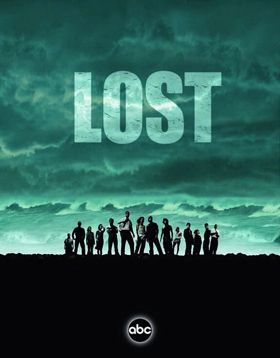
LostTo celebrate Lost's 100th episode – last week's terrific Faraday-centric "The Variable" – I briefly entertained the idea of writing a post entitled "100 reasons why you and everyone you know and everyone they know should watch Lost".

It's tragic that I probably could come up with 100 different reasons, but I figured I would avoid doing so in order to preserve the thinly-veiled façade that I'm not actually a big Lost geek. In any case, after about the forty-eighth reason, I probably would have descended into some really obscure arguments...

49. I actually consider those funky DHARMA jumpsuits highly fashionable.

50. Ben's beady, unblinking eyes. Say no more.

51. The way the show's title flashes across the screen at the end of each episode (usually following some jaw-dropping cliffhanger) never fails to send a chill down my spine.

52. Frank Lapidus: the most engaging minor character in a show packed with engaging minor characters.

53. Scrap that. Richard Alpert is the most engaging minor character in a show packed with engaging minor characters.

54. No, wait. Lapidus.

55. Alpert.

56. It's a tie.

And so on. But don't worry, aside from the above, this isn't going to be yet another post banging on about how brilliant Lost is (I needn't tell you the answer is "freaking"). I'll let the show's makers do that.

"It's a challenging show. It's not just a cookie-cutter procedural with a new case each week. There's a real depth to it. But I also know people who watch only occasionally and really enjoy it when they do." – Stephen McPherson, ABC President of Entertainment

"There are a lot of things happening with [Locke], and the writers give me a lot of room to do things. I like that they allow a wide range of ways of playing this character. There's a lot of potential for interpretation in how to play this character. I don't feel I'll be typecast when the show ends, because you see this character in so many ways." – Terry O'Quinn (John Locke)

"People often ask us if there are any characters on the show that we wouldn't kill. The answer is no, everyone's fair game. With one exception. The most integral character on the show, the one we could not live without, is the music. And that is all a product of Michael [Giacchino]'s singular genius." – Damon Lindelof, executive producer

"We needed to express to the audience where the bookmark was in the novel. By announcing the end date, we signaled yes, we have a game plan, so you can rest assured that your investment in the show is going to pay off." – Carlton Cuse, executive producer

"There's a huge twist in the season finale. It's the best one to me, and I can't talk about it. When I read it, I couldn't stop thinking about it. It's part of that secret scene. I think it tops everything that's happened before this point. I would love to talk about it, but I can't." – Yunjin Kim (Sun-Hwa Kwon)

There's loads more in 100th episode retrospectives in both Variety and The Hollywood Reporter. There are a few spoilers for anyone not up to date with the previous episode, "Some Like It Hoth". You can also check out Jimmy Kimmel's amusing "guest spot" in "The Variable" below.

With 100 episodes down, Lost is now on the home stretch; a mere 20 episodes remain until the island vanishes for good. I aim to live a long and fulfilling life, but to be honest, I'll be content simply by not popping my clogs until after Lost's final episode.

Da Vinci Code sequel announced

Tuesday, 21 April 2009, 11:51 am | Comments (0)

It's hard to believe that it's been nearly six years since The Da Vinci Code first hit bestseller lists worldwide. Probably because during those six years, every living soul on the face of this planet seems to have read the real-time thriller, keeping it at the top of said lists for most of that time. At the height of the book's popularity, airlines may as well have substituted their in-flight magazines with copies of the controversial thriller. A money-raking film adaptation boosted sales even further.

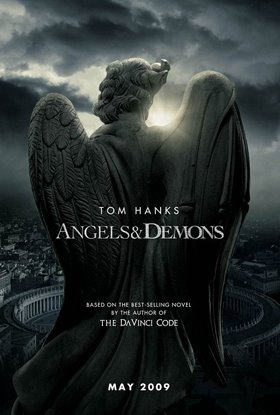
With next month's film adaptation of Angels & Demons set to bring Harvard symbologist Robert Langdon back into the limelight, Brown has today cannily announced the long-awaited follow-up to The Da Vinci Code.

The Lost Symbol will be released this September with US publishers Doubleday giving it a massive five million copy print run. According to the press release, the third Langdon thriller will take place over a 12 hour period, rather than Brown's four previous books, which were all set over 24 hours.

Until today, the novel possessed the working title of "The Solomon Key", which, though evocative of The Da Vinci Code, is a bit less generic than The Lost Symbol. Though the press release announcing the novel's publication doesn't give any clues as to its plot, previous reports suggest the book would see Langdon on US soil for the first time, entangled in a mystery involving the Freemasons.

Variety reports, rather unsurprisingly, that Columbia Pictures is moving forward with a film adaptation of The Lost Symbol set to follow the release of Angels & Demons.

Speaking of which, Columbia have released a sneak peek of Angels & Demons highlighting Hans Zimmer's soundtrack. For me, one of the highlights of the underrated Da Vinci Code adaptation was Zimmer's score, which culminated in the breathtaking "Chevaliers de Sangreal". The Angels & Demons score will take this track and expand upon it as a theme for Langdon. Sounds like it could be one of the soundtracks of the year for this film geek.

The Living Daylights (1987)

Monday, 20 April 2009, 8:49 pm | Comments (0)

The Living DaylightsDespite being a bit of a James Bond geek, I have to confess to having not seen most of the films in several years. To be fair, I've been living overseas for a few years, far away from the massive 20-film DVD box set that weighs down the fourth shelf of my new bookcase. But perhaps most crucially, since the arrival of Daniel Craig's superb 007, it's tough to settle for anything less.

That said, if there's one era of films it's worth revisiting in light of Craig's brooding, bloody and brilliant Bond, it's Timothy Dalton's. While Dalton has a sizeable following among hardcore fans, his two 007 outings are largely overlooked by the general public. Now that audiences have accepted a Bond who doesn't raise an eyebrow or offer up a groan-inducing quip at every opportunity, it's as good a time as any to return to revisit Dalton's debut Bond film, 1987's The Living Daylights.

The fifteenth 007 film was initially conceived as a Casino Royale-esque origin story exploring James Bond's roots. Despite this idea being shelved, The Living Daylights is a clear return to the character's edgier roots. Shying away from the excesses of the Roger Moore era, The Living Daylights is a great send-off as the series' last Cold War thriller.

Ian Fleming's "The Living Daylights", one of several short stories posthumously collected in Octopussy and The Living Daylights, is niftily used by screenwriters Michael G. Wilson and Richard Maibaum as a launching pad for the movie's fairly down-to-earth plot, which sees 007 assisting with the defection of a KGB agent. When the defector is subsequently abducted from British hands, Bond discovers a plot by a war-obsessed arms dealer to frame a Soviet general for the murder of a number of British spies.

Dalton, a Shakespearean-trained actor, has a fine understanding of Fleming's character, imbuing him with a dark, often nasty streak (witness the violent way in which he uses General Pushkin's mistress as a distraction). The actor had previously turned down the part in 1968 before vying for the role in The Living Daylights alongside Sam Neill and Pierce Brosnan (who accepted the role before NBC renewed his Remington Steele contract); both of whom lack Dalton's steely seriousness.

The film isn't entirely devoid of humour, and, unlike Dalton's violent follow-up Licence to Kill, most of it is well-placed. Dalton's grim delivery of Bond's one-liners – sparingly used here – lends some black humour to the proceedings.

The supporting cast is led by Maryam d'Abo as Kara Milovy, a professional cellist with whom Bond shares a surprisingly deep relationship. D'Abo makes the most of a pretty beefy Bond girl role. John Rhys-Davies is enjoyable as the underused General Pushkin, a part originally written as General Gogol, Walter Gotell's recurring KGB boss (the role was re-scripted when Gotell fell ill, though he does cameo during the film's final scene). Robert Brown, Geoffrey Keen and Desmond Llewellyn all reprise their recurring roles, outshining an embarrassingly wooden Caroline Bliss in her first appearance as the new Miss Moneypenny.

Where The Living Daylights does flag is in its lack of a strong – or even lead – villain. While Jeroen Krabbé has lots of fun as the slimy Koskov, Andreas Wisniewski's Necros is little more than a diet Red Grant, and Joe Don Baker, who would later return to the series to play a CIA ally in two of Pierce Brosnan's films, fails to leave an impression as arms dealer Brad Whitaker.

Director John Glen, who previously helmed Roger Moore's last three Bond films, is reinvigorated by the series' more serious approach. Despite a character-intensive script, the film does deliver some knockout action sequences. A training exercise gone awry on Gibraltar's rocky landscape makes for a memorable pre-credits sequence, while a Tangier-set rooftop chase and a thrilling climax involving a drugs-laden cargo plane are also among the action highlights.

Veteran Bond composer John Barry returns to compose his final 007 score, an unusually electronics-heavy soundtrack that ranks among his best. The most successful Bond soundtracks always use a great song as a base, and The Living Daylights has not one, but three. In addition to a-ha's catchy title song, The Pretenders contribute two excellent tracks that also form the basis of Barry's score: the brash "Where Has Every Body Gone" and "If There Was a Man", a sweet romantic ballad that also closes the film.

For fans of Daniel Craig's Bond who may not be acquainted with some of the earlier films in the series, The Living Daylights is a great place to start.

Lost: Season 5 (2009)

Wednesday, 1 April 2009, 10:10 pm | Comments (0)

Lost: Season 5Spoilers for Lost: Season 5 ("He's Our You")

In previous posts about Lost, I praised the show to the skies and encouraged newcomers to get onboard and see what all the fuss is about.

I take it all back. Why? Because despite the fact that Lost continues to surpass its own lofty standards, it's clearly a show for the hardcore fans. Instead, I urge you – more strongly than ever before – to start buying those DVD box sets and catch up. Lost is brilliant.

Once upon a time, casual viewers could easily tune in to Lost and still have a vague idea about what was going on. A self-contained flashback was more than enough to hold one's attention amid the polar bears and hatches and dead people walking around the island.

Those days are long gone. Unlike Alias (J.J. Abrams' pre-Lost series), which hit the reset button several times during its five-year run, Lost is now in the process of delicately assembling five seasons of stories into an impressively cohesive whole. The side effect of this is that it has separated the true fans from the casual viewers.

If you skipped out on Lost a season or two back and tuned back in now, you may be forgiven for thinking you're watching another show entirely, what with Jack, Kate, Hurley, Sawyer and co. currently ingratiating themselves with the DHARMA Initiative in a 1977-version of the island. The acceptance that time travel is possible in the Lost universe has proven itself not only a great way to finally reveal the island's twisted history, but also to allow our favourite castaways to become inextricably linked with it.

With just 24 episodes to go until Lost calls it a day, the resolutions to the show's main mysteries are slowly shifting into focus: the smoke monster, the four-toed statue, Richard Alpert's agelessness... but there are a few other questions I hope we'll get answered. I hereby present my top five lesser Lost mysteries I hope we see resolved before the island disappears for good...

1. Does Walt have special powers? One of Lost's few disappointments for me was the poor handling of Michael's storyline. Though he promisingly returned last year, the troubled dad was offed shortly after. While Walt, his son, had to be written out of the show (the actor was growing up too fast for the show's compressed timeframe), the death of his onscreen father seems to have sidelined any resolution to the notion that Walt is "special". A recent cameo by the character has given me renewed hope that this will be addressed in the future.

2. Who was Libby? The short-lived tail survivor who captured Hurley's heart before being gunned down by Michael was never treated to a flashback of her own. We've caught intriguing glimpses of her in other characters' flashbacks (why was she in the mental asylum with Hurley? was it just a coincidence that she gave Desmond the boat that took him to the island?), but she's got an almost clean slate for the producers to address her history however they like.

3. What happened when The Swan station blew up? Aside from the fact that Locke lost his voice and Desmond lost his clothes. With The Swan under construction in the show's current '70s setting, the answer to this may be closer than we think.

4. What happened between Benjamin Linus and the real Henry Gale? This was something the producers intended to address during the show's strike-shortened fourth season. It's not essential information, but there's a good story to be told about the hot-air balloonist Ben impersonated after being caught in Danielle Rousseau's trap. Heck, I just wanna see more of the creepy former leader of the Others.

5. What is "The Magic Box"? Remember Locke's father mysteriously appearing on the island back in season three? Ben claimed his sudden appearance owed to a "magic box" that would give you anything you desired. How about some answers to these questions?

The X-Files: Fight the Future (1998)

Tuesday, 17 March 2009, 11:32 pm | Comments (0)

The X-Files: Fight the FutureRevisiting 1998's The X-Files: Fight the Future after the release of the disappointing The X-Files: I Want to Believe only amplifies the strengths of the former and the flaws of the latter.

Unlike the "Is that it?" reaction elicited by last year's long-awaited sequel, Fight the Future proves itself to be one of the best TV-to-film transitions ever, deftly turning an already-cinematic show into a bona fide theatrical film.

Mostly filmed between The X-Files' fourth and fifth seasons, but released and set between its fifth and sixth, Fight the Future represents The X-Files at its creative peak. While fans of the series are no doubt better positioned to understand its tangled conspiracy yarn within the context of the show's ongoing story, the movie also offers a terrific starting point for franchise newcomers.

David Duchovny and Gillian Anderson reprise their roles as FBI agents Fox Mulder and Dana Scully, believer and sceptic, who discover evidence suggesting a Dallas building was bombed in order to destroy several human corpses infected with an extraterrestrial virus.

X-Files regulars Frank Spotnitz and Chris Carter (who together wrote the script) and director Rob Bowman make the most of cinema's broader canvas, both narratively and technically. Fight the Future expands on The X-Files' ambitious plot, presenting an epic conspiracy tale spanning four continents and 35,000 years in history. Bowman makes certain that every extra cent of the film's sizeable budget winds up on screen. All of the show's staples are present and accounted for – paranormal occurrences, shadowy conspirators meeting to ambiguously discuss their plans, unresolved sexual tension between Mulder and Scully – but on a much grander scale. A Hitchcockian chase through a corn crop is just one of a number of memorable action scenes.

The impact of agents' investigation – which sees them hung out to dry by their own agency – allows the film to examine the issue of trust, a key theme that runs throughout the series, characterised by its popular catchphrase: "Trust no-one". Infiltrating military facilities and chasing rogue tanker trucks, Mulder and Scully find they have only each other to depend on, and the will-they-or-won't-they? romantic subplot is only one aspect of their engaging relationship.

Most of the series' recurring characters appear, including Mitch Pileggi as assistant director Walter Skinner, Tom Braidwood, Dean Haglund, Bruce Harwood as conspiracy theorists The Lone Gunmen and William B. Davis as the show's iconic villain known only as the Cigarette-Smoking Man. In addition, Martin Landau is superb as Alvin Kurtzweil, a paranoid doctor whose suspicions may or may not be founded.

The film falters during an action-dominant third act that fails to give any meaningful payoff to the fireworks, but Fight the Future, in true X-Files style, delivers an open ending that leaves the viewer with an insatiable urge to continue untangling the labyrinthine plot via the popular TV series.

Topkapi (1964)

Thursday, 12 March 2009, 11:21 pm | Comments (0)

TopkapiI probably should have prefaced yesterday's fairly positive review of Brett Ratner's After the Sunset with the following: I'm a huge fan of the heist flick. Who hasn't been stuck in line at a bank or bored in a museum only to find themselves wondering how they could purloin something valuable from the premises – and get away with it? The closest I've ever come was when I forgot to return my baggage claim card at Amsterdam's Rijksmuseum. I'm counting on that card becoming very valuable one day.

There's something fascinating about a genre that positions a thief as the hero of a film. Ethically, you shouldn't root for the protagonist, but the joy of a heist film – and, particularly, a heist film done well – is that it leaves the viewer with a sense of appreciation. You admire the thief for pulling off what is often a remarkably elaborate crime.

For a superior, genre-defining heist comedy, look no further than Jules Dassin's Topkapi, the 1964 adaptation of Eric Ambler's The Light of Day. It is, quite simply, a heist film with everything: a gorgeous setting, a terrific cast, a good dose of humour and most importantly, a great caper.

Peter Ustinov landed an Oscar for his role here as Arthur Simpson, a bumbling small-time shyster, himself unwittingly duped by all and sundry. After Simpson is recruited by a pair of thieves posing as tourists (played by Melina Mercouri and Maximilian Schell) to drive their car across the Turkish border, customs officers discover a hoard of arms hidden in the vehicle's body. Simpson agrees to act as an informant for the Turkish government, who erroneously believe a terrorist act is in the offing, in order to guarantee his release. In the process, he becomes entangled in a scheme to lift a priceless dagger from Istanbul's Topkapi Palace.

That Ustinov's (deserved) Oscar was for Best Supporting Actor is a curiosity, as his clueless swindler is central to Topkapi's plot. Simpson is the most amateur of the amateurs drafted by Schell's Walter Harper to pull off his heist. He remains consistently flustered, even though he is oblivious to being duped and used every step of the way. It's a terrific performance for a role that could have easily been as irritating as it is ultimately endearing.

Ustinov outshines the rest of the cast, ranging from Mercouri's rather simple temptress to Robert Morley's brilliant mechanical genius (who gets one of the picture's best sight gags involving a greasy rag). Schell's dark good looks work in his favour as the smooth Harper, while Akim Tamiroff has a lot of fun as the gang's drunken cook.

Topkapi's overarching story is a simple one, but Dassin revels in the smaller details of the heist. Monja Danischewsky's script gives the viewer obscure glimpses at Harper's plot – such as the scene in which Simpson proves his worth by dragging a couch attached to a length of rope across a room – but leaves the puzzle incomplete until the final act. The purposes of the other members of Harper's motley crew, including an acrobat and a toy-maker, are also tantalisingly, but ambiguously laid out in the lead-up to the main event.

And what an event! Topkapi's hugely entertaining heist sets a high bar for the genre, as the crew split up over two locations in order to pull off the daring theft. It's a nerve-racking sequence, wisely devoid of music. The sound of a rope tightening or a cog turning becomes deafening in a void of silence, greatly heightening the sequence's realism. It's equally gorgeous to look at, with Dassin never neglecting the stunning Istanbul scenery, even during the film's climax (from beginning to end, Topkapi is imbued with that travelogue feel so rare in contemporary cinema).

While I won't spoil the heist itself, it should be noted that Mission: Impossible's oft-parodied scene in which Tom Cruise suspends from wires above a series of motion sensors, actually has its roots here. In fact, Topkapi is said to have inspired the original Mission: Impossible television series.

Forty-five years after its release, Topkapi holds up surprisingly well. The editing in the film's opening sequence shows its age, the first act has some minor pacing issues and the movie's final scene is reminiscent of a dated sitcom, but these are just a few flawed moments. Topkapi is a landmark in the heist genre, as sharp, stunning and unique as the jewelled dagger at the centre of its story.

After the Sunset (2004)

Wednesday, 11 March 2009, 5:13 pm | Comments (0)

After the SunsetWarning #1: the following is a review of a Brett Ratner film – the much-maligned director who ran the X-Men franchise into the ground with The Last Stand and who gave us the cinematic pairing no-one asked for in the Jackie Chan/Chris Tucker-led Rush Hour series.

Warning #2: it's not an entirely negative review.

After the Sunset, a 2004 heist flick featuring Pierce Brosnan, Salma Hayek, Woody Harrelson, Don Cheadle and Naomie Harris, is a film I've always had an inexplicable soft spot for. Deep down, I know it's not a classic. Heck, superficially, I know it's not a classic. But I do consider After the Sunset a success in that overdone "light-hearted film with a cast of good-looking people set in an even better looking location" genre. Best of all, it's devoid of the kind of self-satisfied smugness that makes the Ocean's films so difficult to endure.

After the Sunset begins where most heist films end, as jewel thieves Max Burdett (Brosnan) and Lola Cirillo (Hayek) retire to the Bahamas after stealing a valuable diamond. In pulling off their last caper, the pair elude Max's FBI nemesis, Stan Lloyd (Harrelson), who's spent the past seven years of his life trying to catch him. When Lloyd shows up in the Caribbean, convinced Max is planning to steal another priceless gem on display in a berthed cruise ship, the pair form an unexpected bond.

Pretty much everything in After the Sunset has been done before and done better – for starters, check out Brosnan's superb remake of The Thomas Crown Affair – but it remains a fun, undemanding, inoffensive caper comedy.

The cast has some enjoyable chemistry; Brosnan and Harrelson make an unlikely comedy duo, sharing a number of the movie's best scenes. Meanwhile, Hayek and Harris' characters are more than just (admittedly, spectacular) eye candy (actually, After the Sunset's women are far more balanced and level-headed than the men). Cheadle's Henri Mooré, a local entrepreneurial gangster, is underused as the film's most intriguing character. Before his unsatisfactory exit, he does deliver one of the movie's best lines after Max discovers Mooré is really American: "Yes, actually, it's Moore. I put the little thing on the 'e'. Matches the culture."

After the Sunset's emphasis is clearly on comedy and characters – there's a particularly nifty gag involving Max and Stan attempting to salvage each other's relationships over dinner – but it's at the expense of the film's flimsy heists, the intricacies of which should be the jewel in a caper film's crown. Sadly, both of the movie's heists are lazily undeveloped, which is a fairly damning flaw for a film of this genre.

Ratner makes extensive use of the gorgeous Bahaman scenery and the cinematography is full of rich, vibrant colour. Meanwhile, veteran composer Lalo Schifrin, the musical genius who gave us the Mission: Impossible theme, delivers a slick, low-key score (though it reaches ridiculous heights of cheese during the movie's romantic climax).

After the Sunset is far from perfect, but there are worse ways to spend an hour and a half. It's a bit like one of those holidays where you sit about and don't do a thing – the time whizzes by quite breezily; just don't expect to have gained anything from the experience.

Watchmen (2009)

Thursday, 5 March 2009, 10:19 pm | Comments (0)

WatchmenSo, yesterday I praised the heck out of Watchmen, Alan Moore and Dave Gibbons' esteemed graphic novel set in an alternate 1985 in which the world is teetering on the brink of nuclear war. Does the much-hyped film version live up to the expectations that accompany any adaptation of such acclaimed source material?

For the most part, yes. Director Zack Snyder captures much of the spirit of the graphic novel, which offered a refreshingly cerebral take on the "superhero genre". Fans of Watchmen will relish seeing the book's unique imagery represented in live action form. Even as someone who only discovered Watchmen less than a week ago, hearing masked vigilante Rorschach's gravelly narration taken word-for-word from the book, or seeing the action scenes painfully reconstructed shot-for-shot from the graphic novel's frames, enlightened my inner geek.

Watchmen opens with the brutal assassination of a vigilante named The Comedian, whose death sparks theories of a plot against masked heroes. This opening scene, coupled with one of the best title sequences in years (a three-minute montage of moments in the lives of the earliest superheroes, accompanied by Bob Dylan's "The Times They Are A-Changin'"), is arguably the highlight of the film. In just a brief, few minutes, the audience is thrown headlong into the history of this bizarre, alternate reality. It's moving, intriguing and beautifully shot and edited.

Snyder's film remains incredibly faithful to its source material, despite lopping a number of my favourite subplots and sequences in order to get the movie's runtime down to a still-pretty-meaty 161 minutes. Snyder plans to release a director's cut on DVD, containing an extra half hour of footage, which I suspect will benefit the film greatly. (Additionally, an animated film based on the brilliantly dark "Tales of the Black Freighter" story-within-a-story from the original comic is due to be released on DVD in the near future.)

Where Snyder does deviate from the graphic novel (as opposed to excising content due to time restrictions), it's often an improvement. In particular, the villain's ultimate plot, or rather the means by which he aims to achieve it (which I criticised yesterday), is altered here, becoming a tighter, tidier scheme with the same end result. It's difficult to elaborate without spoiling the film, but it's a marked improvement on what was, for me, one of the graphic novel's few flaws. Unfortunately, the absence of the sequences missing from this cut of Watchmen mean we don't fully grasp the scope of the final act's devastation; here's hoping this will be rectified with the director's cut of the film.

Watchmen's faithful transfer to the screen is also due in large part to its cast, which doesn't contain a single A-lister (a major plus). Rather, the film is populated by a very capable group of actors who could only individually be described as "that guy/girl from...". For the most part, all embody their roles with a perfect understanding of the original book's appeal: that Watchmen's characters were not "super" heroes, but rather a random patchwork of real people with real flaws. Standouts include Patrick Wilson (that guy from The Phantom of the Opera) as Daniel Dreiberg/Nite Owl, Jackie Earle Haley (that guy from Little Children) as Walter Kovaks/Rorschach and Jeffrey Dean Morgan (that guy from Grey's Anatomy) as Edward Blake/The Comedian. All of Watchmen's characters are mired in a kind of murkiness and ambiguity that more popular superheroes don't even come close to representing.

My only minor niggles with the cast were Matthew Goode (who's almost too young for the part of Adrien Veidt) and Billy Crudup (though that may have more to do with the difficulty of depicting a character who was vaporised in a radiation accident only to regenerate in the form of a bright blue super human who possesses a range of powers, few clothes and an oft-featured bright blue knob, because he is superb in his pre-accident flashbacks). The fact that Watchmen is one of the best-cast comic book adaptations ever is a major boon in light of the story's ensemble nature.

The cinematography, special effects and costumes are all terrific. Special praise goes to Watchmen's superb soundtrack, which features a fantastic assembly of songs, each beautifully fitting and unfitting for the scenes they accompany.

Yet as much as I found to enjoy in Snyder's adaptation, I can't help but appreciate Alan Moore's snobbery that Watchmen could only ever be pulled off within the confines of the comic book medium. The writer told Entertainment Weekly in 2008, "There are things that we did with Watchmen that could only work in a comic, and were indeed designed to show off things that other media can't." I'm inclined to agree.

Even though Snyder's take on Watchmen is probably as faithful as any adaptation could ever get, everything about the story, including its very context, functions so much better in the comic book medium that any transition to film was bound to live in the shadow of its source material. Many of the book's talky sequences, often dealing with heady existential subjects, are much more engaging on the printed page than on the screen. Moreover, the absence of any equivalent to Moore's engaging and articulate written extracts that close each chapter and contextualise much of the story are sorely missed. Meanwhile, the movie's excessive violence, though accurately translated from the book, at times seems like a bone tossed at fans of the so-called "torture porn" genre. In short, the film version failed to leave me with the same sense of awe at the saga unfolding before me as the graphic novel did.

Like its original format, Watchmen probably isn't destined to be crowd-pleasing fare. I suspect it may even divide fans of the graphic novel as much as it will moviegoers (I'm hoping the director's cut will amend most of my bugbears about this adaptation). It also lacks the psychological resonance that made the graphic novel such a landmark in its medium. Nevertheless, it remains a superior addition to the superhero genre, and one that will hopefully point filmgoers towards its phenomenal source material.

Angels and Basterds get trailers

Saturday, 21 February 2009, 8:05 pm | Comments (1)

Angels & DemonsTrailers for two of my most-anticipated films for 2009 have found their way onto the world wide web this week.

First up is Angels & Demons, the prequel-cum-sequel to Dan Brown's love-it-or-hate-it religious thriller, The Da Vinci Code. As I've written elsewhere on this blog, I really liked Ron Howard's film adaptation of The Da Vinci Code; it's not flawless, but there's plenty to enjoy, and it certainly didn't deserve the critical mauling it received upon its release.

That said, Angels & Demons is the superior book. There's less historical exposition, a tighter story and more action (I'm keen to see how the film handles one particularly fanciful stunt). The trailer's pretty standard for an action flick – it's the usual mish-mash of confusingly out-of-context quotes accompanied by a rising choral soundtrack – but I have high hopes for the film.

Tom Hanks returns as Robert Langdon (sans the hardly noticeable but inexplicably controversial mullet), joined by Ewan McGregor, Ayelet Zurer and Stellan Skarsgård.

With Howard breaking news this week that Brown has finished work on the third Langdon book (working title: The Solomon Key), expect Angels & Demons to be the second of a trilogy if it makes a wad of cash.

Personally, I'm still hanging out for a Deception Point adaptation.

Meanwhile, Inglourious Basterds (yes, that's the correct spelling) is shaping up to be a return-to-form for Quentin Tarantino. After the misstep that was his Robert Rodriguez collaboration Grindhouse (more of a throwaway curiosity than enduring cinema), the controversial filmmaker is back with this long-in-development World War II epic: Tarantino's first self-contained movie since 1997's Jackie Brown.

Inglourious Basterds, partly based on the more literate 1978 Italian film Inglorious Bastardssees a group of soldiers dropped into Nazi-occupied France posing as civilians. The trailer focusses on a Brad Pitt (who looks to have given a terrific performance) making a long-winded speech to his troops about collecting Nazi scalps. Vintage Tarantino in the making.

Lost: Season 5 (2009)

Wednesday, 4 February 2009, 11:32 am | Comments (0)

Lost: Season 5Spoilers for Lost: Season 5 ("Jughead")

It's best to consider Lost as the most demanding – yet rewarding – jigsaw puzzle you have ever tackled. Its story is a rich, growing tapestry of flashbacks, flashforwards and flashes in time that are slowly piecing together to form a beautiful, detailed image. It's a slow, often frustrating process, but when that piece you've been agonising over for so long finally slots into place, the reward is a giddy, euphoric feeling.

Three episodes into its penultimate season and Lost has made finally made the leap into fully-blown science fiction territory, adding another dimension to its already complex narrative. So imagine that lovely flat jigsaw you've been working on is actually one of those funky 3D puzzles.

Casual fans may turn their noses up at this season's principal theme of time travel, but from the moment that thunderous monster began tearing up large patches of jungle in the pilot episode, Lost was showing its sci-fi hand. Its current state is the result of a very natural progression.

While last season's phenomenal Desmond-centric episode, "The Constant" proved that time travel exists in the Lost universe, the fifth season has taken that idea and ran with it. It's a bold move, but the show has danced around the notion for so long that it was an inevitable development.

"Because You Left", this year's season-opener, plunged viewers headfirst into a four-year-long mystery and made no apologies for doing so. If you'd never seen Lost before, lost is precisely what you'd have been. But if you have watched Lost, and watched it devotedly, it was a brilliant continuation of all the themes and characters that have made the show such compulsive viewing.

The second episode, Hurley-centric "The Lie", slowed things down a touch; the cursed lottery winner has always been one of the most relatable characters on the show. It also featured a great expanded role for Hurley's father, played by Cheech Marin. Meanwhile, "Jughead", episode number three, continued the show's run of virtually flawless Desmond episodes. Oh, and I'd like to note that eccentric scientist Daniel Faraday, who I initially felt was overplayed by Jeremy Davies, is developing into one of the most intriguing characters on the show.

Lost has always been an ensemble programme, and that's never been truer than in the fifth season. After just three episodes, there's already been a list of returning guest stars long enough to bewilder anyone but the most ardent of fans. However, as that's precisely what I am, it's thrilling telly. If you struggle to keep up with who's who among the regular cast, good luck remembering returning characters like Ms Hawking, the enigmatic antique saleswoman who convinced Desmond that travelling to the island and pushing the button was his destiny (gibberish to non-fans) in an episode two years back.

If that wasn't enough, this season's new storytelling format that sees the remaining castaways visiting the island at various points in its past really requires viewers to brush up on Lost history (Lostory?). However, that's all part of the fun of unravelling the show's labyrinthine plot. With the island constantly shifting in time, the producers have given themselves the broadest canvas imaginable for exploring the island's past – and future.

Lost has long since become impenetrable for new viewers hoping to make heads or tails of its intricate plot, but that's precisely what makes it such a rewarding viewing experience. Pick up the DVD box sets and get stuck into it. And if you're really struggling with the Lost jigsaw, consider Lostpedia – a wiki entirely devoted to the television series – as the puzzle box from which you can cheat.

The Dark oversight

Friday, 23 January 2009, 9:00 am | Comments (3)

The Dark KnightThe Oscar nominations are in and there aren't many surprises among the contenders.

The Curious Case of Benjamin Button deservingly leads the field with 13 nominations, including Best Picture, Best Director (David Fincher) and Best Actor (Brad Pitt).

Best Picture favourite Slumdog Millionaire – a film I've been hanging out to see – comes in second with 10 nominations. Given how it swept the Golden Globes, expect it to put in a good showing here.

Meanwhile, biopic Milk landed eight nominations, putting it in third place alongside Christopher Nolan's triumphant reinvention of the Batman saga, The Dark Knight.

What's disappointing is that, despite an enviable haul of awards nominations and wins, The Dark Knight's Oscar nods are almost exclusively in the technical categories.

The blockbuster comic book flick became a record-setting global phenomenon when released last year, leaving a wave of Oscar buzz in its wake. However, The Dark Knight's lacklustre showing at the Globes, which saw the film land just a single nomination and win for Heath Ledger's awe-inspiring turn as the Joker, seemingly slowed the picture's Oscar momentum.

It's a rare occasion, but the Academy is not entirely averse to acknowledging record-shattering blockbusters. The Lord of the Rings: The Return of the King, perhaps the best parallel for The Dark Knight, managed to take home all 11 Oscars for which it was nominated (including Best Picture and Best Director). That same year, Johnny Depp was nominated for his first nuanced performance as Captain Jack Sparrow in Pirates of the Caribbean: The Curse of the Black Pearl.

Aside from a couple of surprising but worthy nods, including Robert Downey Jr's fantastic performance in Tropic Thunder and a screenplay nom for In Bruges (Colin Farrell's Golden Globe-winning turn somehow failed to be nominated), this year's contenders are typically po-faced. I was also holding out hope that Pixar's heartwarming WALL•E would defy the odds and also score a Best Picture nomination; alas, it wasn't to be, despite the film landing five nominations, including Best Animated Film and Best Original Screenplay.

The Dark Knight is a sure bet for Best Supporting Actor and most of its technical nods, but, like Return of the King before it, a picture with this much atmosphere, a phenomenal cast, some gorgeous cinematography and direction with such obvious respect for its source material, deserves that kind of recognition. It's not quite worthy of a win, but definitely of recognition.

To fans of the film: you have one last chance to relive The Dark Knight in the ultimate format; Warner Bros. are re-releasing the picture in IMAX cinemas around the world from tomorrow.

To the Academy: why so serious?

Lost: Season 5 (2009)

Thursday, 22 January 2009, 12:06 pm | Comments (1)

Lost: Season 4Spoilers for Lost: Season 4

Can you believe it? Lost is back tonight!

Following its groundbreaking first year, Lost settled in for a bumpy but thoroughly entertaining season and a half. It was then that the show's producers announced that Lost will end in 2010. With just three curtailed seasons remaining, a noticeable shift into focus occurred, and our favourite castaways were no longer wandering aimlessly through the jungle encountering endless random island weirdness.

Lost is in the unique position of being a blockbuster television programme with an incredibly intricate storyline. I think many people were turned off the show during its second and third years, fearing that Lost would become a victim of the kind of protracted, meandering storytelling that ultimately caused The X-Files' flame to flicker out. But ever since the end date announcement, Lost has confidently propelled forward, providing answers to existing mysteries, and tantalising new ones. This viewer has faith that there will be a worthwhile resolution at the end of it all.

For those who gave up on Lost, there's no excuse not to come back. While it makes no apologies if you miss an episode, and the show's producers have openly admitted that those who have never watched the show will be, erm, lost, during the fifth season opener, viewers who do their homework and fervently follow the show will be greatly rewarded. Lost is at the top of its game as one of the most exciting and intelligent shows on the box.

As we prepare to enter Lost's penultimate season, I present you with a brief cheat sheet to brush up on television's most perplexed castaways.

[insert flashback whoosh sound here]

Jack (rescued)
Everyone's favourite doc with daddy issues escaped the island and declared that the other escapees mustn't tell anyone about what happened there in order to protect the other survivors. Since rescue, Jack has been visited by Jeremy Bentham (the man in the coffin) who told him some terrible things had happened on the island since he left. Jack became racked with guilt over abandoning the other survivors, including Claire, who he learned is his half-sister.

Claire (unknown)
Since being all blowed up in an explosion while the survivors battled the freighter folk, Claire's been acting incredibly strange. Her current pasttime seems to be hanging out in that creepy moving shack with her and Jack's dead father, Christian Shepherd.

Kate (rescued)
Upon rescue, Kate went to court for her crimes and was given 10 years probation on the condition she remain in California. Kate and Jack were briefly engaged. Claire's child, Aaron, is living with Kate. Presumably without contributing any rent, the slacker. Kate is living under the pretence that Aaron is her child.

Sawyer (on the island)
Sawyer sacrificed his own rescue so that the other survivors could escape. Before doing so, he whispered something in Kate's ear. He probably asked her to feed his fish.

Juliet (on the island)
Juliet was last seen drinking rum with Sawyer on the beach. Yo, ho, ho, etc.

Daniel (missing)
Eccentric physicist Daniel was last seen ferrying people to the freighter off the island. He has developed a bond with Desmond, who is his "constant", something too complicated to do anything but link to here. Brush up on that, as time travel is set to be a major part of the fifth season.

Miles (on the island)
Ghost-whisperer Miles remains stranded by choice, opting not to ride with Daniel to the freighter. Bit weird.

Charlotte (on the island)
The mysterious Charlotte also opts to stay on the island. Although it transpires she's been there before...

Hurley (rescued)
Hurley's curse hasn't escaped him since being rescued. After seeing visions of the deceased Charlie and Mr Eko off the island, he is readmitted to the same mental institution he was in before the plane crash. He has also been visited by Jeremy Bentham. Oh, and those numbers still haunt him.

Michael (dead)
By delaying the detonation of a large amount of explosives aboard the freighter, Michael sacrificed himself in order to give the survivors the time they needed to escape. Christian Shepherd appeared to Michael moments before he died.

Jin (presumed dead)
Jin's fate is uncertain, but he was seemingly caught in the inevitable explosion of the freighter.

Sun (rescued)
Sun escaped the island but, hopeful that Jin survived, she makes a pact with big baddie Charles Widmore to help him find the island.

Ben (magically appeared off the island after turning a giant, frozen wheel)
Upon instruction from Jacob (overseer of the island), beady-eyed Other Ben assisted Locke to "move the island". To where (or when) remains a mystery. In doing so, he was teleported to the Sahara desert 10 months into the future. After the death of his own daughter at the hands of Widmore's men on island, he swears to kill Widmore's daughter in order to settle the score.

Sayid (rescued)
After escaping, Sayid married his beloved Nadia who was later murdered. Ben finds Sayid and tells him the culprit was one of Widmore's men, leading Sayid to become a mercenary for Ben.

Desmond (rescued)
Desmond's rescue remains unknown to the rest of the world (unlike the highly-publicised rescue of the Oceanic 6). He was swiftly reunited with his beloved Penny... Widmore's daughter.

Locke (dead?)
We recently learnt Locke has been watched from birth by ageless Other Richard Alpert. On the island, he made contact with Jacob, who told Locke to move the island. After the island moves, Locke will become leader of the Others. On the mainland in the future, Ben visits Jack, who tells him that in order to save the stranded survivors, everyone who left the island must return, including the deceased Jeremy Bentham, who, it turns out, is John Locke.

Ooooooo...

Anyway, Lost. Brilliant. Watch it.

24: Season 7 (2009)

Saturday, 17 January 2009, 7:17 am | Comments (0)

24: Season 7Spoilers for 24: Season 7 ("11:00 a.m. – 12:00 p.m.")

After the two-hour taster that was 24: Redemption, the world's best (and only) real-time thriller series is back in all its day-long glory.

Having been subpoenaed from the fictional African nation of Sangala, Jack Bauer is facing trial as part of the now-disbanded CTU. Within minutes of the trial beginning, he's summoned by the FBI who are investigating a number of technology thefts, seemingly orchestrated by none other than Tony Almeida, Jack's long-dead colleague.

It's been two years since 24's sixth season performed one of television's finest ever displays of shark-jumping, but its creators promised a major overhaul this year. Have we got it?

Four hours in, my answer is: yes and no. The shift of location from Los Angeles to Washington is a welcome move and the show's directors unafraid to show it off with lingering shots of various Washington landmarks. In scrapping CTU, 24's creators have also ditched most of the sixth season cast (wise move: they were mostly insipid).

There are still a few familiar faces; most notably, Carlos Bernard's Tony Almeida has been resurrected as a bad guy only to have his alliance clarified within the first few episodes – he's actually undercover, despite dabbling with the villains for a couple of years after his alleged death (I'm still not convinced that it was always intended to bring Tony back from the dead, but as it looks like we're stuck with him and his annoying facial hair, I'll move swiftly on). Almeida's working with his former CTU colleagues Chloe O'Brian and Bill Buchanan who are operating outside the government in order to topple a far-reaching conspiracy within it.

It's a step in the right direction, but I wish 24's producers had gone further in shaking up the show. Having Jack work outside a government organisation is a neat idea, but he's been disobeying orders for so many years that it's basically the same thing. The FBI, meanwhile, is little more than a stripped-down CTU complete with bickering employees, large quantities of meaningless technobabble, scurrying extras and you guessed it: moles.

Meanwhile, in the White House, President Allison Taylor (played by a slightly-too-grandmotherly Cherry Jones) is faced with the difficult decision of withdrawing US troops from Sangala after being threatened by the terrorist group Tony has been undercover with. Her husband has been investigating the death of their son (last seen alive in 24: Redemption), which was officially ruled a suicide. Oh, and yep: the White House apparently has its fair share of hidden traitors, too.

Season five gave us a brilliant conspiracy story, which was a great culmination of 24's staple plot device of moles. But given we're stuck with it this season, I'd like to see our heroes unearth a slippery organisation (kind of like Quantum in the new Bond films) that are the real driving force behind the copious numbers of traitors found within the government over the past six seasons; something to something to tie this overdone plot device together and prove that the US government's screening process is actually mildly effective.

In any case, it's great to see 24 prove it has a bit more life left in its old ticker.

DVDs of Solace

Friday, 16 January 2009, 2:12 am | Comments (0)

For those who girls and boys who like to watch Daniel Craig shirtless and blowing stuff up respectively, Quantum of Solace has been announced on DVD and Blu-ray Disc for release in March.

There's a single-disc edition and a two-disc special edition, but both are a bit light on extras, making it clear that a second, better set will hit shelves around the time the 23rd James Bond flick arrives in cinemas. That said, if the follow-up release is anything like the swanky, extras-laden three-disc edition of Casino Royale, I won't complain.

The artwork, based on the film's posters, is below. I like.

Quantum of Solace (Single-Disc Edition DVD)Quantum of Solace (Special Edition DVD)

Prison Break’s run comes to an end

Thursday, 15 January 2009, 2:52 am | Comments (0)

Prison Break: Season 1So, Fox has opted to not renew Prison Break beyond its current fourth season. The news shouldn't come as a huge surprise to fans of the show, as it was widely speculated that Prison Break would not return next season.

Guardian columnist Charlie Brooker once described Prison Break as "the quintessential artefact of a civilisation sliding into absolute babbling madness", which, on the face of it, might be a fair assessment of the show's high-concept but patently absurd premise (man deliberately gets caught robbing a bank in order to break his innocent brother out of prison). However, the concept soon developed into a much grander storyline involving shadowy conspiracies and the like.

I'm a big fan of serialised dramas, so Prison Break was right up my alley, even if it doesn't touch the likes of 24 or Lost. The show's first year got a surprising amount of mileage out of its gimmicky concept, while the second season saw the show successfully expand into a Fugitive-esque thriller; special nod to the introduction of corrupt FBI agent Alexander Mahone, fascinatingly played by William Fichtner, instantly joining the hallowed echelons of New-Characters-Who-Join-Existing-Shows-And-Who-Fit-In-Oh-So-Bloody-Brilliantly.

The wheels began to fall off during Prison Break's strike-shortened third season. The new, exotic location (Panama) was the equivilant of giving a fresh coat of paint to a rickety old house. It wasn't bad television, but it was very familiar territory.

I haven't seen any of the fourth season yet, but Fox boss Kevin Reilly's comments that the show would be creatively stretched beyond its current season seem perfectly reasonable to me. Then again, I'm still floored that TV's king of gimmicks, 24, is approaching its eighth season.

Another six or so episodes of Prison Break will be filmed before the show is locked up for good.

24: Redemption (2008)

Sunday, 11 January 2009, 4:06 am | Comments (0)

24: RedemptionAfter its nearly flawless Emmy award-winning fifth year, real-time thriller 24 returned for the 2007 season with an opening quartet of episodes that culminated in a nuclear bomb being detonated in Los Angeles. What a setup! Tragically, within hours, 24 proceeded to jump the shark in spectacular style. For a show where contrivances are frequent but often excusable, this was no mean feat.

Having squandered a terrific premise, 24 went on to deliver a preposterous storyline about Jack Bauer's heretofore unmentioned father and brother being in kahootz with terrorists. Like a devoted fanboy, I refused to leave 24's side, optimistic that the show would make a recovery. I watched hopefully as big-name veteran actors like Powers Boothe and James Cromwell were brought in and swiftly wasted. 24's condition worsened and the sixth season's final moments saw Kiefer Sutherland's Jack Bauer mournfully looking downwards over the edge of a cliff. Hmm. Perhaps it was time.

Rather than slipping away, 24 – plot threads dangling – entered a coma, becoming one of the major casualties of the 2008 Writers Guild of America strike. Soon after the strike's commencement, 24's producers announced that the seventh season would be postponed until 2009.

Instead of denying us any real-time action in 2008, Fox announced 24: Exile (later retitled, rather appropriately, 24: Redemption), a two-hour telemovie to bridge the gap between the show's sixth and seventh seasons.

Having been served a subpoena by the American government for torture, Jack Bauer is lying low in the fictional African nation of Sangala, helping long-time friend Carl Benton (Robert Carlyle) with missionary work at a school. When the school is raided by militia from a rogue general who is plotting a coup, Bauer springs into action.

Meanwhile, in Washington, the United States is preparing to swear in its first female president, played by Cherry Jones (24 famously ticked the first black president box in its early years). A childhood friend of her son's has just stumbled across evidence that someone within the American government might be bankrolling the coup in Sangala.

I watched an extended cut on DVD, so I'm not sure what was broadcast and what wasn't, but a plot based around child soldiers is fairly dark stuff for American commercial television. Mind you, this is offset by the film's Washington cast who are so ridiculously good-looking, it makes you feel nauseatingly repulsive in comparison. Speaking of attractive things, 24: Redemption makes great use of its fresh locations (South Africa doubles for Sangala), which is promising for the show's Washington-based seventh season.

That said, the Washington-set stuff in this telemovie was probably the only bum note for me (with the exceptions of Powers Boothe and Peter MacNicol briefly reprising their sixth season roles). I have no doubt Cherry Jones will be given something useful to do in the show's seventh year, but her appearance here was primarily to establish her presidency. The subplot involving her son was fairly unengaging, despite Jon Voight popping up occasionally to look all menacing and mysterious.

On the upside, Kiefer Sutherland's devotion to the character refuses to waver (his performance remained the strongest element of the rubbish sixth season). It was fantastic to see Bauer in a location other than the United States. Carlyle gives a similarly enthusiastic turn, as do Tony Todd and Hakeem Kae-Kazim as the telemovie's villains.

Long-time 24 helmer Jon Cassar's direction is adequate, while Sean Callery's score is suitably exotic. Unfortunately, if you're aware of the cast and storyline of the seventh season, it's all a bit predictable. Nevertheless, 24: Redemption fits in the upper tier of Jack Bauer's adventures and points to a brighter future for the show.

Having seen the opening 17 minutes of the season seven premiere (which airs tomorrow), I'm pleased to say the show appears to be back on track. Despite an implausible return from a long-dead character and some extraneous FBI bickering that replaces the extraneous CTU bickering of past seasons, Jack Bauer's seventh day from hell looks to be a return to form for the groundbreaking action series, which is just as well: 24's eighth season begins shooting in April for broadcast in 2010.


All original content is Copyright © 2009 by popular culture... etc. | Firebug Theme by Blog Oh! Blog | Converted to Blogger Template by ThemeLib.com