Showing posts with label Comedy. Show all posts

Brüno (2009)

Saturday, 29 August 2009, 9:47 pm | Comments (0)

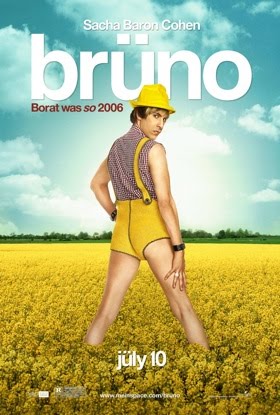
BrünoThe phenomenon of the difficult second album is alive and kicking in Brüno, Sacha Baron Cohen's follow-up to the brilliant (and brilliantly titled) Borat: Cultural Learnings of America for Make Benefit Glorious Nation of Kazakhstan. But while Brüno doesn't recapture the magic of watching Cohen's hapless Kazakhstan reporter navigate conservative America, it's often hilarious, which is more than can be said for most comedies that wind up in cinemas.

Brüno Gehard is Cohen's third creation from Da Ali G Show. In the guise of a fish-out-of-water documentary à la Borat, Cohen sends the extroverted gay Austrian fashionista to America with one goal: to become famous. In our current celebrity-soaked climate, it's a ripe target for satire and Cohen milks it wonderfully. "I'm going to be the biggest Austrian since Hitler," Brüno proclaims.

What follows is essentially a series of sketches/stunts/pranks loosely strung together by Brüno's pursuit of fame and his assistant's assistant's (no typo there) romantic pursuit of Brüno.

In perhaps the film's most cringe-worthy scene (or at least the most cringe-worthy scene that doesn't involve talking male genitalia), a parade of mothers spruik their babies to Brüno in an effort to have their children feature in a photo shoot. Shockingly, the parents show no qualms about their children potentially having liposuction, wearing Nazi uniforms or appearing crucified as long as their child has a shot at stardom. As an diatribe against fame, Brüno frequently hits a bull's-eye.

Of course, Brüno's other target is prejudice. It's an attack that's only partly successful as Cohen's character obviously embodies all the gay stereotype characteristics that the film itself would aim to stamp out. Fortunately, Cohen's unwitting co-stars are well-picked, including a gobsmacking sequence in which US Republican presidential candidate Ron Paul reacts horribly to Brüno's none-too-subtle passes.

Comparisons to Borat are inevitable given Brüno would never have been made were it not for the surprise box office success of the former picture. This follow-up is a much more uneven film, chiefly for the greater proportion of staged set pieces featured. However, Cohen's knack of nailing those stunts in which he would have had just one chance to do so is consistently impressive. This is never more apparent than during Brüno's joint interview with a Palestinian politician and a former Mossad agent, as well as in a remarkable separate encounter with an alleged terrorist leader.

Cohen's slapstick pratfalling is also a joy to behold. A sequence in which Brüno shows up at a fashion show in Milan while wearing a velcro suit is hilarious in its simplicity.

Brüno's crass, controversial and confrontational humour will obviously not appeal to all, but there are more than enough laughs here to justify a watch for fans of Borat's satirical stunt comedy.

“I will be missed.”

Thursday, 2 July 2009, 12:15 pm | Comments (0)

The Today Show's Richard Wilkins made the big-time this week when his embarrassing coverage of the supposed death of Jurassic Park star Jeff Goldblum was featured on The Colbert Report.

Goldblum was shown the cringe-worthy piece of journalism on Colbert's show and concluded he must be dead after all, before proceeding to eulogise himself.

Great stuff, but a sad indictment on the state of journalism. In an age of websites, blogs and social media, where anyone can spread falsehoods as swiftly and as accurately as a game of Chinese whispers, it's truly a rum state of affairs when these sick hoaxes aren't researched before appearing as fact on national television.


The Colbert ReportMon - Thurs 11:30pm / 10:30c
Jeff Goldblum Will Be Missed
www.colbertnation.com
Colbert Report Full EpisodesPolitical HumorJeff Goldblum

Naturally, the whole charade prompted Media Watch's Jonathan Holmes to give Wilkins a well-deserved bollocking on air.

Meanwhile, talk show host Jimmy Kimmel hit the street with the question everyone's been asking: where were you when you found out Jeff Goldblum was still alive?

The Chaser become the chased (updated)

Thursday, 4 June 2009, 8:17 pm | Comments (1)

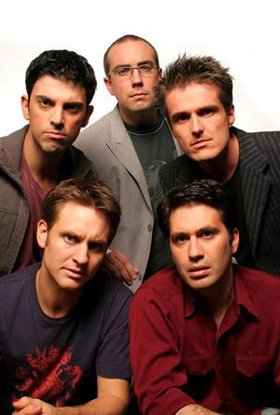
The Chaser's War on EverythingSatirical comedy team The Chaser have landed themselves in the media's bloodthirsty spotlight once again thanks to a sketch on last night's episode of The Chaser's War on Everything.

The sketch in question spoofed the Make a Wish Foundation in the form of a mock advertisement for a Make a Realistic Wish foundation, in which the dying wishes of children were turned down in favour of more practical gifts.

The backlash against the comedy troupe now seems to be in full force following last week's episode – the first new show in 18 months – which drew criticism about nearly every segment, most of which was ridiculously misguided.

Likewise, most of the complaints levelled at last night's show seem equally misjudged. It's daft to believe that The Chaser team created the sketch in anything but an absurdist sense, eliciting humour from the blackness of the subject matter and nothing else.

Criticisms have been as varied as charity foundations claiming it will make viewers think twice before enlisting their services to children being upset at the broadcast. Of course the show's creators aren't dissing the work of such charitable organisations, and of course they aren't mocking terminally ill children. The comments also raise the question of why children are being allowed to watch post-watershed programs.

Most of all, though, it beggars belief as to why those complaining would continue to watch a show with a history of pushing the envelope and generating controversy and, in doing so, submit themselves to be so easily offended. Vote with your remote.

I first saw the sketch on Tuesday at the taping of last night's episode – you can catch my brief audience cameo about 17 minutes into last night's show – and would never have imagined the sketch would generate this kind of response. Of course, the media know how to create an outrage; the questions aimed at Chaser member Craig Reucassel during a media scrum this afternoon were as biased and unbalanced as they come. Likewise, was our Prime Minister ever going to express anything but disdain for the sketch, despite never having actually seen it?

It's unlikely the hubbub will end here. It's nothing new, after all – who could forget the reaction to the infamous Eulogy Song? And with a further eight episodes to go, there's little doubt that the media will continue to stoke The Chaser's fire for the sake of shifting more papers, scoring more website hits and grabbing higher ratings.

Update (5 June 2009)

Looks like it's the ABC who has voted with their remote – the broadcaster has pulled The Chaser's War on Everything for the next two weeks pending a review of the show's editorial process. The comedy team have responded to the ban on their official site: "We're disappointed by the decision and we don't agree with it."

In their apology, however, the team state what should have been obvious as they explain why the sketch was unworthy of the scuffle that erupted surrounding it.

We never imagined that the sketch would be taken literally. We don't think sick kids are greedy and we don't think the Make a Wish Foundation deserves anything other than praise. It was meant to be so over-the-top that no one would ever take it seriously.
Precisely. I'm largely opposed to censorship in any form, and this ban sets a dangerous precedent whereby any potentially edgy (and thus, potentially offensive) comedy could be considered unfit for broadcast. It's another victory for politically-correct moral crusaders, bent on taking any kind of free will out of the public's hands and transforming the country into a nanny state as a result of knee-jerk reactions designed to provoke drama. Of all the ills of the world to fight against... Where will it end? Even when the forcibly watered-down Chaser's War On Everything returns in two weeks, I suspect it won't be then.

Personally, I'm a big fan of Charlie Brooker's counter-complaint solution, concocted in light of the Jonathan Ross/Russell Brand ruckus late last year, which beautifully speaks for itself...

Maybe, just maybe, it's time to establish "Counter-Complaints": a method of registering your complaint about the number of knee-jerk complaints. And one should cancel out the other - so if 25,000 people complain, and a further 25,000 counter-complain, the total number of complaints is zero. It might lead to a lot of fruitless button-mashing, but at least we can keep our shared national culture relatively sane.

The Boat That Rocked (2009)

Friday, 15 May 2009, 11:18 pm | Comments (0)

The Boat That RockedThe scent of fresh popcorn wafts through the cinema as a throng of people march their way across the unnaturally sticky floor before getting settled into their seats and noisily wrestling with bags of M&Ms. Everyone's wallets are (a frankly absurd) $16.50 lighter, but no-one is complaining. It could only mean one thing: Summer Blockbuster Season™ is here!

Or there, rather. There being the northern hemisphere. Here, we're lumbered with the somehow less exciting winter blockbuster season. Still, doesn't really matter what the weather's like outside, right? This is the time to sit back, relax and enjoy popular cinema at its most popular.

So, you ask, which balls-to-the-wall, special effects-laden, action-fest did I kick off with? X-Men Origins: Wolverine? Star Trek? Angels & Demons? How about the latest film from the man behind Love, Actually and Four Weddings and a Funeral? Aren't I a good boyfriend?

To be fair, the association with these and the other romantic comedies on Richard Curtis' CV doesn't do justice to The Boat That Rocked, which is an unabashed ode to rock and roll.

It's the mid-1960s, a time of political upheaval, as Great Britain embraces a more liberal lifestyle. One of the key figures is the pirate radio station, Radio Rock, broadcast from a ship in the North Sea populated by a motley crew who burst out one popular track after another to the enjoyment of millions of listeners and the irritation of the country's conservative government.

Our ticket onboard Radio Rock comes via Carl (Tom Sturridge) who is sent there by his mother (Emma Thompson). She claims it's to be with his godfather (Bill Nighy, just being Bill Nighy), but there may be a deeper reason for it.

Essentially an ensemble comedy, Curtis' script flits between the exploits of boat's boisterous male crew members, including Nick Frost, Tom Brooke, Chris O'Dowd, Rhys Darby, Ralph Brown, Phillip Seymour Hoffman and Rhys Ifans. Onshore, Kenneth Branagh (as MP Dormandy) manipulates Jack Davenport's ambitious civil servant, Twatt (the name of whom may be the film's cheapest laugh), into finding some way to legally shut down Radio Rock for good.

Whereas Love, Actually (possibly the only romantic comedy I can stomach) worked by showing its large cast of characters through a series of vignette-type set-ups, The Boat That Rocked isn't nearly as deft in its handling of such a diverse group, even with its bloated 129 minute runtime. There are moments when the story really begins to gather steam before it suddenly changes direction to focus on a different shipmate.

Despite the muddled storytelling, the cast serve as well as one would expect in a light-hearted comedy such as this. While there are no real stand-out performances, O'Dowd, Branagh, Darby and Hoffman are among the most memorable stars. Special mention, too, ought to go to Ralph Brown's early morning DJ Bob, a man so reclusive his fellow crew members remain unaware that he's actually onboard; Brown's understated turn is the picture's real heart.

Props to Curtis for finding a unique premise and setting for a comedy flick, which the film exploits to the fullest extent. Indeed, The Boat That Rocked's final act, in which the ship's crew decide to evade capture by pulling up anchor, is perhaps its strongest.

Fans of the era's music will no doubt find much to enjoy, even if the film is positively slathered in sentimentality. It may be adrift more often than it steers the course, but The Boat That Rocked is the kind of inoffensive gender-mutual date film that will likely entertain most but be remembered by few.

Newswipe with Charlie Brooker (2009)

Tuesday, 28 April 2009, 10:10 pm | Comments (0)

Death, crime, war, puppies, the weather. It could only be the news.

I actually began university with the intention of having a career in journalism. However, after sitting through class after class trumpeting fair, balanced and objective reporting as essential, it became clear that real-world journalism was something else entirely.

I remain a news junkie, but my inner cynic always approaches the news with nothing short of an overflowing salt shaker. Quite simply, the news is a manipulative affair, whether it's tugging blindly at its audience's heartstrings, begging for viewers to send in feedback in a bizarre effort to make the news interactive or just plain old scaremongering. As a viewer, it's impossible to feel like anything other than a puppet, the recipient of constant instructions telling us how to think and act. Rarely does the news allow the viewer to come to his or her own conclusions.

What's troubling is the ease with which people do seem to accept whatever the news tells us. Which is what's makes Charlie Brooker's Newswipe must-see television. Brooker writes...

TV news now comes packaged as a dazzling CGI cartoon, with the names of star anchors included in the programme title, and an absurdly theatrical air of bombast underpinning every second of every broadcast. Traditional newspapers, beaten to the punch by the immediacy of the internet and 24-hour news networks, are becoming less and less bothered with breaking actual news than celebrity gossip, or provocative comment, or shouty campaigning. The internet, meanwhile, can be a great source of rapidly updated information, but is also home to an endless range of partisan news sources, paranoid imaginings, and outright hoaxes. Is it possible for anyone to truly know what the hell's going on?

A spin-off of the superb Charlie Brooker's Screenwipe, Newswipe takes an acerbic, hilarious, eye-opening look at the news. Like his terrific Guardian columns, Brooker hits the bull's-eye on pretty much every issue – adding a healthy shot of humour to the proceedings.

Because I'm a kind soul, here is the entire fourth episode of Newswipe (in three bite-sized chunks) dedicated to the recent G20 summit in London. If you're a news junkie like me, this is fascinating viewing. If you're not, watch it anyway. If anyone should tell you how to think and act, it's Charlie Brooker.

Topkapi (1964)

Thursday, 12 March 2009, 11:21 pm | Comments (0)

TopkapiI probably should have prefaced yesterday's fairly positive review of Brett Ratner's After the Sunset with the following: I'm a huge fan of the heist flick. Who hasn't been stuck in line at a bank or bored in a museum only to find themselves wondering how they could purloin something valuable from the premises – and get away with it? The closest I've ever come was when I forgot to return my baggage claim card at Amsterdam's Rijksmuseum. I'm counting on that card becoming very valuable one day.

There's something fascinating about a genre that positions a thief as the hero of a film. Ethically, you shouldn't root for the protagonist, but the joy of a heist film – and, particularly, a heist film done well – is that it leaves the viewer with a sense of appreciation. You admire the thief for pulling off what is often a remarkably elaborate crime.

For a superior, genre-defining heist comedy, look no further than Jules Dassin's Topkapi, the 1964 adaptation of Eric Ambler's The Light of Day. It is, quite simply, a heist film with everything: a gorgeous setting, a terrific cast, a good dose of humour and most importantly, a great caper.

Peter Ustinov landed an Oscar for his role here as Arthur Simpson, a bumbling small-time shyster, himself unwittingly duped by all and sundry. After Simpson is recruited by a pair of thieves posing as tourists (played by Melina Mercouri and Maximilian Schell) to drive their car across the Turkish border, customs officers discover a hoard of arms hidden in the vehicle's body. Simpson agrees to act as an informant for the Turkish government, who erroneously believe a terrorist act is in the offing, in order to guarantee his release. In the process, he becomes entangled in a scheme to lift a priceless dagger from Istanbul's Topkapi Palace.

That Ustinov's (deserved) Oscar was for Best Supporting Actor is a curiosity, as his clueless swindler is central to Topkapi's plot. Simpson is the most amateur of the amateurs drafted by Schell's Walter Harper to pull off his heist. He remains consistently flustered, even though he is oblivious to being duped and used every step of the way. It's a terrific performance for a role that could have easily been as irritating as it is ultimately endearing.

Ustinov outshines the rest of the cast, ranging from Mercouri's rather simple temptress to Robert Morley's brilliant mechanical genius (who gets one of the picture's best sight gags involving a greasy rag). Schell's dark good looks work in his favour as the smooth Harper, while Akim Tamiroff has a lot of fun as the gang's drunken cook.

Topkapi's overarching story is a simple one, but Dassin revels in the smaller details of the heist. Monja Danischewsky's script gives the viewer obscure glimpses at Harper's plot – such as the scene in which Simpson proves his worth by dragging a couch attached to a length of rope across a room – but leaves the puzzle incomplete until the final act. The purposes of the other members of Harper's motley crew, including an acrobat and a toy-maker, are also tantalisingly, but ambiguously laid out in the lead-up to the main event.

And what an event! Topkapi's hugely entertaining heist sets a high bar for the genre, as the crew split up over two locations in order to pull off the daring theft. It's a nerve-racking sequence, wisely devoid of music. The sound of a rope tightening or a cog turning becomes deafening in a void of silence, greatly heightening the sequence's realism. It's equally gorgeous to look at, with Dassin never neglecting the stunning Istanbul scenery, even during the film's climax (from beginning to end, Topkapi is imbued with that travelogue feel so rare in contemporary cinema).

While I won't spoil the heist itself, it should be noted that Mission: Impossible's oft-parodied scene in which Tom Cruise suspends from wires above a series of motion sensors, actually has its roots here. In fact, Topkapi is said to have inspired the original Mission: Impossible television series.

Forty-five years after its release, Topkapi holds up surprisingly well. The editing in the film's opening sequence shows its age, the first act has some minor pacing issues and the movie's final scene is reminiscent of a dated sitcom, but these are just a few flawed moments. Topkapi is a landmark in the heist genre, as sharp, stunning and unique as the jewelled dagger at the centre of its story.

After the Sunset (2004)

Wednesday, 11 March 2009, 5:13 pm | Comments (0)

After the SunsetWarning #1: the following is a review of a Brett Ratner film – the much-maligned director who ran the X-Men franchise into the ground with The Last Stand and who gave us the cinematic pairing no-one asked for in the Jackie Chan/Chris Tucker-led Rush Hour series.

Warning #2: it's not an entirely negative review.

After the Sunset, a 2004 heist flick featuring Pierce Brosnan, Salma Hayek, Woody Harrelson, Don Cheadle and Naomie Harris, is a film I've always had an inexplicable soft spot for. Deep down, I know it's not a classic. Heck, superficially, I know it's not a classic. But I do consider After the Sunset a success in that overdone "light-hearted film with a cast of good-looking people set in an even better looking location" genre. Best of all, it's devoid of the kind of self-satisfied smugness that makes the Ocean's films so difficult to endure.

After the Sunset begins where most heist films end, as jewel thieves Max Burdett (Brosnan) and Lola Cirillo (Hayek) retire to the Bahamas after stealing a valuable diamond. In pulling off their last caper, the pair elude Max's FBI nemesis, Stan Lloyd (Harrelson), who's spent the past seven years of his life trying to catch him. When Lloyd shows up in the Caribbean, convinced Max is planning to steal another priceless gem on display in a berthed cruise ship, the pair form an unexpected bond.

Pretty much everything in After the Sunset has been done before and done better – for starters, check out Brosnan's superb remake of The Thomas Crown Affair – but it remains a fun, undemanding, inoffensive caper comedy.

The cast has some enjoyable chemistry; Brosnan and Harrelson make an unlikely comedy duo, sharing a number of the movie's best scenes. Meanwhile, Hayek and Harris' characters are more than just (admittedly, spectacular) eye candy (actually, After the Sunset's women are far more balanced and level-headed than the men). Cheadle's Henri Mooré, a local entrepreneurial gangster, is underused as the film's most intriguing character. Before his unsatisfactory exit, he does deliver one of the movie's best lines after Max discovers Mooré is really American: "Yes, actually, it's Moore. I put the little thing on the 'e'. Matches the culture."

After the Sunset's emphasis is clearly on comedy and characters – there's a particularly nifty gag involving Max and Stan attempting to salvage each other's relationships over dinner – but it's at the expense of the film's flimsy heists, the intricacies of which should be the jewel in a caper film's crown. Sadly, both of the movie's heists are lazily undeveloped, which is a fairly damning flaw for a film of this genre.

Ratner makes extensive use of the gorgeous Bahaman scenery and the cinematography is full of rich, vibrant colour. Meanwhile, veteran composer Lalo Schifrin, the musical genius who gave us the Mission: Impossible theme, delivers a slick, low-key score (though it reaches ridiculous heights of cheese during the movie's romantic climax).

After the Sunset is far from perfect, but there are worse ways to spend an hour and a half. It's a bit like one of those holidays where you sit about and don't do a thing – the time whizzes by quite breezily; just don't expect to have gained anything from the experience.

The Simpsons’ title sequence gets a facelift

Sunday, 22 February 2009, 7:25 pm | Comments (1)

It's been 20 years since The Simpsons debuted, forever changing the face of primetime television. With the long-running cartoon sitcom finally taking the high definition plunge, its iconic opening title sequence has been given a permanent 21st century makeover.

When I heard the sequence had been changed, I instantly worried that they'd butchered a classic, and the programme's slow but evident fall from grace would finally be complete. However, I'm pleased to report that The Simpsons' makers have actually outdone themselves: it's a winner!

At its core, it's the same sequence, but the opening has been completely updated with characters and gags more faithfully the show's 20-season history. Gone are appearances from early players like Bleeding Gums Murphy (who?), replaced by cameos from regular characters, including Ralph Wiggum, the gun-toting Texan, Apu's octuplets and Hans Moleman. Some of my choice gags to watch out for: a billboard featuring a forlorn Krusty flogging funerals, and the products that comprise Marge's grocery shopping.

Like most people, I used to be an avid viewer of The Simpsons, but its declining quality over recent years, coupled with the dual resurrections of Futurama and Family Guy, has given me less incentive to check out what was once staple viewing. However, I caught a recent episode (in which Nelson befriends Bart) while in transit from Honolulu to Sydney and was pleasantly surprised at its quality (the show is almost always at its best during its more human episodes).

The high gag rate of The Simpsons' new opening sequence actually has me hankering to sit down and watch some new instalments of TV's original dysfunctional, non-prehistoric cartoon family.

Tropic Thunder (2008)

Tuesday, 10 February 2009, 6:07 pm | Comments (0)

Tropic ThunderFirst things first: if Robert Downey Jr. ever disappears from cinema again, I will be one unhappy chappy. Despite getting third billing behind Jack Black and Ben Stiller (who is also credited here with co-writing, co-producing and directing), Downey owns Tropic Thunder. He plays an Australian actor who gets so involved in his roles that he undergoes major pigmentation surgery in order to play a black man; it's a unique hook for a character and Downey is incredibly convincing in selling it. Like Heath Ledger's scene-stealing supporting role in The Dark Knight, the hype for Downey in Tropic Thunder is justified. His Oscar nomination is every bit as worthy as Ledger's.

Downey is part of a motley crew of actors abandoned in the Vietnamese forest by their director (an underused Steve Coogan) in an attempt to reign in an over-budget and behind-schedule war film. When the actors come across a gang of real-life drug runners, they debate whether the encounter is all part of the script and a series of fairly amusing misunderstandings ensues.

It's a high-concept comedy that, despite a crowd-pleasing cast of Stiller, Black, Downey, Coogan, Nick Nolte, Matthew McConaughey, and an unrecognisable Tom Cruise in an extended cameo, manages to be pretty offensive on a number of levels; this isn't family fare. The key is to remember that while Tropic Thunder seems to poke fun at taboo subjects such as disabilities, homosexuality and war, it's mostly taking sly digs at the representation of these subjects in Hollywood.

In fact, this is when Tropic Thunder is at its best: parodying Hollywood. Preceded by a handful of superb mock trailers (including one which hilariously juxtaposes Downey's "five-time Academy Award winner Kirk Lazarus" with "MTV Movie Award Best Kiss winner Tobey Maguire", who cameos as himself), Tropic Thunder opens with an extended action sequence from the film-within-a-film. It's a genuinely amusing take on the war genre: the camera lingers for far too long on the gore and dramatic sequences are way overplayed. When Tropic Thunder takes on the Hollywood machine – from Oscar-grabbing fare to blockbuster sequels – it's on fine form.

Unfortunately, once the cast realises the film they're shooting isn't a film at all, the satire makes way for average gags and the movie ceases to be particularly funny. Downey remains captivating, the locations look terrific (Hawaii doubles for Vietnam) and Tom Cruise's cameo stays shocking right until the credits roll (if only because it's Tom Cruise), but without the Hollywood mickey-taking, Tropic Thunder is just a slightly-above-average big-budget comedy.

The Trial of Tony Blair (2007)

Friday, 6 February 2009, 10:59 am | Comments (0)

The year is 2010 and former British Prime Minister Tony Blair is summoned to the Hague to face war crimes charges over his involvement in the Iraq invasion. That's the premise of The Trial of Tony Blair, a satirical Channel 4 telemovie first broadcast in 2007.

The Trial of Tony Blair's "what if?" premise is an intriguing notion, reminiscent of the conceit of faux-documentary Death of a President. However, The Trial of Tony Blair eschews any kind of realism for blatantly opinionated farce. It's a missed opportunity to delve into the mind of the embittered former PM. The film is a political mouthpiece and nothing more.

The Trial of Tony Blair begins with Blair (Robert Lindsay) handing over power to Gordon Brown in the run-up to the 2010 general election. Lindsay's Blair is a far-fetched caricature of the man, obsessed with his own legacy and increasingly tortured over his hand in the war in Iraq. It's a worthwhile performance, but, in light of the script, Lindsay's Blair is reduced to a buffoon of a man. (In the apparent interests of balance, Alexander Armstrong cameos as an out-of-touch David Cameron, but his appearances are too fleeting and disconnected to mask the film's political agenda.)

With Brown elected, Blair spends his days lost, waiting for phone calls from the likes of Bill Gates and Hillary Clinton (who has been elected President of the United States). He longs for the power and importance of his previous position. Cherie Blair, played coldly by Phoebe Nicholls, also becomes discontent with her new life. As it becomes increasingly likely that Tony Blair will face trial, the political forces that brought him to power and that now lie in the hands of others begin to turn against him.

There are plenty of elements the film gets right. Blair and Brown's abhorrence for each other is engaging stuff, particularly when Brown decides to hang Blair out to dry in an attempt to distance himself from the Blair/Bush era of politics. Later in the film, Blair is called to the US embassy hopeful of being offered some kind of position, only to be told that Hillary Clinton, who is due to embark on her second term campaign, will be spouting some nasty things about Blair in order to similarly disassociate herself from the war in Iraq – even though the US will continue to support Blair at the Hague.

When The Trial of Tony Blair makes these kind of jabs at the political scene, it really hits the mark; it's a dirty world where enemies can be anywhere. As if to illustrate this, there's a terrific scene in which Gordon Brown (a pouty Peter Mullan) is put in his place by a pair of children during a media tour of a primary school ("Are you the one my dad says is a born loser?" one child innocently asks).

Though the satire is mostly painted with far too broad strokes, when the movie arrives at the event in its title, the filmmakers skip off without exploring the trial itself. The movie's obvious political stance leaves little doubt as to how the trial would have turned out, but at a brisk 72 minutes, The Trial of Tony Blair feels like it's missing the vital third act.

Where Death of a President presented a bold, compelling and – crucially – neutral examination of a world leader's decisions, The Trial of Tony Blair takes the easy road to deliver a film that, while entertaining, is disappointingly shallow in its execution.

Desperate Housewives: Season 5 (2008-2009)

Wednesday, 21 January 2009, 9:50 am | Comments (1)

Desperate Housewives: Season 5 Minor spoilers for Desperate Housewives: Season 5 ("The Best Thing That Ever Could Have Happened")

Hi. My name's Matt. I'm a 23-year-old heterosexual male and I'm a fan of Desperate Housewives. There. I said it. Wanna fight about it?

I always get some strange reactions when I make the above statement (least of all because I'm threatening people with violence), but you know what? Anyone who judges Desperate Housewives based on its apparent reputation for being a light, fluffy show for women – a kind of primetime Bold and the Beautiful – is dead wrong.

Desperate Housewives might be slick, sexy and comical, but that's all subterfuge, for its overarching stories are dark mysteries with some truly disturbing twists in their unravelling. The subject matter allows the show's trademark black humour to flourish – at times, Desperate Housewives is outright hysterical. Unlike other dramatic serials, Desperate Housewives more or less wraps up every story arc by the end of each season, meaning that each mystery can be plotted out and resolved in a satisfying manner. Most importantly, though, it's smart, addictive television.

The final scenes of Desperate Housewives' fourth season saw the show take an unprecedented five-year leap forward in time that's seen the fifth season re-ignite the spark of the show's first and third years (it seems Desperate Housewives is at its best during the odd-numbered seasons). This year's mystery began with the arrival of Neal McDonough's sinister Dave Williams, husband to man-eater Edie Britt. The psychotic Williams, brilliantly played by McDonough, is secretly plotting revenge against one of Wisteria Lane's residents for reasons unknown. It's a compelling story on par with the mystery of Mary Alice's death and the tale of Orson Hodge's sick past.

"The Best Thing That Ever Could Have Happened", the series' milestone 100th episode, was broadcast this week. Opting to give this year's mystery a back seat, creator Marc Cherry served up a self-contained story based around guest star Beau Bridges' Eli Scruggs, a handyman with a heart of gold. Scruggs dies before the opening credits roll (there is much death within Desperate Housewives), prompting the main characters to reminisce about how he had impacted their lives.

What followed was a series of moving flashbacks that essentially re-engineered key moments in the characters' lives to show the involvement of the generous handyman. It was a neat trick that, like the sudden inclusion of Lost's maligned background castaways Nikki and Paulo, was pulled off effectively, even allowing us to revisit some familiar faces from the show's past.

It was a surprisingly moving episode that may have been light on the comedy, but it proved that for all the dark satire of suburban life, Desperate Housewives' characters are real people with real emotions. Serialised drama episodes are frequently overlooked at TV awards ceremonies, but I'd be very surprised if this standalone tale is doesn't receive a nod at Emmy time.

The Ricky Gervais Guide To... Medicine (2009)

Tuesday, 20 January 2009, 4:21 pm | Comments (0)

The Ricky Gervais Guide To... MedicineThe team behind the record-breaking podcast, The Ricky Gervais Show, is back with a brand new series of unrelenting drivel so sidesplittingly funny that I strongly advise against listening to it on public transport for fear of giving the impression that you're actually laughing at the creepy-looking guy sitting directly across from you.

I couldn't even begin to succinctly describe Karl Pilkington, but most of my friends will have probably heard me pass on a bizarre piece of unwisdom from him at some point or another. Prodded by fellow podcasters Ricky Gervais and Stephen Merchant (co-creators of two of the best British comedies of recent years: The Office and Extras), Pilkington shares his uniquely bizarre outlooks on life. Much of what he says is pure, concentrated bollocks, but there's occasionally a strange profundity to what he comes out with.

For those unfamiliar with his nonsensical genius, here are a few of Karl Pilkington's most memorable quotes from The Ricky Gervais Show...

On the mind: "Does the brain control you or are you controlling the brain? I don't know if I'm in charge of mine."
On evolution: "It goes bacteria, fish, mermaid, man..."
On gravity: "Could the world fall?"
On having a doppelgänger: "How would I know which one I was?"
On seeing an ultrasound: "It was an awkward situation because [the mother] was happy with it. I was like 'Oh, God'. It was an odd-looking thing. I couldn't say 'Oh, it looks like you' because that would be a dis."
On getting his girlfriend's attention if he transformed into a slug: "It'd be impossible. I'd chuck myself into the salt pot or something."

While The Ricky Gervais Show was essentially a series of glorious ramblings, The Ricky Gervais Guide To... Medicine is a touch more focussed, maybe even educational. It still contains some hilarious diversions (Karl describing an exhibition on Tutankhamun: "They had some video footage made up; it wasn't from the time"), while keeping in with the theme of medicine (Karl on the possibility that Russia or the US still has a supply of smallpox for military use: "To me, that's like in James Bond, when they don't kill him when they have the chance"). Pilkington summarises the world of medicine with this meaningless gem: "Today's cure is tomorrow's legache."

The Ricky Gervais Guide To... Medicine is occasionally a bit too crass for its own good, but when Gervais, Merchant and Pilkington's ramblings hit the target, it's nearly always a bulls-eye. After nearly eight years of chatter in radio and podcast form, it's amazing that there's still material to be plundered. As amusing as Gervais and Merchant are (which is very), the key to the trio's longevity lies in the fascinating mind of Karl Pilkington.

The show can be purchased from iTunes via the links at rickygervais.com.

In Bruges (2008)

Wednesday, 14 January 2009, 2:20 am | Comments (0)

In BrugesThese days, an original idea is a rare thing in cinema. In addition to the abundance of sequels, prequels, adaptations, remakes, reboots, reimaginings and reinterpretations thrust upon us each week, so many of the remaining films that get served up on screen are the same stale meal reheated and repackaged.
Yet there's a refreshing delight to be found in the occasional film that manages to take the same old ingredients – to continue with this clumsy metaphor – and turn them into something new and tasty. Which brings us to In Bruges, Martin McDonagh's surprising black comedy that breathes new life into the British gangster flick.

Brendan Gleeson and Colin Farrell play a pair of Irish hitmen instructed by their handler (Ralph Fiennes) to lie low in Bruges for a couple of weeks. Gleeson's Ken is a seasoned assassin with an unexpectedly mild-mannered side, who relishes the opportunity to soak up the atmosphere and culture of the medievil Belgian city. Farrell's Ray, on the other hand, is a novice assassin, tortured by his first botched job, who becomes instantly bored with Bruges.

When Ray stumbles onto a cheap movie being shot in the city centre ("They're filming midgets!" he excitedly exclaims), the duo inadvertantly become entangled with a pair of con artists, hard drugs, prostitutes and a racist dwarf. Things go from bad to worse when their handler, Harry, informs Ken of the real reason behind their exile to Bruges.

It all sounds a bit generic, but McDonagh's script is ripe with quick-witted dialogue and black humour, evocative of a restrained Quentin Tarantino or Guy Ritchie flick. In Bruges is eminently quotable and features some truly hilarious exchanges, including a fiery Harry acting incensed that Ray isn't enjoying himself in Bruges ("How's a fairytale town not somebody's f***ing thing?") and Ray sharing his theory that dwarfs have higher suicide rates (with the exception of "the R2D2 man ... he's still going").

There's also a great sequence in which Ken, alone in his and Ray's shared hotel room, elaborately fakes Ray's exit in order to trick Harry into thinking Ray was there in the first place, only to have to repeat the ordeal when Harry suspects Ray never left at all.

The cast – particularly the starring trio of Farrell, Gleeson and Fiennes – are on top form, clearly energised by McDonagh's unique script. Like Pierce Brosnan, who also brilliantly played a tortured hitman in black comedy The Matador, Gleeson and Farrell succeed in making their assassins relatable, human characters (the latter took home a Golden Globe for his role here). Fiennes, meanwhile, is delightfully intense as the duo's boss. Their strong performances pay off as the film's characters converge for the inevitable shoot-out climax.

The city of Bruges is also as visible a character in this film as the hitmen who descend upon it. Bruges comes in for a right bollocking throughout ("It's in Belgium," the film's characters are frequently informing each other, as if it's the most obscure place on Earth), before its quaint virtues eventually come to light. Having visited Bruges myself, it truly is the perfect city to fulfil its purpose here.

With plenty of swearing and an overly violent climax, In Bruges might not be everybody's cup of tea. But for anyone after a hilarious and inventive black comedy with some star performances, look no further than In Bruges.

Ten films to bet on in 2009

Friday, 9 January 2009, 2:13 am | Comments (0)

Angels & Demons

The cinema gods are vengeful gods, for 2008 was the year we were blessed with The Dark Knight and punished with Mamma Mia!. What does 2009 have in store? Read on for my picks...

Watchmen (6 March, 2009?)
Potentially The Dark Knight of 2009, the film adaptation of Watchmen is currently the subject of a bitter legal battle that may see its release postponed into 2010. I haven't read Watchmen yet, but it's considered to be the most critically-acclaimed graphic novel ever (it even made Time's 100 best novels of all-time). The amazing trailers show that the film appears to do it justice.

This Side of the Truth (20 March, 2009)
Ricky Gervais' feature film directorial debut is a high-concept comedy set in a world where lying was never invented. Gervais has assembled an impressive cast, including Jennifer Garner, Rob Lowe, Tina Fey, Jonah Hill, Christopher Guest, Patrick Stewart and cameos from Gervais regulars Stephen Merchant and Karl Pilkington.

Star Trek (8 May, 2009)
Star Trek! What a geeky recommendation, I hear you cry. Fair point, too. But before you start hurling insults my way, like, er, Trekkie, let me tell you that this instalment is helmed by none other than J.J. Abrams, the genius who gave us TV's Lost and Alias, as well as the enjoyable Mission: Impossible III. Abrams is a master of high-quality popcorn entertainment and if anyone could get me into a cinema to watch a bunch of fellows with pointy ears and bowl haircuts, it's him.

Angels and Demons (15 May, 2009)
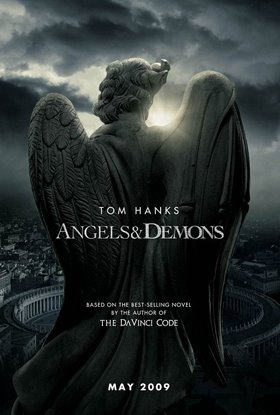
The critics predictably bashed it, but I actually loved Ron Howard's adaptation of The Da Vinci Code. Angels and Demons, though, is the superior book. It loses the huge amounts of exposition that were necessary in The Da Vinci Code and opts for a simpler race-against-time plot that sees Robert Langdon (played again by Tom Hanks) trying to stop a plot to destroy Vatican City on the eve of the papal election. Ewan McGregor, Ayelet Zurer and Stellan Skarsgård co-star.

Terminator Salvation (22 May, 2009)
Never thought I'd see a McG film on my most-anticipated list (he's to blame for those God-awful Charlie's Angels flicks), but here we are. Christian Bale is onboard to once again resurrect a dormant franchise and the trailers are looking rather spiffy. Don't expect it to reach the heights of Terminator 2, but with a script by reboot masters Jonathan Nolan (The Dark Knight) and Paul Haggis (Casino Royale, Quantum of Solace), it doesn't look like the write-off it could have been.

Up (29 May, 2009)
WALL•E set a phenomenally high bar for Pixar, but they're notorious for topping themselves. A 3D re-release of Toy Story is also set for later in the year.

Public Enemies (1 July, 2009)
Johnny Depp and Christian Bale team up with Michael Mann (the director who gave us Heat and Collateral) for this crime drama set during the Great Depression. Two actors at the height of their careers and one of the best crime directors around – what's not to like?

Inglourious Basterds (21 August, 2009)
Love him or hate him, Quentin Tarantino is one of the most influential filmmakers around. He's back after the commercial stumble that was his Robert Rodriguez collaboration, Grindhouse, with this clumsily-spelled wartime epic. Brad Pitt, Diane Kruger and Mike Myers head up a huge cast list.

Sherlock Holmes (20 November, 2009)
The more serious of two Holmes films currently in production, Guy Ritchie's take on Sir Arthur Conan Doyle's famous detective sees Robert Downey Jr. as the title character and Jude Law as Watson. Scenes for the film were being shot at London's St Paul's Cathedral when I visited there in October. (For those curious, the second Holmes pic is a comedy starring Sacha Baron Cohen and Will Ferrell...)

Avatar (18 December, 2009)
James Cameron returns to the director's chair for the first time since blockbuster mush-fest Titanic. Sci-fi pic Avatar uses groundbreaking 3D technology that's predicted to finally put 3D cinema on the map.

Runners-up
Coraline (6 February, 2009): surreal stop-motion adaptation from the director of The Nightmare Before Christmas, starring Dakota Fanning, Ian McShane and Teri Hatcher.
X-Men Origins: Wolverine (1 May, 2009): spin-off exploring Wolverine's formative years; can the X-Men franchise bounce back after the lacklustre Last Stand?
Brüno (15 May, 2009): Sacha Baron Cohen's Borat follow-up will also likely offend and entertain in equal measure.
Transformers: Revenge of the Fallen (26 June, 2008): more big, dumb action with extra-special effects from Michael Bay.
Green Zone (TBC): Matt Damon and Paul Greengrass reteam for this film about the American reconstruction project in Iraq.

Anyway, those are my bets for 2009. If any of them turn out to be rubbish, I apologise. If all of them turn out to be rubbish, blame the cinema gods.


All original content is Copyright © 2009 by popular culture... etc. | Firebug Theme by Blog Oh! Blog | Converted to Blogger Template by ThemeLib.com