Showing posts with label Thriller. Show all posts

Ashes to Ashes: Series 1 (2008)

Monday, 5 October 2009, 3:33 pm | Comments (0)

Ashes to Ashes - Series 1With Life on Mars – and the journey of time-travelling cop Sam Tyler – neatly wrapped up after two stellar seasons, the existence of sequel series Ashes to Ashes clearly owes to one thing and one thing only: Detective Chief Inspector Gene Hunt.

Philip Glenister's brutish, scene-stealing cop is back front and centre in Ashes to Ashes alongside Life on Mars sidekicks Ray Carling (Dean Andrews) and Chris Skelton (Marshall Lancaster), who have left Manchester to tackle the criminal scum of London. The trio are brought back to life when police psychologist Alex Drake (Spooks' Keeley Hawes) awakes in 1981 after being shot during the pursuit of a criminal in 2008. Like Tyler before her, Drake finds herself trapped in the past and working with Hunt and his team.

By the time Ashes to Ashes' first season wrapped up on ABC1 last week, it had more or less escaped the vast shadow of Life on Mars. The season's central arc, which saw Drake fighting to prevent the death of her parents in a car bombing, was engaging stuff, and her urge to return to her daughter in the present day meant Drake's even more determined to return to the present day than Tyler was.

Unfortunately, the show stumbles in overcoming the expectations attached to a sequel series. The transition from Life on Mars' gritty depiction of seventies Britain to the glitz and glamour of the 1980s in Ashes to Ashes is accompanied by a jarring tonal shift; at times, Ashes to Ashes borders on a parody of its predecessor. The ingredients are all there (the Ford Cortina is replaced by an Audi Quattro, the pub by an Italian restaurant and the Test Card girl by a very creepy clown) but there's an obvious sense of self-awareness to Ashes to Ashes that was lacking in the original series. While it may be befitting to Hawes' character, who, having read Sam Tyler's files, is convinced that her awakening in 1981 is all in her head, the jokier tone plays contrary Life on Mars' engaging conviction to its conceit.

(Curiously, the lighter Ashes to Ashes would probably have leant itself better to a US adaptation than Life on Mars did, particularly given the in-vogue setting of the 1980s. It also wouldn't have given US producers the ammunition they needed to make a God-awful literal twist in the final episode.)

Glenister still lends great gusto to Gene Hunt who is now aware that his old school policing methods are soon to be a thing of the past (it's ripe material only hinted at in series one – here's hoping it'll be further explored in future episodes). However, Hunt, like Skelton and Carling (sporting an ace perm), seem to be painted in far broader strokes than they were in Life on Mars – witness the bombastic introduction of Gene Hunt in episode one.

Hawes, meanwhile, eventually comes into her own as Ashes to Ashes ultimately does. Her constant (and occasionally annoying) narration in early episodes makes her a less endearing protagonist than John Simm's instantly likeable Tyler, but Drake's tetchy sparring with Hunt becomes a joy to behold. She also develops an intriguing relationship with Montserrat Lombard's Sharon Granger toward the season's end.

It's difficult to assess the first season of Ashes to Ashes as an independent entity (the show even takes its title from another David Bowie song, just one of dozens of funky '80s tunes to feature), and it was always going to struggle to recapture the brilliance and originality of Life on Mars. However, there's still life left in the show's fish-out-of-water premise and with that awkward transitional phase over, Ashes to Ashes should be well placed to develop an identity of its own as the second season begins tonight.

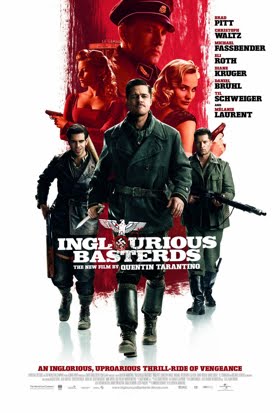
Inglourious Basterds (2009)

Wednesday, 9 September 2009, 6:14 pm | Comments (2)

Inglourious BasterdsIt was worth the wait.

Quentin Tarantino has been promising to unleash his World War II epic Inglourious Basterds upon us for over a decade. In the choppy wake of the critic-dividing Grindhouse experiment, Basterds is not only a return-to-form for the acclaimed director – it's perhaps his finest film yet.

Tarantino's love and appreciation of cinema is evident in virtually every frame of Inglourious Basterds; the film itself builds toward a finale set during the premiere of Joseph Goebbels' latest propaganda flick. Ostensibly a revenge tale, Basterds serves up an alternate history of World War II that is ultimately a propaganda movie of its own – and arguably a statement on violence in film.

Inglourious Basterds is perfectly paced, playing out like an on-screen novel; indeed, the film itself is split into five chapters during which Tarantino's knack for dialogue flourishes. Unlike those in most films, Inglourious Basterds' lush, natural conversations play out for longer than a mere couple of minutes – few directors could pull off an opening scene that is a fifteen minute conversation as well as Tarantino does here with an engaging sequence in which a Nazi interrogates a French farmer who may be harbouring Jews.

What follows is a sprawling tale as a vengeance-driven daughter of a slaughtered Jewish family, a defecting German actress, members of the British military, the Nazis and a group of OSS soldiers (the titular Basterds) converge, as characters do in Tarantino films, for a violent confrontation.

Although an ensemble picture, Inglourious Basterds benefits from just one megastar in its cast: Brad Pitt as beefcake Lieutenant Aldo Raine, who leads the Basterds on a mission to collect 100 Nazi scalps each. The rest of the cast (with the possible exception of Mike Myers, whose British general has overtones of Austin Powers) is mostly rounded out by a troupe of capable unknowns.

Two of the movie's stars shine particularly bright: Mélanie Laurent as Shosanna Dreyfuss, a Jewish girl whose family was murdered by the Nazis, and Christoph Waltz as Hans Landa, the man who ordered the deaths. Laurent's moving performance grounds the film in some semblance of reality, while Waltz, quite simply, is phenomenal; his nuanced performance as Inglourious Basterds' main antagonist is indescribable – a dead certainty for a Best Supporting Actor Oscar nomination.

There are a couple of jarring additions, including one of two sequences narrated by Samuel L. Jackson that overtly explains the explosive properties of nitrate film, but in the wake of some brain-crushingly moronic summer blockbusters, Inglourious Basterds is a gust of fresh air.

As expected for a Tarantino flick, violence abounds, and if you're likely to get squeamish at the sight of Raine and his cronies hacking the scalps off of evil Nazis, you have been warned. But when Tarantino (via Brad Pitt) professes during the film's final scene that Inglourious Basterds may just be his masterpiece, it's very difficult to disagree.

Public Enemies (2009)

Sunday, 23 August 2009, 11:17 am | Comments (4)

Public EnemiesThere's something oddly unengaging about Michael Mann's Public Enemies that keeps the film from achieving greatness. Instead, it's merely good. With the director of Heat and Collateral (we'll overlook that sketchy Miami Vice remake) at the helm, it's disappointing that this tale of John Dillinger, one of history's most infamous criminals, isn't the bona fide classic it had the potential to be.

An adaptation of Bryan Burrough's Public Enemies: America's Greatest Crime Wave and the Birth of the FBI, 1933-43, Mann's film sees Johnny Depp take on the role of Dillinger with a cool, restrained performance that truly sells the character as a real person. It's the central performance Public Enemies needed, given the script itself is rather light on character development; despite clocking in at nearly two-and-a-half hours in length, the film wells too often on plot at the expense of character.

Elsewhere, Christian Bale lends his trademark gruffness to Melvin Purvis, the FBI agent tasked with hunting down Dillinger and his gang, while Marion Cotillard is Billie Frechette, whose romance with Dillinger is sadly underdeveloped.

The real standout, though, is Billy Crudup (last seen all blue and naked as Dr Manhattan in Watchmen) who brings J. Edgar Hoover to life in a minimal amount of screen time.

Stylistically, Public Enemies is a mixed bag. The film is shot in digital which, while visually impressive, is seemingly at odds with the period setting. It's also quite a claustrophobic picture, with Mann often choosing to rely on tight shots to convey a sense of intimacy with the characters; this is at the expense of a feel for the era, which one doesn't get a sense of until some way into the film.

Thankfully, the picture does gather steam as the FBI closes in on Dillinger and his gang – Public Enemies' denouement is as strong as the rest of the film should have been.

One area that scores a direct hit is the film's sound – the Tommy Gun has never sounded as vivid and powerful as in Public Enemies. Each bullet fired is accompanied by a violent crack. If only the rest of the film were as sharp.

Life on Mars (2006-2007)

Thursday, 13 August 2009, 7:49 pm | Comments (3)

Life on MarsFor those of you wondering whether the experience of enduring Transformers: Revenge of the Fallen had turned me off popular culture, fret not. To detox, I've decided to splurge on all the critically-acclaimed telly I missed over the last few years while I was travelling the world, having life-shaping experiences and all that.
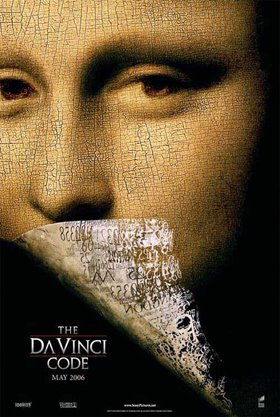
The first DVD box sets to land in my shopping basket? BBC's Life on Mars, the time travel/cop show with a premise so balmy it shouldn't work, let alone work so brilliantly.

The excellent John Simm is Sam Tyler, a Manchester police officer who is hit by a car in 2006 and wakes up in 1973. With no idea as to how or why he is living in the past, Sam struggles to fit in with the archaic, corrupt and thuggish 1970s Manchester police force led by Philip Glenister's eminently quotable Gene Hunt.

Tyler's time warp dilemma is mostly a subplot on the show, simmering in the background of each week's fresh, '70s-set police procedural. It's a time when forensic science is a developing field, when suspects and witnesses are treated with equal contempt and when it's perfectly acceptable to halt a murder investigation on account of it being "beer o'clock".

It's testament to the sheer quality of Life on Mars' that at no point does the concept ever feel naff. Jokes about the past and present are sly and subversive without ever seeming too cute; "There will never been a woman Prime Minister as long as I have a hole in my arse," bellows the sexist, racist, alcoholic, homophobe Hunt, who still remains likeable thanks to Glenister's commanding performance.

Dean Andrews as the boorish Ray Carling, Marshall Lancaster as the likeable Chris Skelton and Liz White as love interest Annie Cartwright are all perfect for their parts, but the real focus is wisely kept on Tyler and Hunt; their relationship represents a fascinating contrast between the morals and values of the 1970s and the present day.

Life on Mars is rich on nostalgia, truly capturing the essence of the seventies – the soundtrack is amazing (led by David Bowie's dizzying title track) and the cinematography drenched in all those browns and yellows commonly associated with the decade. This vivid detail of the 1970s constantly plays on Sam's mind, as he fights off voices and visions that suggest he's actually gone insane rather than back in time.

Both seasons deliver a pitch-perfect cocktail of intrigue, humour, action and drama through their highly successful meshing of the science fiction and crime genres. Thanks largely to the strengths of the show's two main actors, Life on Mars also succeeds in being strangely affecting; I challenge any other viewer not to share Sam's mixture of emotions each time he hears a voice beckon to him from the present day.

The programme's creators chose to follow the great British tradition of ending a show at the top of its game, and while Sam's predicament remains almost as intriguingly ambiguous at the end of the show as it was at the start, the finale is perfectly satisfying.

(As an aside, don't get Life on Mars confused with the gratuitous US remake, the finale of which sounds as awful as it is different from that of the UK version.)

If I sound like I'm gushing, it's because I am. Life on Mars is one of the finest shows of the decade. Thoughts on the show's sequel – the 1980s-set Ashes to Ashes, which recently premiered on ABC1 – will be here in the coming weeks.

The Da Vinci Code (2006)

Saturday, 9 May 2009, 9:40 pm | Comments (2)

The Da Vinci CodeIn anticipation of Angels & Demons, the prequel-cum-sequel to The Da Vinci Code, a few weeks back, I revisited Ron Howard's adaptation of the second Robert Langdon bestseller.

Unless you've spent the last three years living under a rock, which was, itself, situated under an even bigger rock, you'll be aware of the critical mauling Howard's film received upon its release; the picture was reportedly booed at by critics attending its premiere at the 2006 Cannes film festival.

At the time, I dismissed the claims as Tall Poppy Syndrome at work. With Dan Brown's books seemingly shifting more copies than there are human beings to read them, the time was right to cast aspersions on the man's work. Bizarrely, Tom Hanks' hairstyle even came under heavy fire. But was it deserving of the attacks? (The film, not Tom Hanks' hair.)

In this viewer's eyes, no. However, it must be said that the film version of The Da Vinci Code, in spite of (or perhaps because of) an unwavering devotion to its source material, is a rather different beast to The Da Vinci Code, the novel. Where Brown's page-turning yarn takes its readers along for the ride, allowing us to solve the book's numerous riddles alongside symbologist Robert Langdon and cryptographer Sophie Neveu as we swiftly precede through one brief chapter after another, Howard's adaptation is comparatively languid in pace.

It's a key difference, and one that it appears many critics were unable to overcome. Audiences, however, flocked to see The Da Vinci Code, prompting the film to rake in over $700 million worldwide. These are the same audiences who fervently snapped up copies of the novel before reading it on trains, planes and buses the world over before telling their friends to do the same. It's obvious that Howard and screenwriter Akiva Goldsman both belong to this readership and, subsequently, made their adaptation for this readership, as the film is steadfast in its faithfulness to Brown's controversial tome.

The result is a rich, thinking person's thriller that will be enjoyed by anyone who eagerly flipped through The Da Vinci Code's pages. For the most part, the characters are brilliantly brought to life with pitch-perfect casting. Indeed, with just one key exception, it's difficult to imagine anyone else portraying the numerous characters populating The Da Vinci Code: Audrey Tautou, Jean Reno, Paul Bettany, Jürgen Prochnow and Alfred Molina bring their respective parts to life with ease, while Sir Ian McKellan steals each and every scene he's in as Holy Grail enthusiast Leigh Teabing.

The one omission from this list is, oddly enough, leading man Tom Hanks. From the moment Robert Langdon is summoned from a book signing to assist in the murder of a curator at the Louvre who may or may not have been a high-ranking member of a secret religious society, Hanks is strangely wooden and disconnected. In one of the novels, Brown likens Langdon to Harrison Ford, whose dynamic persona is at ends with Hanks' apparent staidness. A thriller this talky needs a vibrant lead to carry it, and it's only during the movie's final sequence – a real standout of the film, accompanied as it is, by Hans Zimmer's dazzling soundtrack – that Hanks really comes into his own as Langdon.

Elsewhere, Howard stunningly realises the book's numerous flashback sequences, thanks to some magnificent cinematography by Salvatore Totino, who is also responsible for giving Paris the appealing golden allure it possesses in the film. Indeed, the whole movie has a look and feel that's all its own. The Da Vinci Code truly feels like a unique film; not your typical summer blockbuster.

Perhaps an injection of that blockbuster vigour is precisely what The Da Vinci Code needed. It's all played too straight at times. Ian McKellan offers up considerable energy to the proceedings, as do the sequences in which Langdon uses his eidetic memory to solve the puzzles on his quest to unearth the truth. It's the bits in between that lack in zest. Meanwhile the final revelation doesn't nearly carry the weight that it ought to. Despite its earnestness, The Da Vinci Code remains largely compelling viewing.

For viewers after a simpler, swifter and more explosive thriller, I suspect Angels & Demons will be up your alley. It appears to remedy The Da Vinci Code's flaws in that it's more of a straight, race-against-time type affair that's relatively light on exposition and heavy on action.

I watched The Da Vinci Code's extended edition on DVD, which adds another 25 minutes or so to the theatrical cut. While this may even further put off those detractors who found the film too dry and talky, fans of the novel will relish seeing it all up there on screen. Don't expect The Da Vinci Code to be a traditional blockbuster, overlook its absurdities (and if it's that disconcerting, Hanks' hair), and watch Dan Brown's novel come to life.

Da Vinci Code sequel announced

Tuesday, 21 April 2009, 11:51 am | Comments (0)

It's hard to believe that it's been nearly six years since The Da Vinci Code first hit bestseller lists worldwide. Probably because during those six years, every living soul on the face of this planet seems to have read the real-time thriller, keeping it at the top of said lists for most of that time. At the height of the book's popularity, airlines may as well have substituted their in-flight magazines with copies of the controversial thriller. A money-raking film adaptation boosted sales even further.

With next month's film adaptation of Angels & Demons set to bring Harvard symbologist Robert Langdon back into the limelight, Brown has today cannily announced the long-awaited follow-up to The Da Vinci Code.

The Lost Symbol will be released this September with US publishers Doubleday giving it a massive five million copy print run. According to the press release, the third Langdon thriller will take place over a 12 hour period, rather than Brown's four previous books, which were all set over 24 hours.

Until today, the novel possessed the working title of "The Solomon Key", which, though evocative of The Da Vinci Code, is a bit less generic than The Lost Symbol. Though the press release announcing the novel's publication doesn't give any clues as to its plot, previous reports suggest the book would see Langdon on US soil for the first time, entangled in a mystery involving the Freemasons.

Variety reports, rather unsurprisingly, that Columbia Pictures is moving forward with a film adaptation of The Lost Symbol set to follow the release of Angels & Demons.

Speaking of which, Columbia have released a sneak peek of Angels & Demons highlighting Hans Zimmer's soundtrack. For me, one of the highlights of the underrated Da Vinci Code adaptation was Zimmer's score, which culminated in the breathtaking "Chevaliers de Sangreal". The Angels & Demons score will take this track and expand upon it as a theme for Langdon. Sounds like it could be one of the soundtracks of the year for this film geek.

Duplicity (2009)

Wednesday, 8 April 2009, 10:42 am | Comments (0)

DuplicityA twist can make or break a film. The success of an entire movie can hang on the employment of this simple but overused plot device. It's incredibly difficult to pull off a twist that not only blindsides the audience, but also makes narrative sense. In short, a truly successful twist is a rare occurrence.

Writer-director Tony Gilroy makes it clear from Duplicity's first act that the film will offer audiences more twists than a Chubby Checker album before the closing credits roll. Gilroy, the screenwriter behind the Jason Bourne films, has created a slick, genre-defying romantic/comedy/thriller set in the cut-throat world of corporate espionage. It's relatively virgin territory and the film is richer for being set in it.

Clive Owen is Ray Koval, an MI6 agent who was once duped by Julia Roberts' Claire Stenwick, a CIA operative. Both leave their jobs for the private sector. When the pair cross paths again five years later, they concoct a scheme to pull a sting on their employers. Though all is not what it seems, and the duo's convoluted history is revealed throughout the film by a series of flashbacks.

Neither Owen nor Roberts are flexing their acting muscles here, though both well suit their respective roles. Paul Giamatti and Tom Wilkinson, meanwhile, are terrific in their supporting roles as the heads of the two corporations Ray and Claire are attempting to swindle.

Duplicity is refreshing as a talky low-key thriller, which could have been just as easily brimming with violence or explosions or explicit sex – and probably be more marketable as a result. Instead, Duplicity spins an engaging yarn reliant solely on the sparky dialogue between its two main players.

Oh, and its abundance of twists. Do they work? For the most part, yes. Once it becomes clear that the film's title refers not only to the relationship between Ray and Claire but also to that between Gilroy and the viewer, we are better positioned to follow Duplicity's convoluted story. With this knowledge, however, it's easier for the viewer to attempt to remain one step ahead of the story. Fortunately, the movie's final twist is left-field enough that only the most prescient of viewers will guess it.

As a brisk and enjoyable time-killer, Duplicity is great fun. It might be a bit too elaborate for its own good, but if, like me, you like to keep your brain switched on while in the cinema, Duplicity will be right up your alley.

Layer Cake (2004)

Thursday, 26 February 2009, 12:24 pm | Comments (0)

Layer Cake"Layer Cake? Who's in that? Daniel Craig? Nope, never heard of him." – lots of people, circa 2005

Okay, so it's not a quote I can attribute to anyone in particular, but I did hear it a lot after first seeing Matthew Vaughn's enjoyable British gangster flick in mid-2005. Just a few months later, Craig was announced as the sixth actor to take on the role of a certain enduring spy icon, and the rest, as they say, is history.

The actor's new-found fame and hit-and-miss choice of non-Bond vehicles (most recently, the not-quite-good-enough Defiance) makes Layer Cake, Craig's biggest starring role at the time, fascinating viewing. The actor seldom phones in his performances, and this is no exception.

Based on J J Connolly's novel of the same name, Layer Cake sees Craig play an unnamed drug dealer (Mr X) with ambitions to retire on the fortunes he has made in what he considers a legitimate business. However, when Mr X's boss gives him an unconventional assignment, his world is turned upside down by the chain of events it sets in motion.

While the film starts off superficially glorifying the dealing of drugs (though it's not afraid to show the consequences facing drug users), Layer Cake adheres to the gangster flick staple that sees most of its characters shuffling off their mortal coil before the end credits roll, ensuring no-one will leave the cinema plotting an illicit career change.

Vaughn, who produced Guy Ritchie's Lock, Stock and Two Smoking Barrels and Snatch, delivers a film that's tonally similar to Ritchie's acclaimed gangster flicks: there's a large cast of characters, a convoluted story, an absolutely killer soundtrack, some quotable lines and plenty of violence. However, Vaughn succeeds in toning down the excesses of Ritchie's flicks – the editing is slicker and less obtrusive – offering a tighter story in lieu of an abundance of style.

Layer Cake is a movie that warrants repeat viewings to fully unravel its intricate plot. I watched the film this weekend, having not seen it in a couple of years, only to find myself a bit lost in parts; the story takes unexpected diversions before giving us flashbacks later on to fill in the gaps. It's an unusual storytelling style, and one that requires a bit of extra attention.

The performances are all perfectly adequate, but it's clear that Craig carries the film as the enigmatic Mr X. It's another great performance from the actor. I caught Layer Cake as rumours of Craig's casting as Bond were swirling – this film completely sold me on his talents.

As X's potential love interest, Sienna Miller need only have shown up and looked pretty; needless to say, she effortlessly pulls this off. Similar could be said of the rest of the cast (except for the bit about looking pretty), including Michael Gambon, Colm Meaney and Kenneth Cranham: no-one's a revelation, but no-one lets the side down either. They all do what's required of them.

Which, come to think of it, is precisely what Layer Cake does: it might not reach the heights of Snatch or the brilliant In Bruges, but it ticks all the right boxes as a worthwhile addition to the British gangster genre.

Death of a President (2006)

Sunday, 4 January 2009, 4:59 am | Comments (0)

Death of a President

What if George W. Bush was assassinated?

Before the secret service busts down my door, rifles in hand, this isn't a question posed by me, but rather the premise of the compelling, provocative and controversial faux-documentary, Death of a President.

A seamless mix of real archival footage, doctored material and original film, Death of a President is presented as a contemporary documentary exploring the fictional assassination of the 43rd president of the United States of America in Chicago, Illinois on 19 October, 2007.

The central conceit gives the impression that Death of a President is nothing more than an offensive, headline-grabbing stunt depicting the murder of the controversial world leader. Reaction prior to its premiere on British TV network More4 was predictably outraged. Yet as the film unfolds, it becomes apparent that the assassination of Bush is never celebrated and the repercussions of the event are entirely negative.

The first half of the film deals with the lead-up to the assassination, as Bush attends a conference at a hotel in Chicago where a major anti-war demonstration is taking place. As the President delivers his speech inside, the nearby rally becomes increasingly aggressive. With Bush's death serving as the documentary's midway point, the filmmakers take the time to paint a convincing picture of the kind of meticulous security preparations that would actually take place on this sort of occasion. It's a lengthy set-up, but necessary to give the film the development it needs to prove its premise is not a cheap gimmick.

The inevitable scene in which Bush takes two bullets while walking down the rope line is not dwelled upon. It's a handful of suitably chaotic seconds shot using a range of equipment – digital cameras, handheld cameras, security cameras, even mobile phone cameras – in order to realistically represent how the incident might be captured on film. The shooting is shown only once and in no way is it glamourised or applauded. His eventual death in hospital is leaked to the media; the unconfirmed accounts are shown in a brief montage, but, despite being fictional, the viewer still feels the kind of shock that's strictly reserved for when a major news story like this breaks. Curiously, the White House's confirmation of these reports is never shown.

The film's second half develops into a fascinating whodunit as Dick Cheney assumes the office of the President, and the United States government begins to hastily look for someone to blame for the attack. Hundreds of suspects are detained and dozens of theories are debated, giving the film the opportunity to explore such weighty topics as civil liberties and racial profiling. While the blame is periodically aimed at militant activists, Al-Qaeda, the Syrian government and others, the actual culprit's tragic story is much closer to home.

The impressively slick footage is interspersed with interviews with a range of people involved in the event, including secret service staff, Presidential advisors, members of the press and suspects. The background given to some of the interviewees is compelling, including one forensics expert who walked away from his job after being instructed to draw a premature conclusion on the examination of evidence that wasn't actually conclusive. The actors portraying the interviewees are mostly convincing, and in some cases, exceptionally so. The material with which they're given to work is largely first-rate.

While Death of a President could have been a documentary about the assassination of a fictional world leader, the film would lose much of its resonance. Bush's unpopularity may be prime bait for a script of this nature, but the film's true intent is to explore the repercussions that a President's choices – and death – would have on the world. If you can handle a film about the assassination of a real-life public figure, Death of a President is a unique and provocative docu-mystery well worth checking out.

Unsurprisingly, the film hasn't tapped the US market. However, Death of a President is finally slated for release in American cinemas less than three weeks from today, on 20 January, 2009: the date of Barack Obama's inauguration.


All original content is Copyright © 2009 by popular culture... etc. | Firebug Theme by Blog Oh! Blog | Converted to Blogger Template by ThemeLib.com